

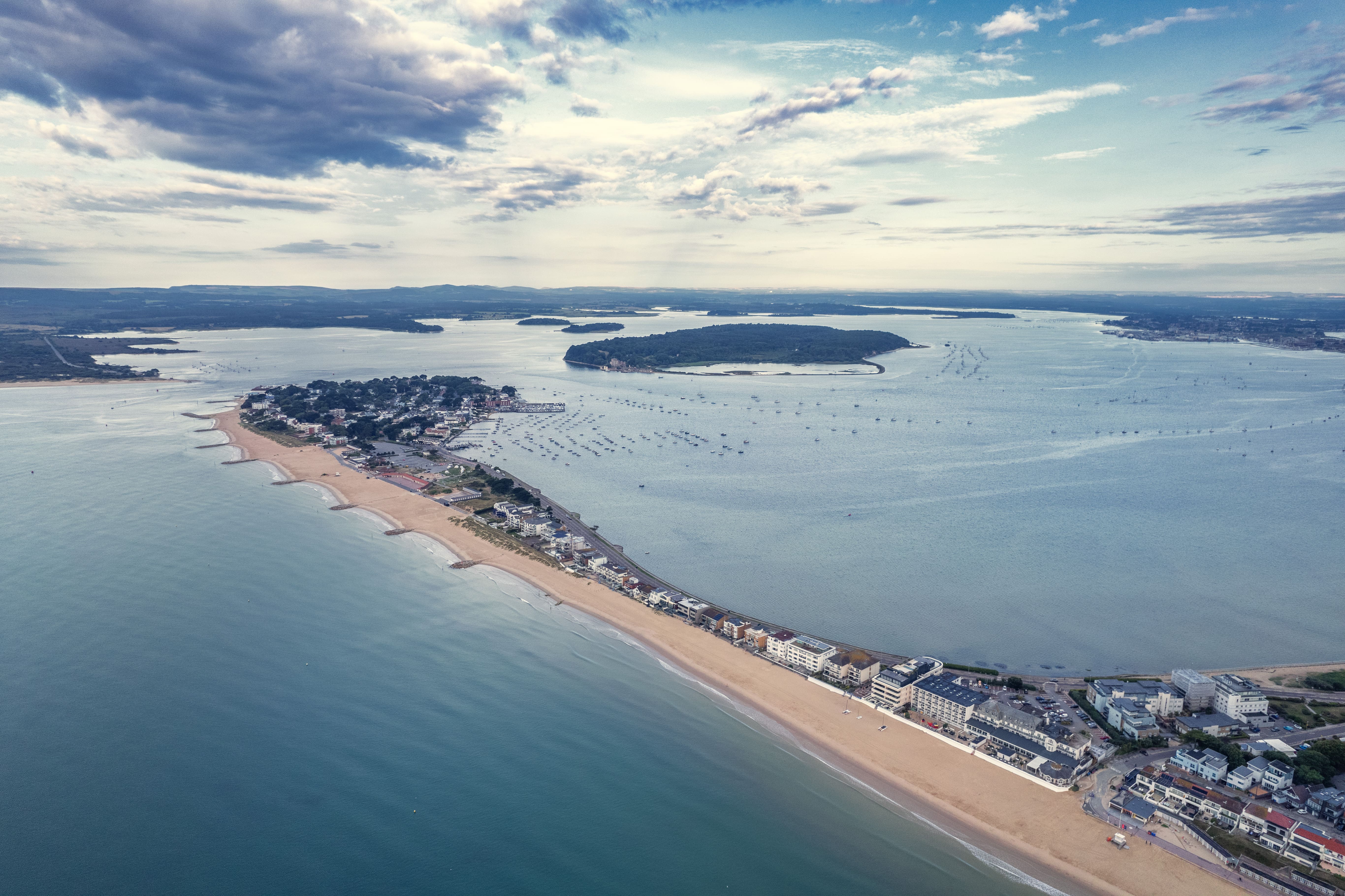
LUSH Cosmetics has partnered with Bournemouth University to co-fund a three-year PhD studentship to explore the creation of a new tidal energy station in Poole Harbour.
If proven to be successful, scalable, and with minimal impact on the local environment it’s planned that the 150kWh energy station would in turn be used to power operations across the LUSH Cosmetic’s local head office.
Tidal energy means capturing and storing the energy generated by the movement of tides. In some places, tides can create a strong current which can move a turbine either on the surface of the water or submerged.
Unlike wind and solar energy, tides are consistent and predictable meaning the successful project could produce a reliable source of renewable energy for the popular cosmetics brand. On top of this, the water temperature can be equally beneficial in the cooling of hardware that is generating heat, reducing or eradicating the need to use more power for a separate cooling system.
The project concept was cooked up by Adam Goswell, head of R&D and tech innovation at LUSH who, alongside a team of creative technologists, works to tackle the technical challenges and issues for the business. One such issue was marrying up LUSH Cosmetics’ stance on the environment with its own energy consumption.
“A lot of the challenges we take on relate to our consumption of energy, especially when it comes to technology,” said Adam. “Whether that’s screens or devices in our stores, or the vast amount of global cloud computing we use.”
LUSH couldn’t be in a better position to turn to the tide for its renewable power. Its UK offices, studios, and manufacturing units all sit next door to the world’s second largest harbour, located very handily in Poole.
“We spend a lot of time in and around the harbour, and frequently on it mostly enjoying birding tours with Birds of Poole Harbour,” said Adam. “We’ve always wondered what the potential would be if we could harness the tidal power in the harbour to power – or offset – some of the energy we use across our infrastructure.”
Adam and the team at LUSH were eventually connected to Bournemouth University by a mutual acquaintance, Matt Desmier, who introduced the idea to university professor, Zulfiqar Khan. By a stroke of chance, Mr Khan had already been researching the topic.
“After a lot of discussion, we landed on the idea that LUSH would co-fund a PhD Studentship for three years in which time, the successful candidate will have the opportunity to take this concept further through their research,” continued Adam.
The PhD studentship will commence from January 2025 and will include a stipend of £18,622 each year to support the candidate’s living costs. Over those three years, the successful individual will have to identify a suitable site within Poole Harbour; gather the required support and permissions form local authorities; demonstrate that renewable electricity does not need to be an eyesore but can complement the natural environment; and deliver a robust, scalable technological solution that can be replicated at additional sites.
“It’s a huge honour to see something like this happen, something I thought we’d never be able to have the chance to attempt,” said Adam. “It’s a great example of rather than just talking about making an impact, we alongside the university are invested in making it happen.”
Those meeting the requirements set by Bournemouth University can apply for the PhD studentship here.
‘We trust the best candidate will be selected by the university and we’re of course excited to get started with the project in early 2025,” said Adam.