
While the recent EU Deforestation Regulation (EUDR) 12-month push back has given companies a little breathing room, they can by no means rest on their laurels as there is a large amount of work to be done and data to be collected to ensure rigorous compliance by the deadline.
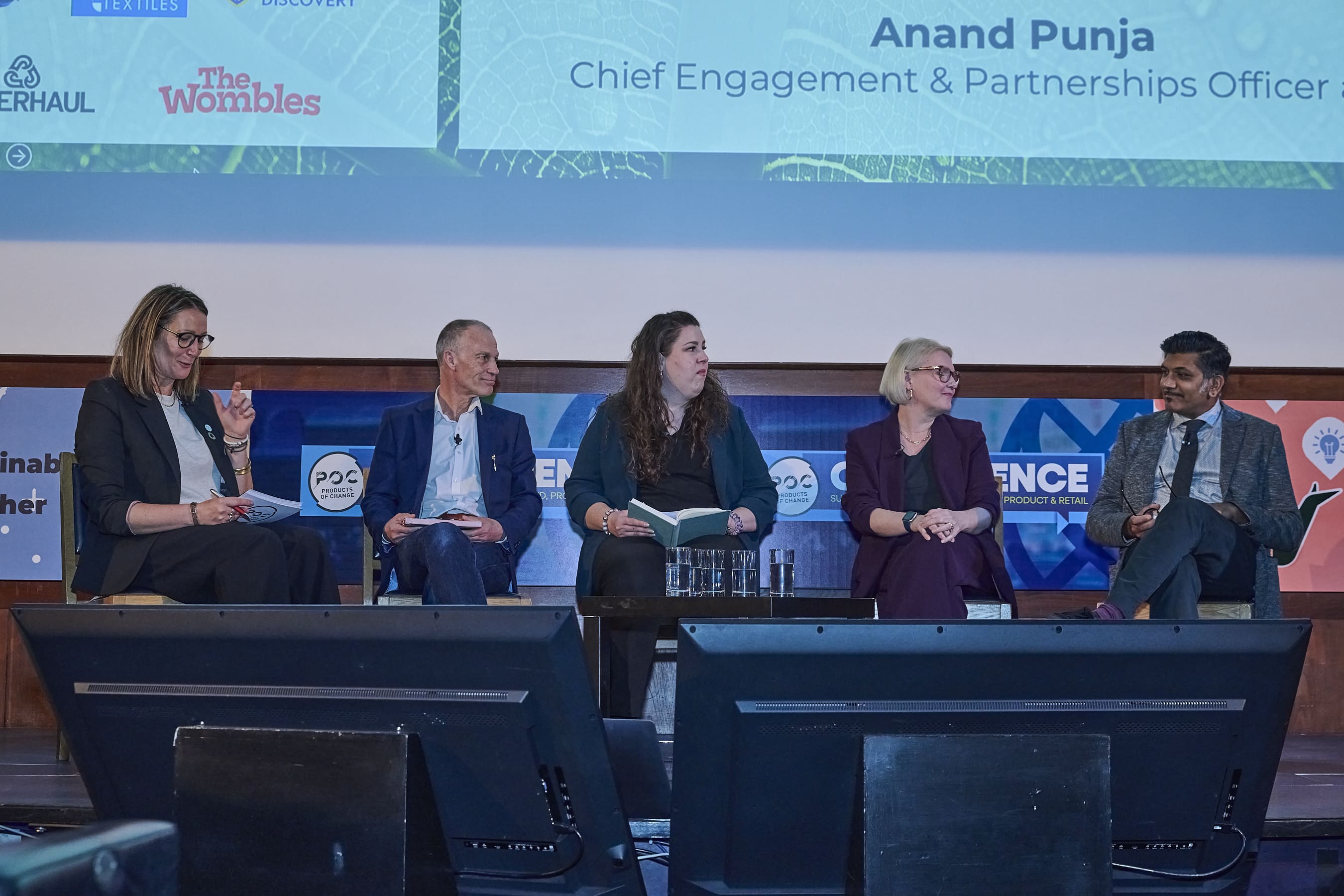
At the POC Conference in November, we brought together leaders from a number of businesses of different sizes, particularly in the paper sector, to discuss how they are preparing for the incoming regulation.
Helena Mansell-Stopher, CEO and founder of POC, was joined by Niina Niemelä, senior manager of sustainability, UPM; Steve Plackett, managing director, Carousel Calendars; Anand Punja, chief engagement and partnerships officer, FSC; Nicola Torode, head of operational compliance and sustainability, DK Books.
“We know that forests are our best line of defence against climate change, making them central to achieving our global climate goals,” opened Helena. “Through responsible management, forests also offer invaluable benefits: they continuously absorb carbon into the soil and their biomass provides countless materials integral to our everyday lives. But the forestry industry also has an environmental impact.”
Anand had just got back from COP16, the biodiversity conference.
“We were there to showcase to the world what FSC is doing, as in the conventions and agreements framework there is quite a lot about sustainable use of land.
“We’re working in globalised consumer and business product markets to support businesses to source their products responsibly from forests and then to promote them and to educate consumers about what it means for them to be FSC compliant.
“Our job now is to showcase that work in emerging markets, such as the sustainable finance markets and donor markets.
“Otherwise, how do we ensure investors and consumer know forests are being well managed?
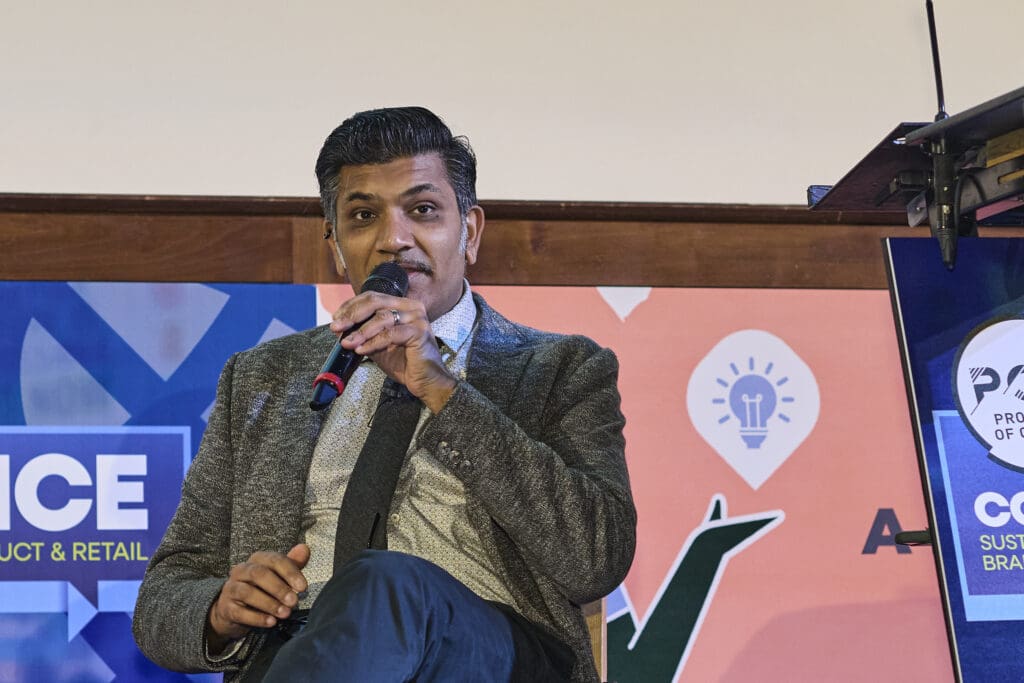
The world has been moving towards more sustainable forest management over time but what EUDR is really doing is putting into the mainstream the work, such as from the existing EU Timber Regulation (EUTR), into regulation and making it minimum bar of best practice around the world, explained Anand.
Anand said that this was his first COP he had attended, but felt it was “hit and miss in terms of negotiations themselves.”
He continued, “There are a lot of pledges around deforestation and we need to see pledges turn to action and quickly, that’s the big challenge.”
We live in a post-war era so a lot of the forestry work that has been done is to grow timber for products, not forests with biodiversity, because we used a lot in that war period, and of course trees take time to grow.
“We’re seeing the outcomes of that now, so we need a more diverse model of forest management,” said Anand.
Meanwhile, Nicola has been on a journey with DK to really start to implement doing things differently within the group.
“As many people have said today, sustainability is a full on journey,” said Nicola.
“We started thinking about sustainable forestry back in 2006 when we first obtained our FSC Chain of Custody. And we have been on a journey from 2006 to 2020 to move our entire product range to 100% FSC materials, which we have achieved.
“We set ourselves a target of deforestation free supply chain at that point which we discovered was hugely difficult without a huge amount of data, a huge amount of energy, and a huge amount of collaborative, cross-industry support.
“So as a publishing industry, we have created a network called the Bookchain Project and that’s helped us develop tools to understand the forestry sources in our supply chain, from the pulp sources, where they come from, to the tree species,” explained Nicola.
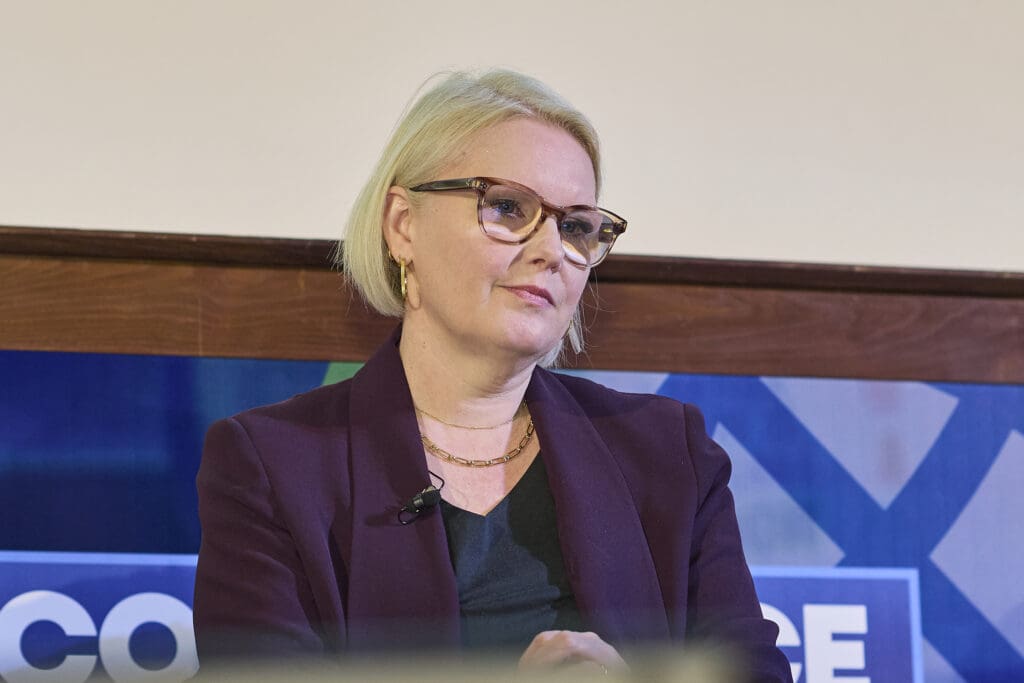
There are key pieces now that companies like DK are required by law to have the data points for around geolocation that just was not there before.
“This collaborative work that we have done, will continue to do, and need to continue to do is hugely important because there is so much we need to still do to ensure transparency,” Nicola commented.
DK is part of the Penguin Random House Group which is owned by Bertelsmann, making it collectively the world’s biggest trade publisher.
Which is why it is important DK works collaboratively across its Group; “We have offices and locations in the US, India, Australia, across Europe, in South Africa etc so we’re truly global,” said Nicola. “That means we have to get this right – the influence we have is significant and we have to use that responsibly and take ownership of that and show leadership.”
Helena then directed to Steve, who, as an SME owner, has a different experience to large multinational groups such as DK and Penguin Random House.
Carousel Calendars has been part of POC for years and is the only SME in the industry to have an SBTi that’s been verified, but it is still complex territory for an SME to navigate.
“We took what seems to be the unusual step of downloading the legislation and actually reading it,” said Steve, “We tried to then learn from that and see what it means for us as a publisher, trading in Europe and manufacturing in Europe and Asia.
“We don’t have all the answers, but we take notes and engage with all out suppliers around the world. The awareness was very low in Europe in manufacturing and to some extent in Asia as well. We’ve been talking to our suppliers and making sure that they know that even if they’re not in Europe this really does impact on their business and we will need them to get it right.”
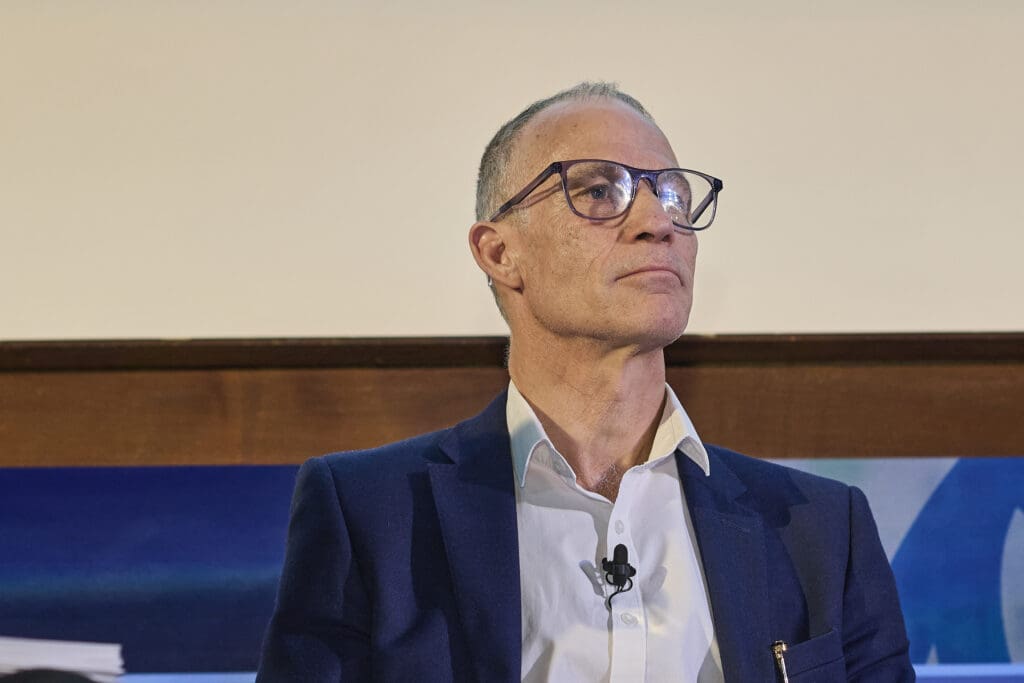
Carousel has also been gathering data and information about the sources of its paper, for which is works closely with UPM, as one of its suppliers.
“So we have pretty good data, not all the geolocation data, but on tree species and countries are all that we require really. And that data is good and encouraging. From Asia it’s not as detailed in some cases. We are still on a journey.”
A journey that companies like UPM are helping with. Niina explained that a couple of years ago they established this UPM forest action programme with the aim to really maximise the positive impact of its forestry actions.
“It is a really holistic programme covering the whole forest, the whole ecosystem, on four different themes: climate, biodiversity, soil, and social contribution.
“Healthy forest eco-systems and healthy forest management is really at the core of our business, and it is more important than ever.
“If we take biodiversity as one example, we have our own programme since 1998 and we renewed our targets and set KPIs and targets for different areas and follow the progress,” said Niina.
The includes initiative such as doubling the amount of broad leaved trees and doubling the amount of dead wood in UPM’s forests in Finland. This is because broad leaved trees increase the biodiversity of the species in the Finnish forest which are mainly based on pine and spruce, but they are also more resistant to the impacts of climate change. The dead wood is important because about 20% of forest species are dependent on dead wood in the forests.
“Many forest companies have their own programmes that go beyond the requirements but at UPM we are really putting in extra effort,” Niina noted.
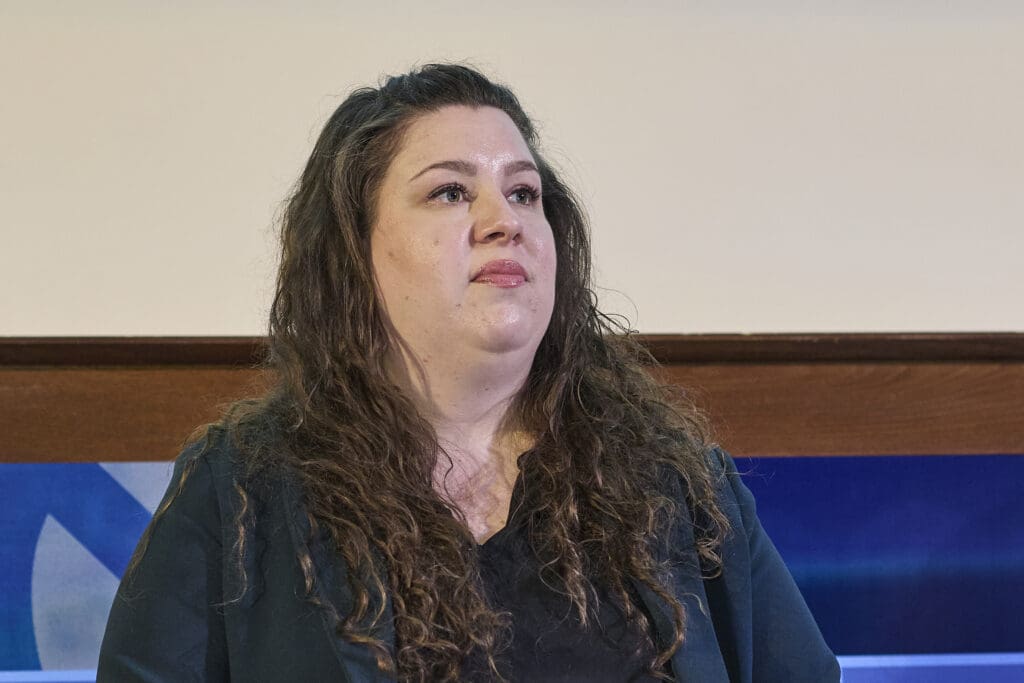
FSC is also taking that step further with its support in this process. In July FSC published a regulatory model on a risk assessment where it gives advice and notes to strengthen commitment to sustainable forests.
“It’s all on the website to use and to help you structure the work everyone is doing on EUDR, and with the FSC certification, how to use the two together,” said Anand.
This was important because what EUDR asks for and how FSC is structured are not the best fit, said Anand, “So we had to make changes to our tools to make them fit into the way EUDR wants companies to work.”
EUDR is a lot about transparency and data, “And certification needs to move in that direction as well,” Anand commented.
Businesses need to see their impacts, need to see their dependencies on nature, on climate, and then do something with that.
“EUDR is structured in very similar ways to other things in the pipeline – it’s all about disclosure and getting companies to know and own their footprint and impact.
“Certification did that to a certain extent but we need to update that for this transparency world that we are moving into.”
Anand continued, “Our network is full of foresters and people on the ground, assessing dead wood and things like that, so we’re in a very good place to collect that data from forests and to present it in a way on a GIS map eventually to show where there are risks of sourcing, or not.
FSC hopes that the data that is gathered will help companies lean in and invest in the areas that are not up to scratch, rather than avoiding them. Anand explained that “That’s the big risk of EUDR and other disclosures; businesses tend to be more risk averse in wanting to deal with their own compliance first and foremost and say actually if that’s a risk to our own compliance we’re going to avoid that and go somewhere else to source. Because with some of the most biodiverse smallholder communities on the ground, there is a lot of risk and they are the areas that need investment and need to change how those supply chains work.”
Anand said that there are people transforming their business models to comply, such as in the rubber industry.
“Rubber is quite an interesting one as it is full of smallholders and it is really impactful on women’s lives. Women tend to go out at 3 o’clock in the morning and tap their rubber trees then come back and send their kids off to school and then do their day job. So, it is really important they get a good price for what they’re growing on their small lots to support their families.”
Anand continued, “The rubber industry is full of intermediaries, who are going round smallholders and pushing prices down, so that’s where the profit ends up: it is with the intermediaries.
“There is a lady that we worked who changed her model, what she did is set up an FSC group scheme, providing transparency and using a cooperative type model instead.
“So effectively that rubber is going to be a lot more transparent downstream and the end user is happy to pay the extra money, because of the reassurance of compliance but also the data is telling them stories of how they are helping families on the ground, wherever they are sourcing from. And that makes them feel good so they think okay this is worth it,” said Anand.
Nicola then goes on to discuss how EUDR is affecting DK as a business.
“A huge amount of it is about looking into the detail and understanding where we are, again transparency is the theme: transparent data, quality data, is where we keep falling back. We need to make sure we have opened up those supply chains and are gathering data in the correct way,” commented Nicola.
She explained that it is making DK look at and revisit its due diligence processes. DK is part of the FSC Trace early adopter programme, so it is working with FSC to see how it utilise the risk assessments that they have, looking at the due diligence processes and seeing how DK can incorporate that into its business as usual processes.
“It’s all about interrogations of that data, looking at our internal systems, how we connect that data, how we record it, how we output it, it’s a massive admin process as you pointed out, Anand.
“It’s important that we don’t lose sight of the end reason why we are doing this. The spirit of the regulation is something that needs to be focused on: prevention of deforestation and driving up standards.”
When there are difficulties, DK tries to have an open conversations to change up and improve standards early on in the supply chain. “We want to have those conversations; sometimes we have to make tough decisions and move away, sometimes we get a really positive result as we can use our collective influence in a really positive manner,” said Nicola.
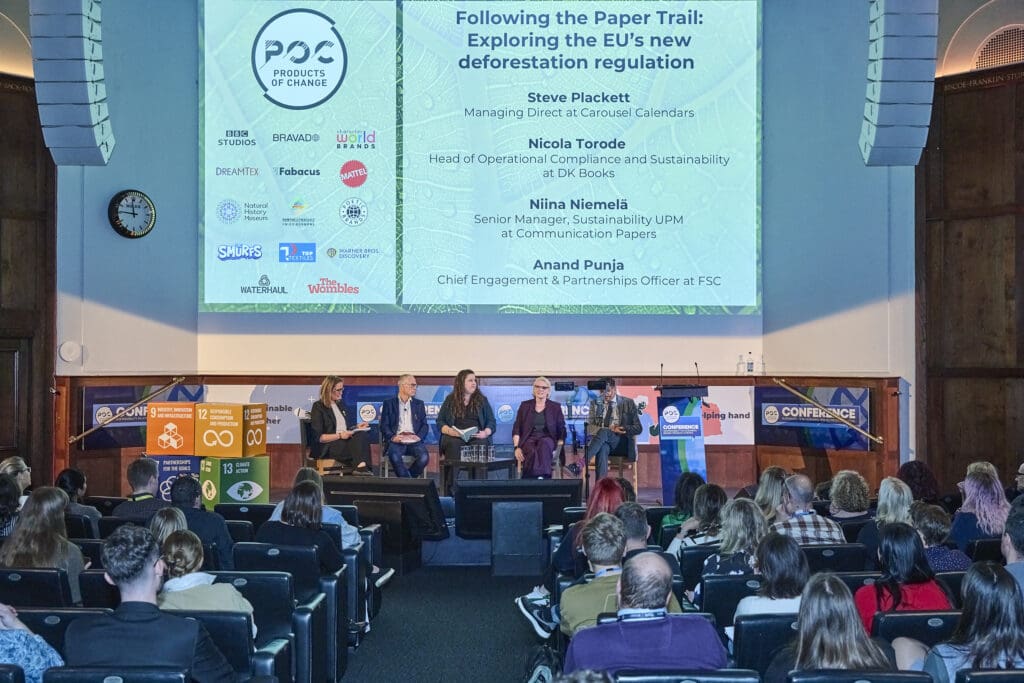
Meanwhile, as an SME, Steve has been trying to understand what it all means for an SME. “With the date going back and SMEs being six months after larger companies, you might think ah it’s okay I have a bit of time now,” said Steve, “But in practice that’s wrong, as many of our customers are not SMEs. The products for those customers will no doubt go out in August/September next year [2025], which means we’ll be ordering paper and manufacturing it in the Spring and I’m sure we will be asked to complete risk assessment documents for our non SME customers, which means we are reliant on UPM and other people to give us paper source information.”
So even if you’re an SME and it seems like it’s long way away, it’s still only round the corner, said Steve.
However, a company such as UPM has not had to start at beginning with collecting the data. It has been been working for decades with forest certifications, such as FSC and BFC, and EUTR. So UPM has already achieved 100% traceable wood by third party.
“We are only using controlled wood or controlled sources which guarantees then that the wood is not illegally harvested or harvested so it could violate human rights or sourced from high conservation value areas,” Niina explained.
“For our FSC target we are also targeting 100% by 2030 but we are not yet there, we are at 86% last year so we still have some work left to do with that target,” said Niina.
Helena added that people who haven’t read the regulation don’t necessarily understand the complexity of it. When a tree gets cut down, it goes to the mill, and is often mixed with lots of other wood and pulp, and every single piece of wood that goes in, including the tree types, is data that needs to be collected.
“It is like a virtual woodyard,” commented Niina, “We might have hundreds of different sources of wood into one piece of paper.”
UPM them combines all the due diligences under one reference number that it is then providing to its customers to make it easier for them.
But this is not the end to the complexity. Take a book as an example, there could be easily as many as six different types of paper used to create a hardback book, explained Nicola.
“Each of those materials will be made from multiple pulp sources, very often from multiple countries,” Nicola said, “We’ve done some research: we currently have 251 tree species from 47 different countries in our supply chain, that’s a lot of data we had to dig into to understand that. That also means there’s 47 countries that we need to do a risk assessment for which is very daunting without additional support and expertise.”
Anand then went onto explain how its FSC Trace technology works: “It’s effectively a digital upgrade of our current chain of custody system and it’s a digital piece of infrastructure for that.
“Our chain of custody standards are effectively around traceability, but as FSC has grown and effectively become more valuable in markets, what we’ve seen is FSC fraud of people trying to get around the paper trail.”
FSC Trace is FSC’s response to mitigate those risks, not only to the FSC reputation and to the reputation of its users, but to make sure what goes in at the start of a value chain is traced through a blockchain system and that people like Nicola and Steve can get that data out at the end of the chain and use it for their compliance needs.
Anand added that there is a simple FSC Trace video on FSC’s YouTube channel if anyone wants to find out a bit more about how it all works.
There is a whole other world opening up, explained Anand, that FSC is not used to either, around data governance, such as who owns the data, who controls the data, and how that all works.
“Most companies have had the data for a while it’s about sharing that data and the fear about sharing the data,” said Anand, “We give the person or company that uploads that data the full control over how that data is used as it moves to a downstream customer – they can turn it on, turn it off, how they wish to. They can get pinged every time someone wishes to see that data, if they’re getting pinged too much they can let it be on an automated flow.
“Ultimately it is about trust,” said Anand, because of the way the industry has been built over time in paper and timber and other products, there are a lot of traders and intermediaries. Those traders have travelled around the world and picked up their suppliers and represent the suppliers into EU markets.
“There is a big fear among those people that they will be skipped over entirely when it comes to sourcing, that people will go direct. I don’t think that will be the case as I think they have a valuable role to play in terms of rethinking their roles as not just providing the timber or the paper, but the data to go with it and the quality aspects as well,” Anand commented.
“But it’s not just around EUDR, it’s about all those disclosure needs that are popping up,” FSC Trace will carry EUDR data, which is what it is built for at the moment, explained Anand, but it will expand to carry much more other data to feed into other disclosure platforms as and when needed.
Anand concluded that, “Certification is a great tool to getting data from the forest to downstream players who will hopefully use it to make good investment decisions in forests in their supply chains.”