
Total industry disruption was what set it apart from previous years when the Licensing Excellence Awards – which took place on the opening night of the Las Vegas Licensing Expo last month – named Goodyear the recipient of the Best Sustainable Product Award.
Not least because the automobile and tyre brand was facing some pretty tough, pretty well-established competition with slightly more traditional and slightly more obvious options in line for the accolade. Stand just any set of calipers against the likes of Floral Street’s endearing and agenda-setting partnership with the Van Gogh Museum, or Skechers’ One Planet footwear collection, and we’d likely have seen a very different result. But Goodyear’s licensed calipers are so much more than your average.
Proving the licensing industry to be an amorphous of innovation and ideas, Goodyear stole the show and replaced it with a rather encouraging message for the future of the business. The international licensing industry is ready for some new processes behind its products and is a sector primed for some true circularity in its manufacturing.
Here, we catch up with Fabrice Faurie, senior Vice President of licensing at IMG, the licensing team behind the partnership between Goodyear and FDP, to learn more about the brand’s plans to bring disruptive sustainability into the licensing industry.
Hello Fabrice and congratulations on the award win at Licensing Expo – what does this mean for the Goodyear Licensing team, for the brand and its place in the licensing industry, and what do you think this means for the idea of sustainability in licensing?
This award is a testament to all the stakeholders, licensees and licensors who play an important part in creating this innovative and sustainable licensing programme for Goodyear. We are delighted to see this new award category.
Not only does it reward sustainable initiatives in the industry, but it also highlights best sustainability practices and hopefully inspires others to bring innovation and positive change to different sectors.

So, the win was for being a prime example of manufacturing things differently, with true circularity at heart. Can you talk us through the processes involved in the reclaiming, refurbishing, and remanufacturing behind the callipers? What drove Goodyear towards this model of circularity?
Remanufacturing consists of taking used parts, completely disassembling them, thoroughly cleaning them, replacing worn components with original quality components, and then restoring them to their original function.
FDP, the Goodyear licensee for Brakes, utilises used calipers as raw materials to manufacture their Goodyear calipers. This remanufacturing process uses 85% less raw materials than manufacturing new original parts. It also reduces waste and energy consumption, using only 15% of the energy needed to manufacture new products. Additionally, FDP offers rebates to consumers for sending worn-out Goodyear calipers, keeping used parts out of landfills.
Goodyear calipers provide exceptional longevity, reliability, and eco-friendliness, and are one of the many ways Goodyear’s licensing programme is reducing its environmental footprint. This model of circularity was possible thanks to having the local skill base, knowledge and materials to be able to refurbish the calipers locally. Being able to offer the remanufacturing process in the USA, not only helps reduce our carbon footprint by reusing old components but also diminishes contamination produced in international transportation.
If the remanufacturing of these calipers took place outside the USA, the model would not be as environmentally effective.
What plans have you got to continue to drive sustainability across the Goodyear brand? What role will circularity like this play in Goodyear’s sustainability strategy overall?
Sustainability is an integral part of Goodyear’s business strategy. We work to integrate sustainability into our licensing business processes, products and value chain.
Going forward, we believe that remanufacturing processes, taking high-quality parts and giving them a new life, and reusing and recycling resources, such as battery recycling and biodegradable components, will be the most significant initiatives within the Goodyear licensing program.
We are also constantly working on implementing new and more sustainable practices. A good example is our focus on responsible sourcing of materials, we have been implementing some new requirements on packaging to use sustainable materials to limit the use of plastic over the next several years. We have also started using Forest Stewardship Council (FSC) certified materials, which means wood, paper or other forest products come from responsibly managed forests that provide benefits to the environment and prevent illegal logging.
Similarly, we are reengineering and implementing smarter packaging by accounting for the whole life cycle of the packaging, from transportation to final on-shelf presentation to disposal. For instance, we are lessening the packaging size for in-store presentations and using shipping boxes as cut cases or shrouded PDQ to reduce corrugate, PDQ packaging and master cartons where possible. This is also seen in our reduced use of disposable single-use components in packaging, increased use of biodegradable and compostable materials, and reduction in packaging sizes and weight.

Are you able to talk us through your sustainability ambitions and targets? How will you tackle this and are the calipers just the beginning for a more sustainable approach to licensing?
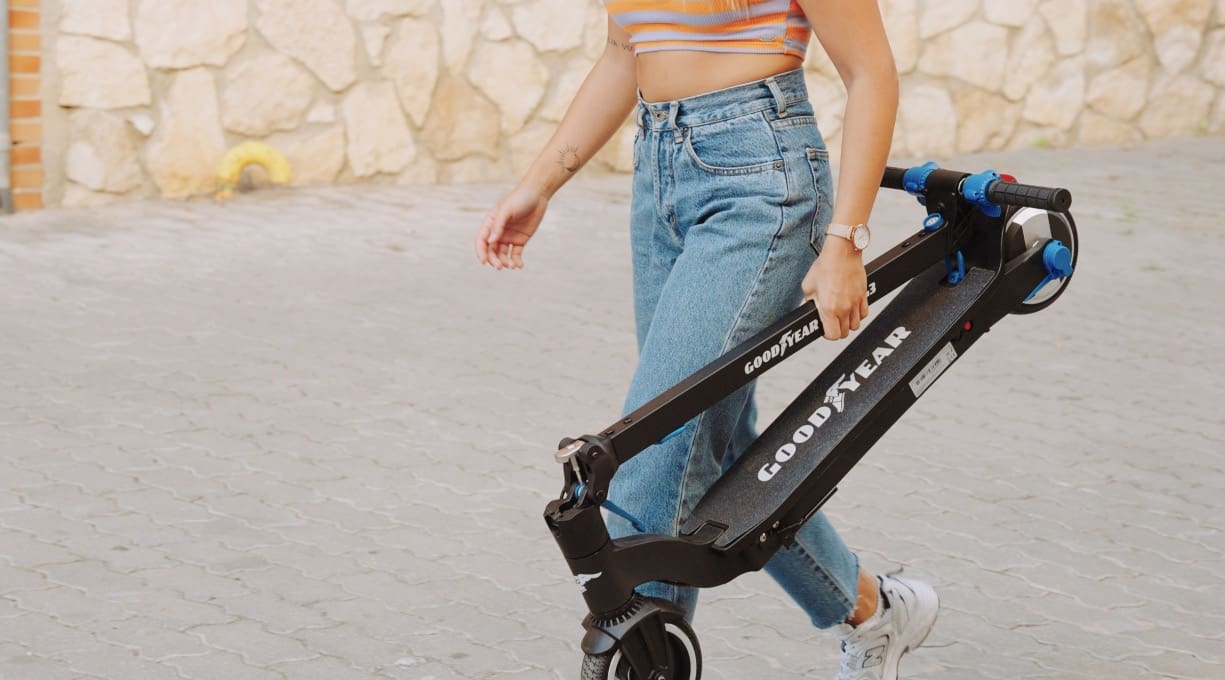
We plan on increasing efforts towards more sustainable products, such as our line of 100% RPET fashion bags and e-scooters . Our licensing program is also extending its product range offerings to account for more products tailored around sustainable mobility methods and environmentally conscious packaging. Creating transparency along the supply chain is also critical. We are also implementing more rigorous supplier assessment systems.
What’s next for Goodyear in this space?
Goodyear continually works to seek sustainable material options that deliver product performance while meeting our high standards of quality and safety. In line with the growing significance of sustainability in the automotive industry, we are pushing for more innovative, sustainable and technical automotive products including auto parts and new products in the electromobility space, such as electric vehicle charging stations and chargers.
We are also pushing for more battery-powered hardware products, such as gardening items, power tools and compressors, to replace gasoline-powered alternatives. Another growing focus for our licensing program is local sourcing and manufacturing.
What’s exciting you guys the most about the journey of sustainable development you’re now on?
The most exciting aspect of our sustainable development journey is the ability to implement greener practices and reduce our overall carbon footprint. It is fascinating to discover new and innovative initiatives that can have big positive contributions to the environment.
As mentioned earlier, an interesting sector with great potential for Goodyear Licensing is in our technical products such as auto parts and car accessories, lubricants, brake components, filters, spark plugs and auto batteries. These industries often involve complex manufacturing processes. The challenge is to launch commercially successful products while delivering on the sustainability commitment. An exciting ideology is being able to bring products back to local production and closer to the consumer, to reduce long transportation routes and the pollution they entail.

Thanks Fabrice, this has been very enlightening. Is there anything you’d like to shout about? The floor is yours…
The Goodyear licensing program is always working to follow the steps and implement the goals set by The Goodyear Tyre & Rubber Company. One of Goodyear’s key sustainable goals is to introduce a 100% sustainable-material tire to market by 2030.
Last year, Goodyear made significant progress on this front by making a demonstration tyre made of 90% sustainable materials that was unveiled in January 2023. Goodyear has also increased the use of bio-based oils to help reach the goal of fully replacing petroleum-based oils in their products by 2040. These two key examples show how Goodyear is integrating sustainability throughout the business.