
The fact that business pioneer and plant enthusiast, Stefan Thomas grew up in a hippy commune in the heart of an Australian rainforest has been more than a little influential over the direction of travel he and his company Tranquil Plants have taken since it was launched almost a decade ago.
On a shopfront surface-level, Tranquil Plants is a means of enabling its customers to bring nature into their homes in the shape of an easy-to-care for, easy-to-manage houseplant.
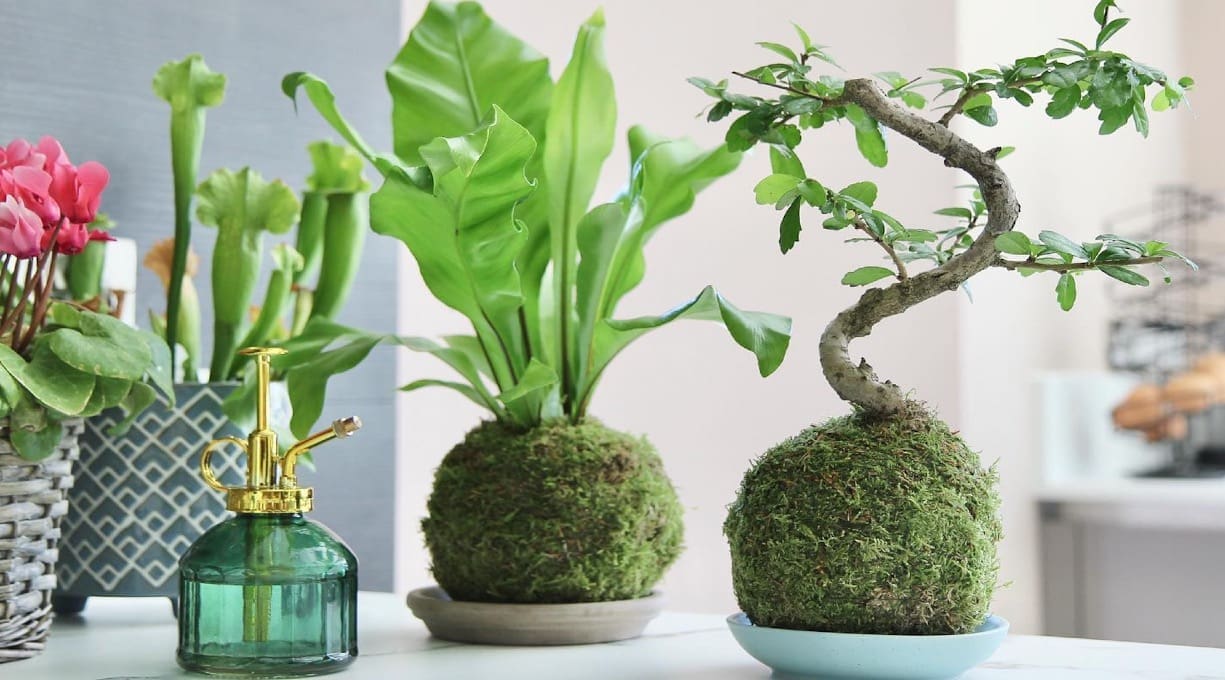
A Tranquil Plant arrives free of the demands of your standard houseplant – requiring no pot of soil, or the constant monitoring, watering, and feeding that has been the undoing of so many houseplants before it when trying to fit into the hectic lives of society today. Why? Because a Tranquil Plant – inspired by the Japanese art of Kokedama – arrives already rooted into its self-sustaining ecosystem.
Now, this may need explaining a little further.
“This is a living plant that has been sculptured in this round soil ball of fertiliser and other plant-goodness,” Stefan tells Products of Change. “It’s then wrapped in this living moss. Now, moss doesn’t have a root system, it just has spores. So, when you wrap it around the plant, it starts to mesh and grow together – as long as it’s in this nice, moist environment.”
The idea, then, is to bring people and nature closer together by making the fine art of keeping a houseplant alive a more manageable task for people living in a society with so many outside pressures and such little time.

“With these plants, you place them in water once every two weeks and you will see the moss ball soak it up and bubble like a sponge,” says Stefan. “Wait until those bubbles stop bubbling, and you know your plant is full.”
Your plant can then be placed on the accompanying terracotta plate, or hung from one of Tranquil Plants’ jute hangers, to be displayed and thus ‘begin to transform your relationship with plants and nature.’
“The accessibility of Tranquil Plants plant-keeping means that people can begin experiencing plants differently and build this completely new relationship with them,” says Stefan.
And now we are getting to the core of what the Tranquil Plants business really is. Beyond the consumer and corporate gifting market that Stefan has seen bounce-back in recent months following a rollercoaster of surging popularity during covid lockdown and a post-pandemic dip amid the chaotic cost-of-living crisis across the country, Tranquil Plants is a lifestyle brand selling its customers a new way to look at life.
It’s why that childhood spent in an Australia hippy commune is of such significance. Because through Tranquil Plants, Stefan wants to offer people access to a slower pace of life that enjoys more harmony – whether that’s an inner peace found through meditation or the peace found when carrying out a mindful activity, like caring for a plant.
Finding a balance with nature
“The positive impact plants have upon our lives is a proven thing,” says Stefan. “From a scientific point of view, air purifying plants like palms are efficient in drawing out the pollutants from the air, whether that’s car fumes out on the street or the fumes from things like cleaning fluids and even toxins in paints within buildings. It’s why you’ll read about plans to introduce more air-purifying plants into places like school playgrounds and classrooms, plants like ivy and palms, to purify the air for schoolchildren.
“But it’s also been proven just how good they are for busy minds.”
Among the Tranquil Plants lifestyle offering, Stefan hosts regular workshops and events during which participants learn the skill of Kokedama. Included in that is a free ten-minute meditation session helping clients to focus, quieten, and calm the mind.

“So often, people will tell me how different they feel while taking part in a workshop,” says Stefan. “Wrapping their plants, it’s like a mindful activity. If you’re focusing on the plant, you’re focusing on making something beautiful, using the textures together. I run these workshops with a lot of autistic kids, and they find it really relaxing.”
This idea of creating something out of nature is deep-rooted in Stefan’s upbringing. His father built exotic houses in the rainforest, sculpting them around the land to incorporate flowing waterfalls and trees. It’s what initially inspired Stefan into a career in education and then subsequently into the craftsmanship of Kokedama. And it’s a path that has served him well. In 2017, Tranquil Plants toured with the RHS to present at all its shows, starting with the Chelsea Flower Show. It was here the business discovered the appetite for something new and thought-provoking that will bring nature into people’s homes.
Of course, as business ramps up, so too do the demands to reduce impact and support the environment that drives the success of Tranquil Plants.
“It’s why we take our journey of sustainability very seriously,” says Stefan. “We’re making plants without plant pots, which is great. We’re harvesting rainwater to water our plants, recycling rubbish, offering our boxes to garden centres who are very happy for them, using low-energy lighting, and forever tweaking and changing our packaging – such as using corn starch packaging.”
In fact, the only bit of plastic involved is the bag in which the plants are shipped in. This the team encourages customers to keep and reuse because, according to Stefan, “it actually acts as a greenhouse for the plant.”
“Owners, when they go on holiday for a couple of weeks, can use the plastic bag to trap humidity and moisture and create a self-sustaining system for while they are away. We tried using wax paper and biodegradable doggy bags, but these perish after a couple of weeks. So, I’ve still got people working on this idea.”
Plant food for thought
The removal of every last piece of plastic is not all at Tranquil Plants that’s being worked on. Sustainability as a lifestyle is so high on the agenda that Stefan has made some major first moves on the superfood space, too. Namely in the form of hydro-herbs and microgreens – both areas of some fascinating discussion.
“To me, I think this area is going to be revolutionary. They’re going mad for microgreens in California right now,” says Stefan. “This is a food concept that could be amazing for countries in harsh food-growing environments. Growing things like beetroot, sunflowers, broccoli, you sprout them and grow them hydroponically, then harvest them when the sprouts are no higher than 5cm and they are a superfood.

“This food has 40% more nutrients than normal, fully-grown or fully-flowered food. So, you can grow a broccoli salad and it will be 40% more nutritious than what you buy in the supermarket.”
On top of that, Stefan is researching the market for edible flowers, the kind you often find flowering in your Jasmin Tea purchased at Wagamamas or adorning a celebratory cake.
“I just want to showcase how creative we can be with what we eat and drink and the different kind of foods we can explore in the process,” Stefan continues. “I’m trying to create an experience for people where they are making something very mindful for the planet and eating really nutritious food – showing them this plant-based lifestyle.
“And through that, I want to convey that happiness comes from working with your mind. If you can have a peaceful, balanced mind, you can live peacefully and at harmony.”