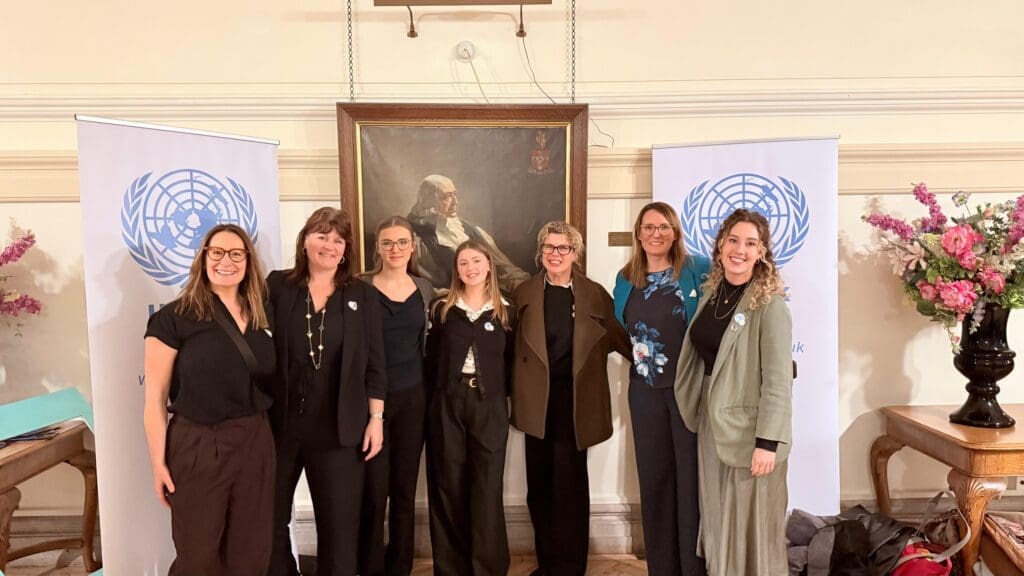
Products of Change and its partner, Wastebuster, alongside a handful of POC Members, joined the United Nations to celebrate 80 years of the institution which is safeguarding the future of both humanity and our planet.
On Saturday (17 January), 80 years of the United Nations was celebrated in the very same location – Methodist Central Hall Westminster – that it was founded, in the heart of what was, at the time, a deeply war-scarred London.
Now, 80 years on, United Nations leaders, ambassadors, politicians, and even a member of the Royal Family, gathered alongside over a thousand delegates, for a day of both celebration, discussion, and deliberation over the next 80 years and beyond.
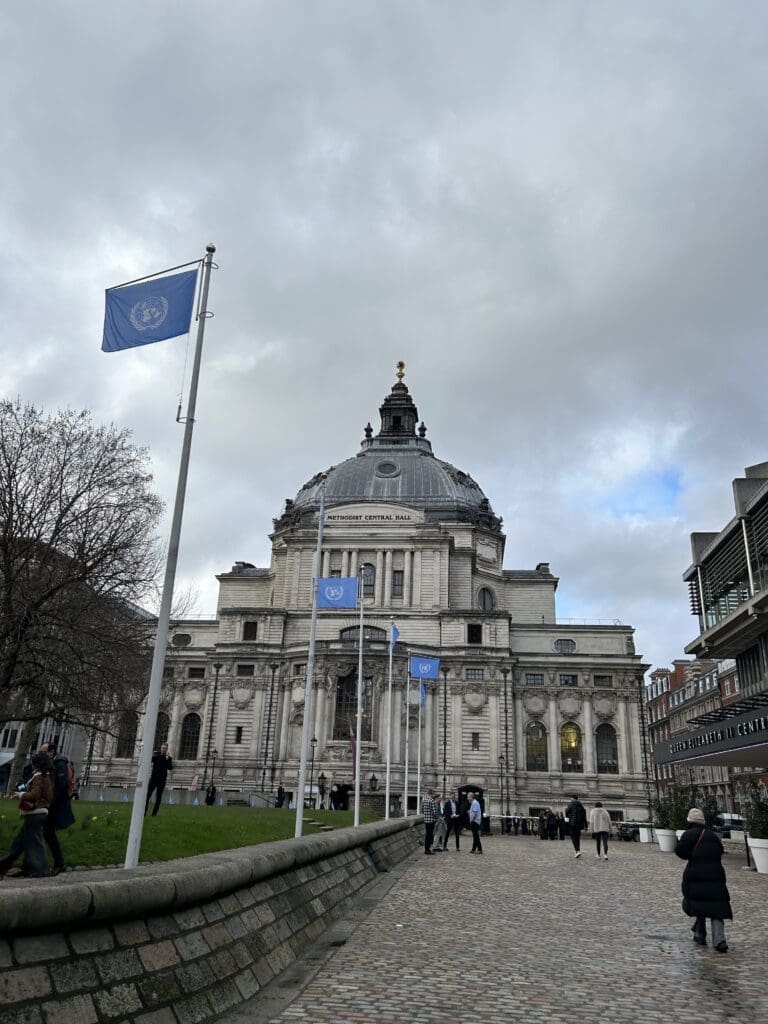
Through its work with the United Nations and Wastebusters, Products of Change, joined by a handful of its members, was delighted to be invited to such a monumental occasion, where sustainability rightfully (and reassuringly) was a core staple of the conversations throughout the day.
For the United Nations, its founding principles were to forge a safer, more equitable and harmonious world, and that of course goes hand in hand with maintaining and safeguarding the existence of such a world.
In his address to the room, United Nations Secretary-General, António Guterres, expressed how “profoundly challenging” our current time is, pointing to the reduced aid provisions and widening inequalities, as well as the acceleration of “climate chaos” and the continuing surge of fossil fuel profits.
“As global centres of power shift, we have the potential to build a future that is either more fair – or more unstable,” said Guterres.
The recurrent theme of the day was the importance of multilateralism, for both the United Nations and for the world as a whole, with Richard Hermer, Attorney General for England Wales, highlighting that, with only a fifth of the UN’s 17 Sustainable Development Goals (SDGs) on track, “now is not the time to turn away from multilateralism.” Hermer emphasised the UK’s continued commitment to the United Nations, and quoted from Clement Attlee, Prime Minister of the UK 80 years ago when the United Nations was founded, who addressed the first UN General Assembly with the words “we can and must succeed.”
Hassan Damluji, executive director of Global Nation, shared data on generational feelings towards multilateralism and solidarity, showing that global solidarity is weakening yet we need to be showing a sense of belonging to humanity at large, beyond just our own circles and even countries.
“We are living at the most important time to be alive as we are writing the future of the next millennium,” said Louis VI, musician and zoologist, in his talk emphasising the importance of human connection to nature. “A lot has been said over the last 80 years, now it is time to listen,” said Louis VI – listen to nature, listen to the planet, as planetary health and human health go hand in hand.
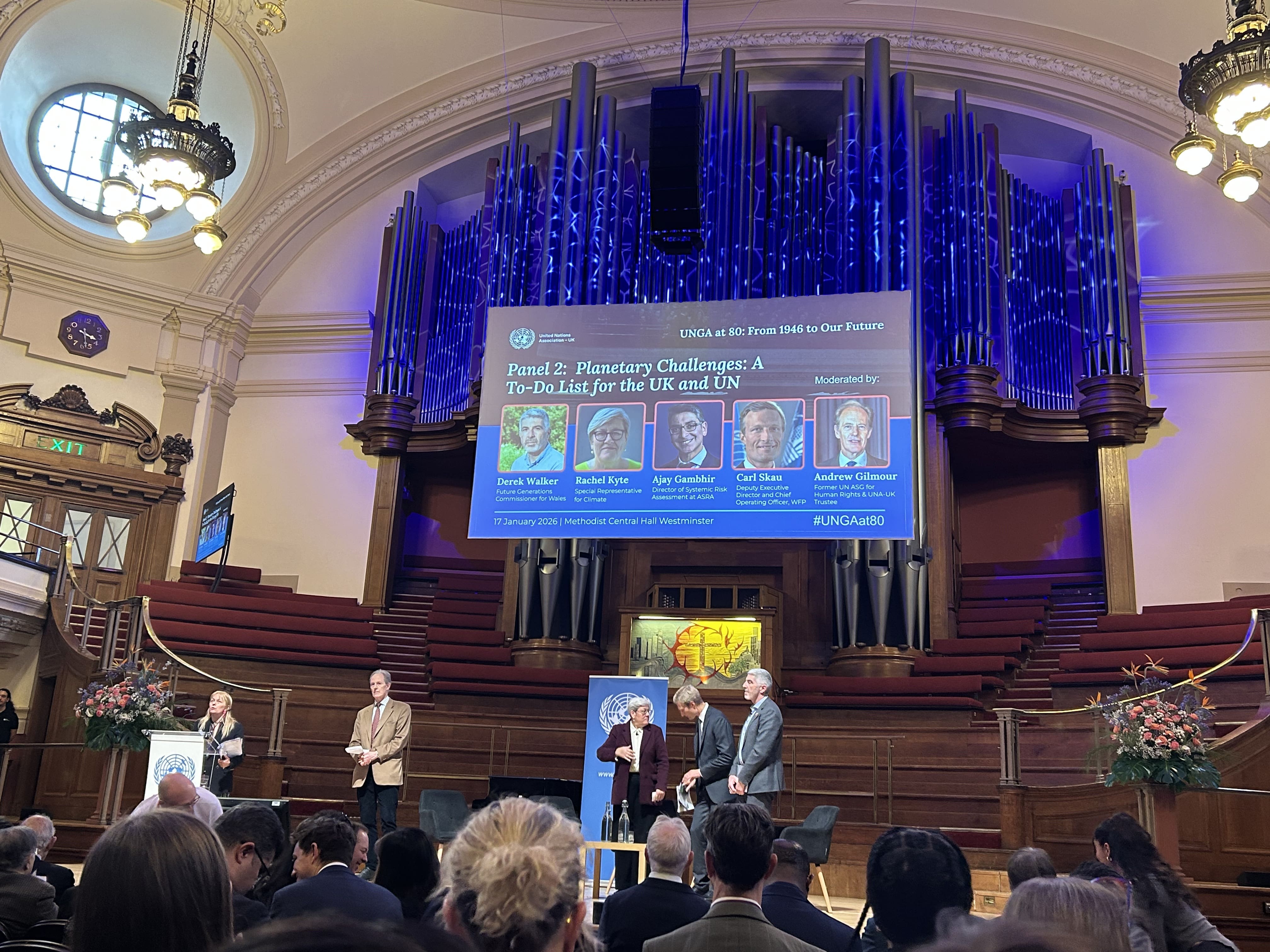
In a panel on Planetary Challenges, Derek Walker spoke about his role as Future Generations Commissioner for Wales, and how that led to the creation of the Wellbeing of Future Generations Act in the country. This act embeds a long-term approach for government in line with the SDGs, and extending beyond the five-year term of a presiding political party. “My job is to be impatient about the pace of change,” he said, and change can only happen when the long-term considerations of future generations are properly accounted for in decision-making. Through the Wellbeing of Future Generations Act, Wales is on track to have 45% of its journeys be on bikes or public transport by 2045 and is already second in the world for recycling. This was a real reminder of how embedding sustainability considerations into every decision with long-term thinking, leads to real and tangible benefits.
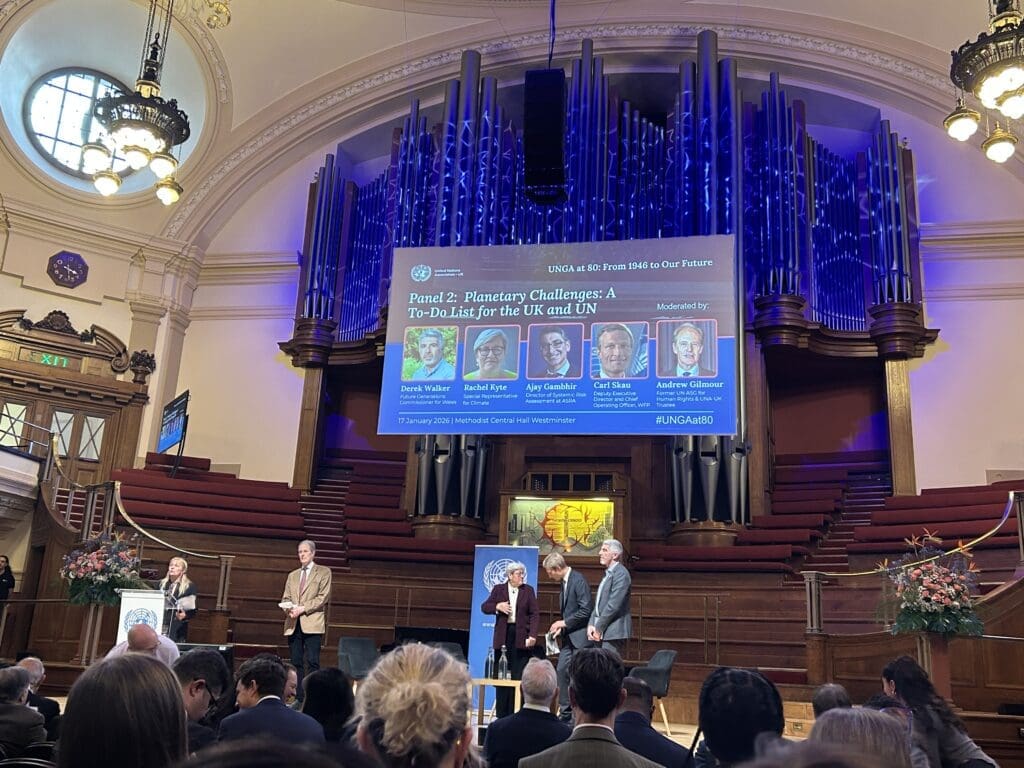
In the same panel, Rachel Kyte, Special Representative for Climate in the UK, spoke about the change in our financial system necessary for the future we want and need. “We cannot pay our way to resilience, we have to change the way we value and invest in resilience,” she commented, emphasising that “the cost of inaction is so much higher than the cost of action,” describing Net Zero as the greatest possible investment opportunity.
In a closing call to action, Maria Fernanda Espinosa, former President of the UN General Assembly & executive director of Global Woman Leaders, reiterated that “institutions don’t save the world, people do,” and that is a responsibility and mantle we must each and every one of us take up. “Leadership is not just about power, it is about stewardship,” she said, poignant words emphasising the role the leaders, stakeholders and decision-makers of the world have to look after the world for every moment we are on it, so it is still fit for humanity when the mantle is passed to the next generation and beyond.
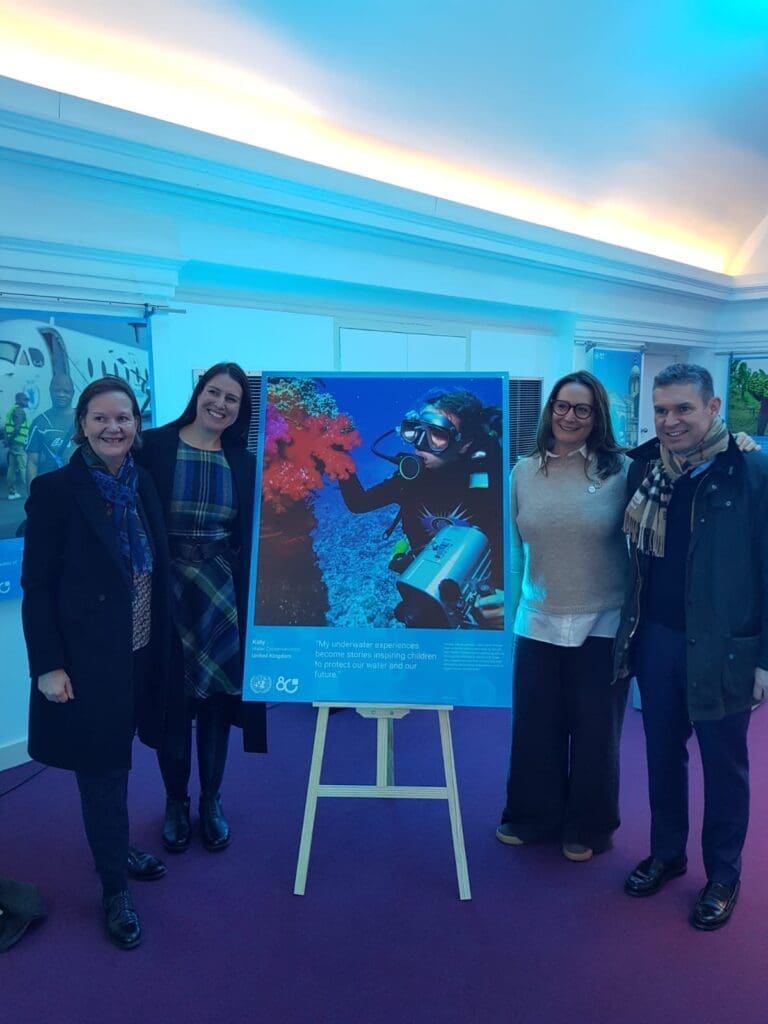
The day’s event was followed by an evening reception at the UN’s 80th anniversary photo exhibition, Shared Lives, Shared Future. Wastebuster’s founder Katy Newnham’s photography was featured in the exhibition, and she delivered the opening speech of the reception, highlighting the importance of empowering young people and the collaboration between Wastebuster, the United Nations, and Products of Change.
“The exhibition we are celebrating today – Shared Lives, Shared Future – captures something essential: that the United Nations is not an idea in New York or Geneva, it is lived, every day, by people everywhere,” said Katy, in her speech to the reception. “My hope is that when people see my photograph, they do not just see a diver in the ocean – but a reminder that the choices we make above the surface, shape everything below it.”