
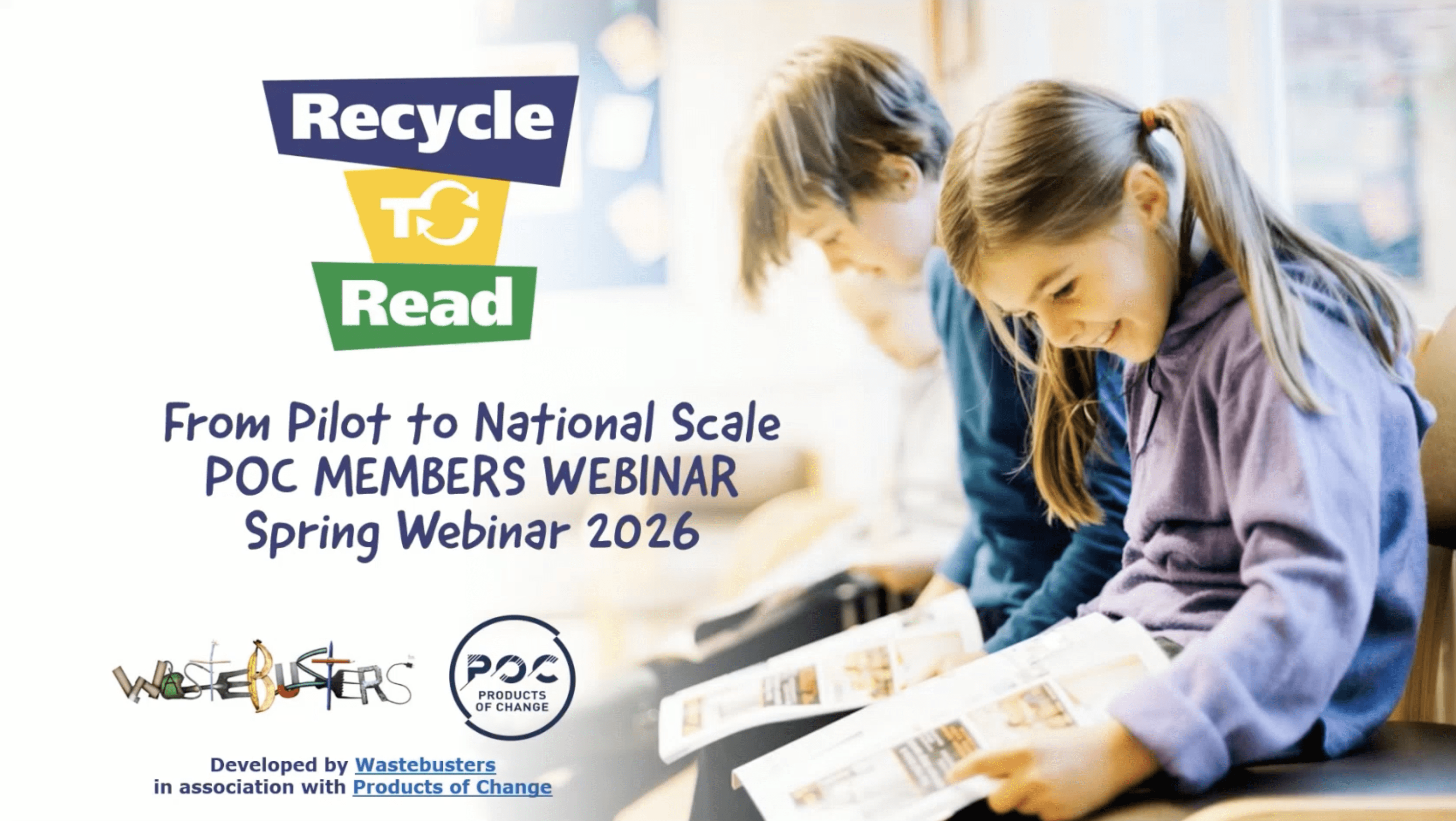
POC hosted the Wastebuster team on our platform earlier this month, as they updated the community on the latest developments of the Recycle to Read programme.
Watch the full webinar recording here.
Over the past year, this pilot initiative has demonstrated the real-world potential of toy take-back and recycling at scale, with over 13 tonnes of hard plastic toys collected across 167 Tesco stores nationwide — achieved with minimal consumer-facing promotion.
Building on this strong foundation, the programme now enters its next phase of growth. Wastebuster is beginning full-scale engagement across its schools network, reaching over 17,000 primary schools and more than 4 million children and their families.
This expansion represents a step-change in visibility, participation, and impact for the scheme.
This performance highlights a compelling opportunity for brands, retailers, and licensing partners: consumer appetite for responsible toy disposal and circular solutions is stronger than many expect.
Following the pilot’s success, Wastebuster has secured a three-year national agreement with Tesco, enabling full programme rollout supported by coordinated marketing, messaging, and consumer engagement strategies.
This next phase creates substantial opportunities for:
- Brand visibility and ESG leadership
- Circular economy participation
- Consumer trust and loyalty building
- Cross-industry collaboration
- Measurable environmental impact
Organisations seeking to play an active role in toy circularity, sustainability innovation, and consumer engagement are encouraged to get involved.
The Recycle to Read programme is a collective impact initiative led by Wastebuster in partnership with Products of Change, designed to tackle system-level challenges in toy recycling by bringing together retailers (notably Tesco), schools, and toy industry partners. Its core aim is to build a scalable, not‑for‑profit infrastructure that makes it easy for families to recycle broken hard plastic toys while rewarding schools with books, linking environmental impact with children’s literacy.
Operationally, the pilot has shown strong performance: 1261 collections have been completed with zero missed collections or compliance issues, and around 900 schools have already engaged, many through word of mouth. Material audits indicate that nearly 50% of the collected stream is target toy material, with relatively low contamination. The programme has secured a three‑year contract with Tesco, giving it a firm basis to scale nationally across the UK and deepen school engagement through assemblies and education campaigns.
Looking ahead, the team will focus on processing and analysing 10+ tonnes of collected toys, including polymer analysis and recycling quality assessments, to support design‑for‑recyclability guidance for the toy industry. They will also expand consumer behaviour analysis, including seasonal patterns and school‑driven participation, and use this insight to inform communications and system design. Longer term, there are active discussions about global replication in Europe and the US. Throughout, the program places strong emphasis on data collection and storytelling with and for children, using characters, narratives, and book rewards to build long‑term, emotionally resonant recycling habits.