
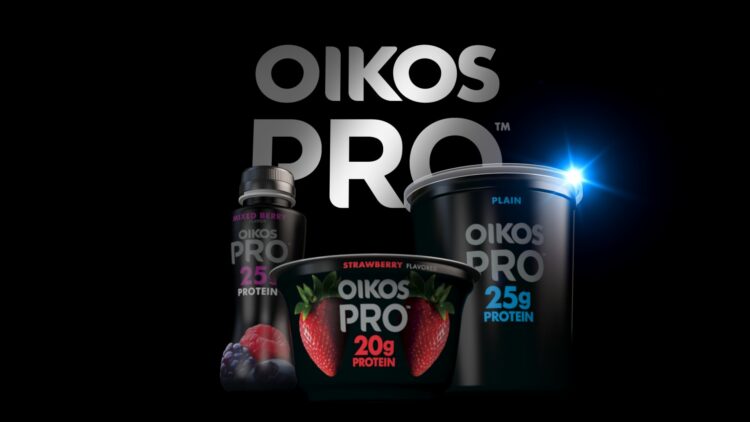
Oikos yogurt maker Danone has just announced a partnership with PurposeEnergy to convert food waste into clean energy at its largest US yogurt production facility.
By Gary Symons, Editor-in-Chief, The Licensing Letter.
It’s a different type of partnership than we typically report on at The Licensing Letter, but these types of partnerships are becoming increasingly important in the world of consumer goods and licensing, as demand increases for sustainably produced products.
Danone is a global food company based in France with operations around the world. It’s a top dairy product producer in both the U.S. and Canada, and Oikos is among the world’s top yogurt brands.
The company has been working to make its products more sustainably for years now. This latest partnership embraces the technology created by PurposeEnergy to reduce energy demand, reduce costs, and lower emissions.
PurposeEnergy designs, builds, owns, and operates industrial anaerobic digestion infrastructure in facilities across the US PurposeEnergy has just announced the commissioning of an industrial food waste and wastewater pre-treatment facility in Danone’s factory in Minster, Ohio.
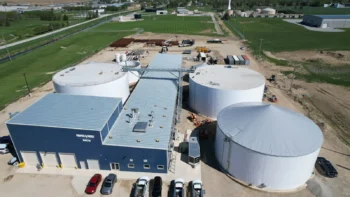
The facility converts wastewater and high-strength organic food waste residuals piped directly from Danone USA’s largest U.S. yogurt manufacturing facility — and from other regional food and beverage producers — into renewable biogas, water treated to municipal discharge standards, and nutrient-rich soil amendments.
PurposeEnergy says the Minster facility represents an investment of more than $40 million and is the company’s first project with Danone.
It’s designed to process up to 250,000 gallons per day, and when it’s fully ramped up, the facility is expected to produce about 50 billion BTUs (British Thermal Units) of renewable biogas per year. That’s the equivalent of 14.7 million kWh of energy, enough to power 1,432 average U.S. homes for one year.
The biogas is then piped back to a dedicated boiler at Danone’s Minster plant, where it displaces conventional natural gas currently being used to power the facility. PurposeEnergy says that, using standard EPA/EIA combustion emission factors, this is equivalent to displacing approximately 3,200 U.S. tons of CO2e (carbon dioxide equivalent) per year.
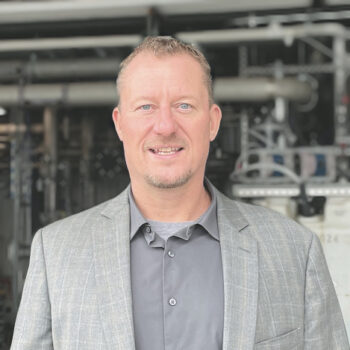
“This project is an excellent example of PurposeEnergy’s role in creating circularity benefits for food and beverage manufacturing,” said Eric Fitch, founder and CEO of PurposeEnergy. “Food manufacturers shouldn’t have to choose between growing production and meeting their environmental commitments.
“With this facility anchored near Danone’s Minster plant, we can give our partner a solution that supports both their goals.”
The partners say the project brings benefits to Danone, to the global environment, and also to the Village of Minster, because it reduces the demand on local municipal infrastructure. Water leaving the plant has already been treated to a level well above the village’s discharge standards, as the surplus nutrients and dissolved solids have been removed before the water reaches the local wastewater treatment plant.
PurposeEnergy estimates piping residuals directly from Danone’s Minster plant to the facility avoids about 720 U.S. tons of CO2e each year versus the previous off-site handling route.
“In Minster, sustainability isn’t just a goal for the future; it’s a commitment we build into our infrastructure today,” said Mayor Craig Oldiges. “By investing in local, resilient energy and smart growth, we ensure that our village remains as self-reliant, vibrant, and prosperous for the next generation as it is for us today.”
Heiko Gerling, chief operating officer of Danone Americas, says this partnership shows that successful companies don’t have to make a choice between cost savings and environmental stewardship. He argues that smart choices on sustainability can support corporate growth.

“The PurposeEnergy facility is an example of our Danone Impact Journey in action and part of our wider Re-Fuel energy excellence program, helping turn organic material from our Minster plant into renewable biogas that can be piped back to the plant and used through a new biogas boiler,” Gerling said. “What makes this project especially meaningful is how it brings together industry, local infrastructure, and community stakeholders around a shared goal.
“It is a powerful example of how operational growth and environmental stewardship can go hand in hand.”
The PurposeEnergy-Minster facility is now operational and ramping up its production of biogas, with a grand opening celebration planned for spring of 2027.