
Whichever side of the Lord of the Rings: The Rings of Power debate you fall on, or whether you’re a clear and present fangirl of The Boys, the last thing you’re likely thinking about when you settle into an Amazon Original series for the evening is its carbon emissions.
And quite frankly, why would you? Because, according to its 2022 Sustainability Report, the online behemoth is making the moves so that you don’t have to.
Already, its entertainment business has been reducing the use of fossil fuels from its production studios, deploying battery-electric generators, using solar-powered cast trailers, and scaling the use of electric vehicles on its sets.
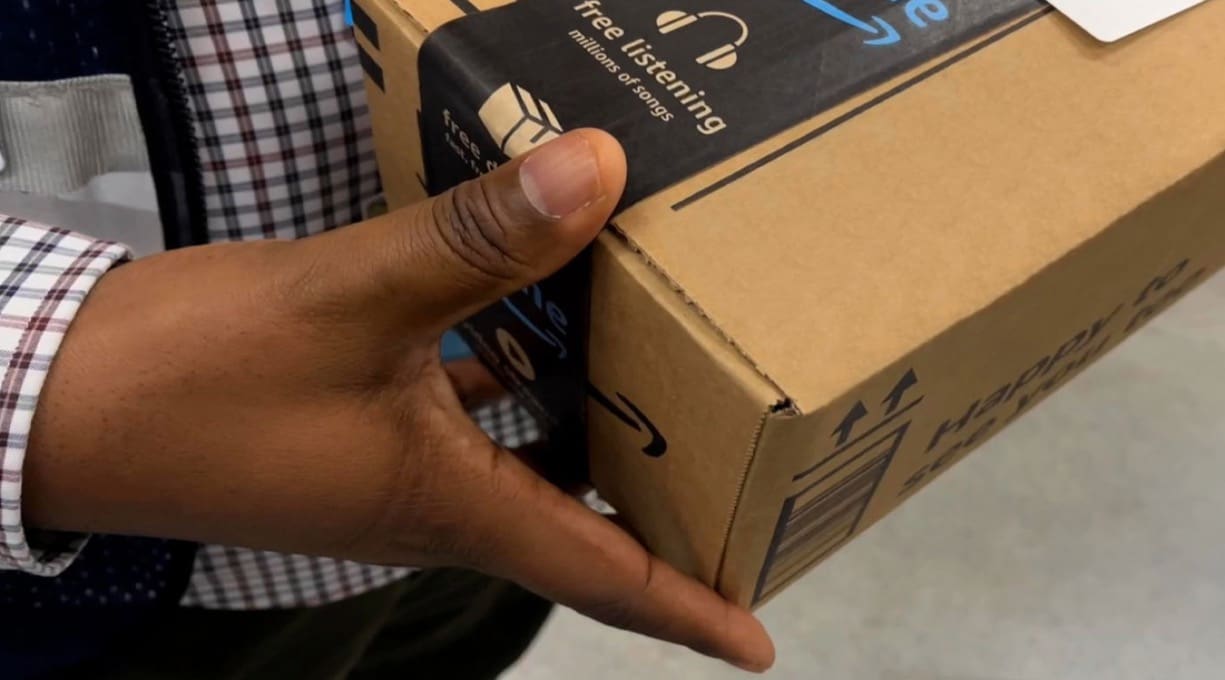
For the third year in a row, Amazon is the largest corporate buyer of renewable energy in the world – an area in which it continues to invest – and (on the e-commerce side of things) is currently in the process of transitioning its fleet to roll out 100,000 Rivian electric delivery vehicles by 2030.
So, you can now maybe forgive yourself a bit of guilt-free indulgence when streaming your next episode of Clarkson’s Farm.
This is all laid out in the opening letter of Amazon’s latest sustainability report, in which vice president of worldwide sustainability, Kara Hurst recites the very lengths to which the company is going to reduce its impact.
Whether you think of Amazon as an e-commerce company, an entertainment studio, cloud provider, a grocer, or all the above, this giant emblem of modernity wants us all to know it’s “making sustainability a priority across all of its businesses.”
The greatest evidence of this can be found in last week’s announcement that Amazon will be updating its Supply Chain Standards as of 2024 to require regular reporting and emissions goal setting from across all its suppliers.
With one of the largest value chains in the world, Amazon recognises that the ‘first step in reducing emissions is to understand them’ and as such has detailed its commitment to ‘supporting third parties in their own decarbonisation efforts.’
Using its scale, investment, and innovation to date, Amazon will “provide suppliers with products and tools that will help them reach their goals – whether those are transitioning to renewable energy or increasing access to sustainable materials.”
For suppliers, it’s a pretty big deal. But not an unexpected one. As its most visibly impactful area, Amazon’s e-commerce entity has been the face for the need to transition – and fast – away from single-use plastic in packaging, away from over-consumption, and away from resource-draining methods of operating for some time. And to its credit, it’s an area of its business Amazon has started to address most publicly.
In 2022, Amazon’s absolute carbon emissions decreased by 0.4%, largely thanks to what it cites as improved efficiencies in the business and continued investment in renewable energy. Breaking it down, however, Scope 1 emissions increased by 11% year-over-year, driven – it states – by business growth, increased transportation via Amazon Logistics rather than third parties, and an improvement in the way it calculates its emissions. Heavy investment in electric delivery vehicles that includes plans for a fleet of over 100,000 EVs on the road will go some way to reducing Scope 1 emissions between now and 2030, as will innovations being driven by Amazon’s packaging team and the machine learning algorithms already at play working to reduce packaging weight and wastage wherever possible.
But it’s in the wording of the report’s Scope 3 Emissions summary that we can perhaps uncover Amazon’s greatest intent. Down by 0.7% in 2022 despite its year-over-year growth, Amazon has so far seen decreases driven through improvements across building construction (the use of low-carbon concrete, for instance), leased buildings and equipment, and third-party transportations.
Its next task is to engage the wider supplier value chain to raise their own ambitions.
“We know that to further drive down emissions, we must ensure those in our supply chain make the operational changes necessary to decarbonise their businesses,” writes Kara in her report.
“To that end, we will update our Supply Chain Standards to require suppliers to share their carbon emissions data with us, including setting goals to reduce emissions as we work together to serve our customers.
“We will use our size and scale to benefit businesses that are committed to decarbonising by providing products and tools to both track emissions and help decrease them. And we will continue to look for suppliers that help us achieve our decarbonisation vision as we select partners for business opportunities.”
So it would seem there’s no debate to be had here, Amazon is laying a clearly marked pathway to hit Net Zero carbon emissions by 2040.
“It’s a focus we have maintained since we first announced The Climate Pledge in 2019,” writes Kara. “Through innovation, collaboration, determination, and a promise to deliver the best for our customers, we will achieve our goal, and most importantly, contribute to a future on a healthier planet.”