

Valued at around $3.6bn, according to the latest Top Global Licensors Report published this summer, the global Food and Beverage licensing sector is no trifling matter. An area now projected to see around 30% growth over the coming year, it’s also one that cannot outrun the importance of the sustainability conversation.
But interestingly, it’s not attempting to. Rather, there’s reason to believe it’s a sector very much on the verge of embracing it.
To a backdrop of conversation centred on the fragility of our global food networks this World Food Day (Monday, 16 October) and the importance of encouraging ‘climate-friendly’ diets, the Food and Beverage licensing sector may just be silently realigning itself with businesses more attuned to regenerative practices.
Recent data tracked by New Hope Network – which covers the natural consumer products goods industry – suggests that one of the Food & Beverage licensing sector’s fastest-growing trends is the organic market. In 2022, the natural and organic sector was estimated at $288.36 billion while industry data suggests consumers are increasingly adopting dietary and lifestyle changes that are bringing them closer to the whole foods market.
Among the Top Ten Trends identified at this year’s Natural Products Expo East – an Informa-owned trade show focused on the health food market – particular focus was placed upon brands now promoting the human-health perks of ‘planet-forward regenerative agriculture.’
Meanwhile, in conversation last month with Food & Beverage Insider, the official content provider for the leading health food and sourcing show, SupplySide and Food Ingredients North America, Darien Holman, sustainability specialist at the natural and sustainable food preservatives specialist, Corbion acknowledged that while crops are at the heart of the world’s food supply, the agricultural sector is “the second-largest source of greenhouse gas emissions globally,” and industries such as the farming of sugarcane, palm oil, and soybean oil have each “been linked to forced and child labour issues.”
He added that “sustainable agriculture has the potential to protect the planet, enhance the economic viability of the agricultural sector, and support the livelihoods and well-being of farmers and the communities they work in.”
Thankfully, there are a growing number of practices in many areas of agriculture now involved with protecting biodiversity; eliminating deforestation; ensuring stewardship of the air, soil, and water; and mitigating climate change.
There are also those working to tackle the long-standing issue regarding forced and child labour within the coca supply chain. And that can be found right on licensing’s very own doorstep.
Tony’s Chocolonely set out upon its mission to fight modern slavery in the chocolate industry and, over the course of the last 12 months and through a partnership with Unilever’s ethically-minded Ben & Jerry’s ice cream brand, brought that fight to the licensing industry. By partnering, not only did Tony’s and Ben & Jerry’s inject a fun new level of innovation to the Food & Beverage licensing market, but it also aligned two of the industry’s greatest pioneers on a mission to stamp out human rights abuse in the chocolate trade.
But the pair are far from the only ones to be taking what action they can.
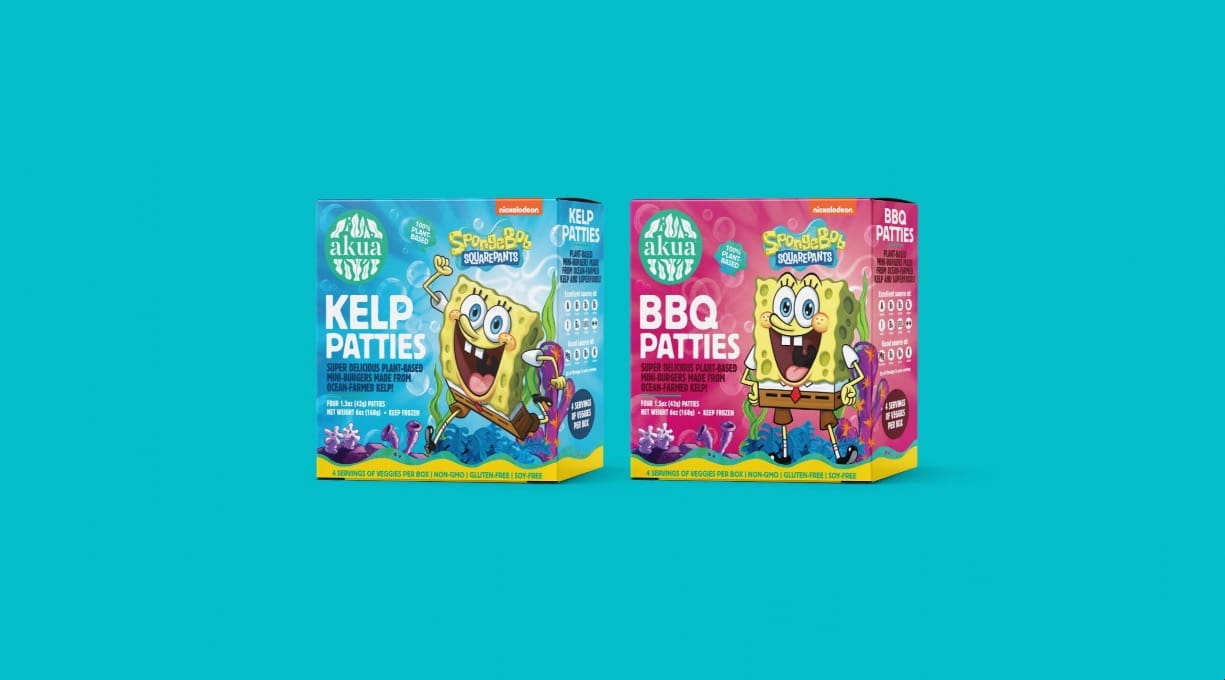
In June this year, Nickelodeon struck up a deal with Akua, the maker of the ‘world’s first’ kelp burger to place SpongeBob SquarePants front and centre of a new range of child-friendly Kelp Patties. Created to ‘make eco-friendly eating more appealing to children,’ the range launched in select US retailers and PLNT Burger locations in July.
The launch was aligned with Nickelodeon’s SpongeBob SquarePants Operation Sea Change – the brand owner’s ocean sustainability initiative that aims to encourage positive action through the power of the popular IP.
Founded in 2017, Akua specialises in meat and seafood alternatives made with kelp – a zero-input crop that requires no fresh water, fertilizer, feed, or arid land to grow.
“Akua’s Kelp Patties offer a delicious and nutritious option for kids while staying true to Akua’s mission of creating great-tasting and planet-friendly food choices,” said Courtney Boyd Myers, founder of Akua upon the launch of the range.
“Crafted from 100% sustainable ocean-farmed kelp, these kid-friendly patties are not only tasty by contribute to improving the health of little humans and the health of our vast oceans.”
Meanwhile, last year witnessed the cooking of a partnership between the upcycled ingredient and baked foods company Renewal Mill and Miyoko’s Creamery, a plant-based alternative dairy company, to launch a new line of vegan salted peanut butter cookies.
United by a shared mission to combat climate change through sustainable food innovation, the pairing was inspired by Project Drawdown – a leading climate change research organisation which pinpoints the reduction of food waste and the switch to a more plant-rich diet as “two of the top three things we can do to avoid global climate warming.”
“Creating artisan cookies made with Renewal Mill’s upcycled ingredients and Miyoko’s Creamery plant milk butter is a delicious way to help achieve both of these goals and put power back into the hands of consumer to make a difference,” said Caroline Cotto, co-founder of Renewal Mill.
The plant-based market itself is seeing something of a renaissance and it’s again according to New Hope Network that recent times has seen it cast off its tofu, seitan, and tempeh-based shackles to embrace an innovative new expanse of alternatives under its newest guide, Craft Vegan.
Beyond plant-based based burgers, nuggets, and cheese slices, Natural Products Expo is today witnessing the rise of ‘next-level veganism’ taking on forms including ‘long-aged hard cheeses and fine salamis, plant-based seafood, and dairy-free butters and creams.’
Closer to home, scientists at the Universities of Aberdeen, Glasgow, and Oxford have this week received a £940,000 award from the Wellcome Trust for a three-year project to investigate the potential of plant-based convenience foods in encouraging healthy, ‘climate-friendly’ diets that are affordable, practical, and compatible with modern lifestyles.
The study will work with groups of young women to understand the complexities of their lives and how this dictates their diets.
“Action needs to be taken to tackle climate change,” said Professor Jennie Macdiarmid, the University’s interdisciplinary director for health, nutrition, and wellbeing. “Transitioning towards climate friendly diets requires people to reduce meat consumption and increase plant-based food, as meat has a high carbon footprint which contributes significantly to global warming.
“The question we have to ask ourselves is how can we make healthy and climate-friendly diets that are appealing, practical, and affordable – therefore giving them a good chance of success?”
Perhaps a question for our industry is what will the Food & Beverage licensing sector’s role be within this adoption? And is this a market giving us some food for thought?