
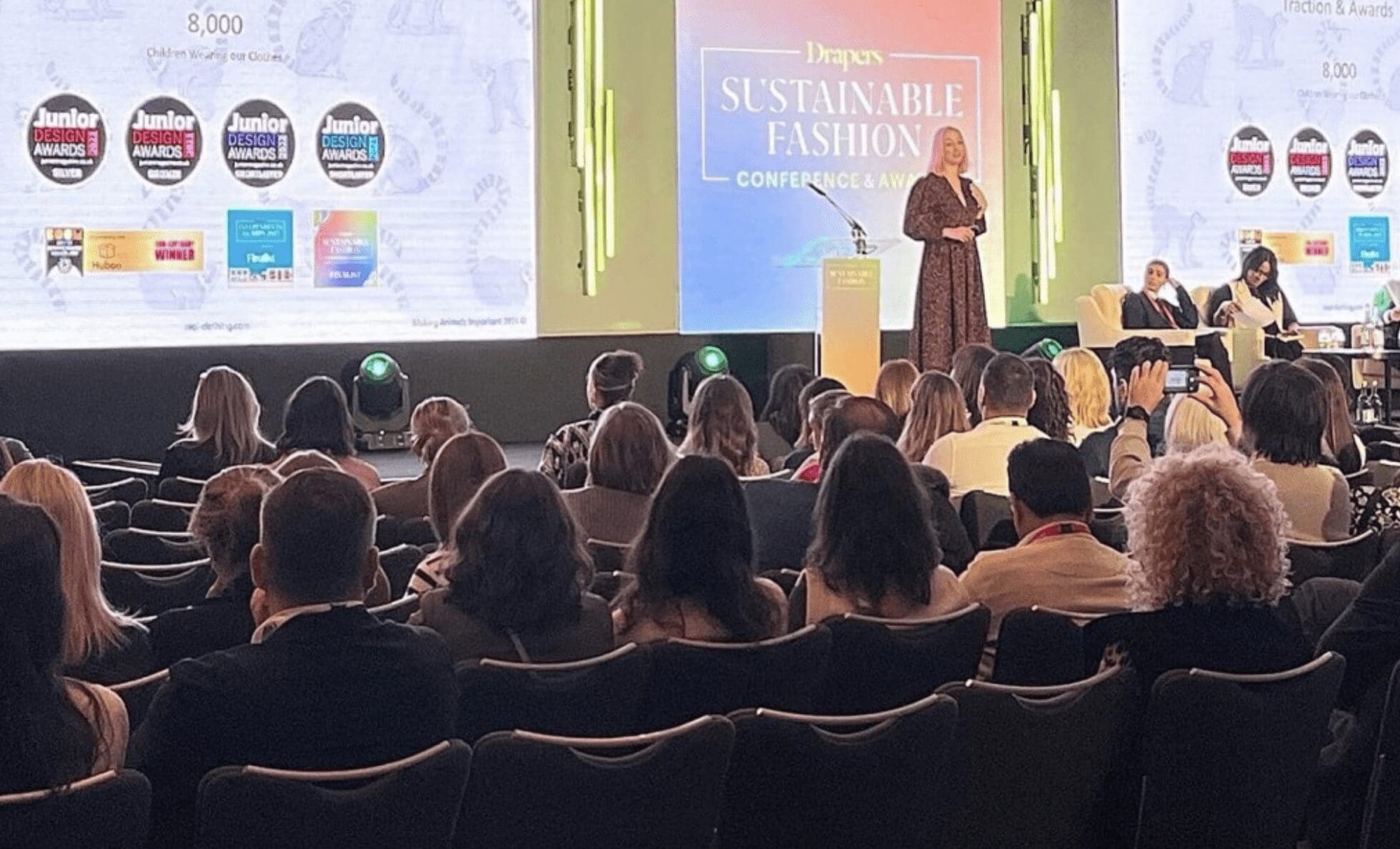
Products of Change’s Ambassador for Fashion, Julia Redman reports back from her day spent at the Drapers Sustainable Fashion Conference and Awards.
I was lucky enough to attend the Drapers Sustainable Fashion Conference and Awards this week, as a guest of MAI Clothing founder Tina Salt.
The day started with a “visionary insights” interview with Baroness Lola Young, who first introduced the concept of sustainable fashion to parliament over 14 years ago. She made the point that businesses should be self-policing but that this approach is clearly not working and needs the support of legislation to accelerate the pace of change. Baroness Young is introducing a private members bill with the aim of making it top of the agenda for the next government.
Incidentally, something I learned earlier in the week is that 40% of the world’s governments are facing elections over the next year, with significant potential to take focus away – in the short term, at least – from the climate change challenges we are facing.
Baroness Young made some very valid points regarding making sure that abuses of all kinds need to be addressed and removed from our supply chains; environmental harms eliminated; and that we take responsibility for communities in producing regions, particularly as we reconsider the benefits and potential of near-shoring production.
Sustainability in Drapers’ Den
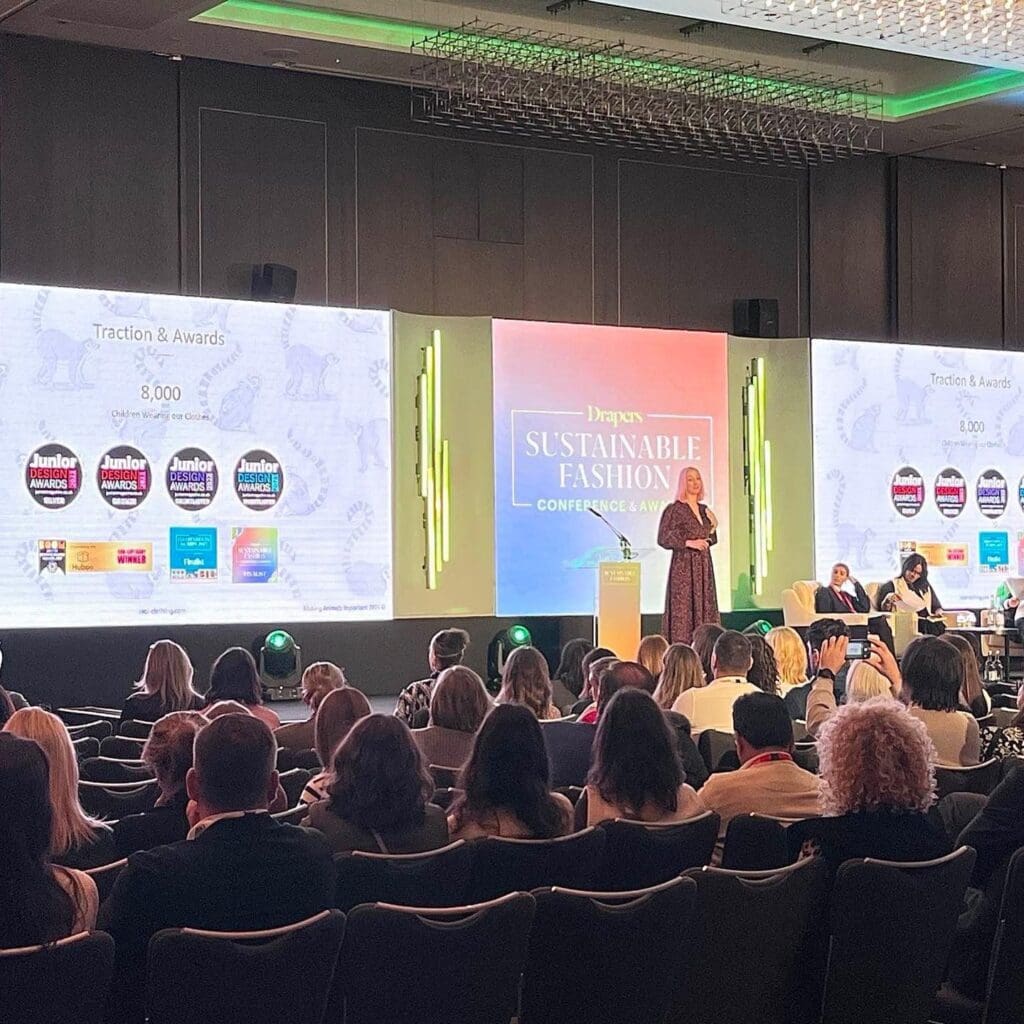
Next on stage was the “Drapers Den” featuring Drapers’ pick of the best sustainable start-ups battling for the title in the “One to Watch” award. Each of the 4 brands – MAI Clothing, Cape Cove, Pip & Henry, and Jorgen House – pitched their business case to a panel of judges, including actual Dragon himself, Touker Suleyman, with voting from the audience also contributing to the result. It must have been absolutely terrifying and very exciting for each of those brands, so congratulations to them all!
Next up were Stuart Greenfield (Advanced Supply Chain) and James Beard (Valpak) discussing Extended Producer Responsibility and the vote taking place this week on new EU legislation, considering the pace at which this will need to be understood and adopted by brands and retailers selling in the EU. Capturing data on emissions and waste etc throughout the supply chain, and dealing with the implementation of mandatory take-back schemes are just a couple of the challenges businesses will face.
The sustainability of fashion supply chains
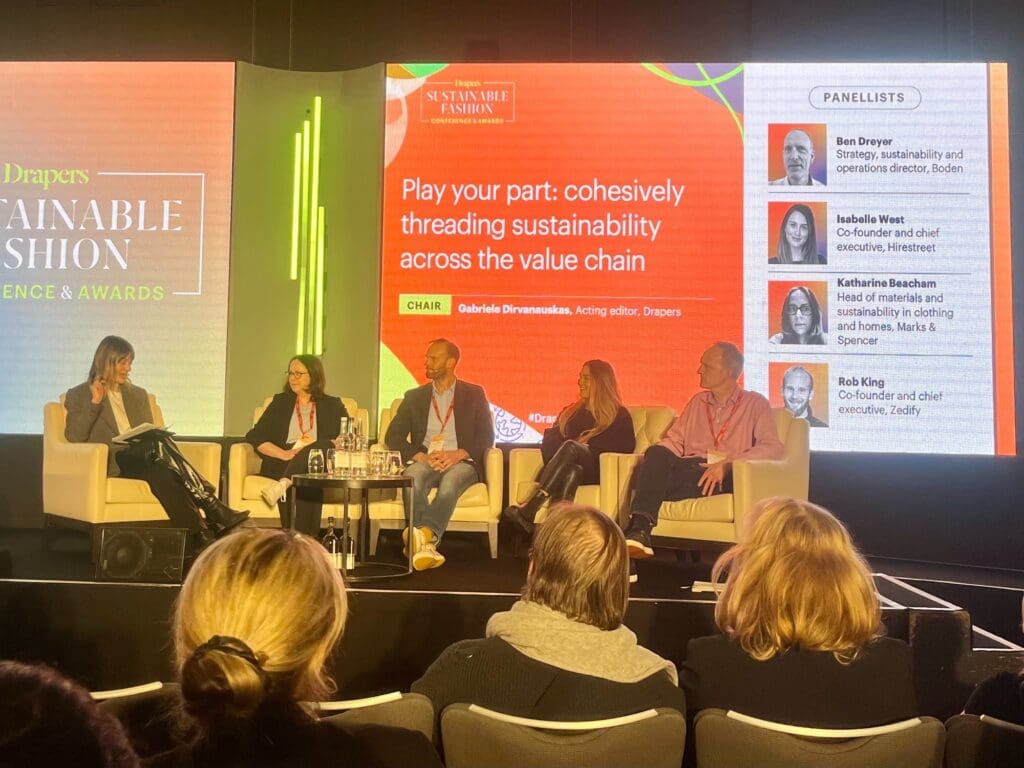
From a panel featuring Katharine Beacham (M&S), Rob King (Zedify), Ben Dreyer (Boden), and Isabelle West (Hirestreet), the discussion turned to the importance of “storytelling”, and ensuring that brand communication resonates with the customer. It was encouraging to learn that the biggest challenge for Hirestreet is around having enough stock/choice to meet the demand for sustainable fashion. The question was raised “could brands and retailers redirect returns for rental?”.
The next panel included speakers from The North Face, John Lewis, The Salvation Army Trading Company (SATCoL), and Finisterre. Interestingly, Catherine Loader from John Lewis Partnership pointed out that over 40% of people using their rental womenswear offer via HURR are new, younger customers to JLP. She identified the fact that introducing circularity can, in fact, be beneficial in terms of both sales and new customer engagement, making the commercial case for sustainability.
Majonne Frost from the SATCoL emphasised the importance of collaboration, discussing partnerships with retail take back schemes, for collection and resale, and the scope of their fibre sorting plant. Again, resonance with the customer was considered. Julian Lings from the North Face pointed out that the customer in Zermatt, for example, will have very different requirements and expectations in terms of durability, repairability etc, than the customer on Regent Street.
Marianne Gybels, Sustainability Director at Vinted, explained their mission to “make second hand first choice”, presenting some incredible statistics including that Vinted is present in 20 markets, and have 16 million members in the UK. The business has partnered with Vaayu to measure its impact and emissions, considering the entire cradle to consumer impact. Their success revolves around a very simple strategy: that the customer will buy into pre-loved if you “make it easy, make it affordable, and engage with consumers”.
I was very surprised to hear Marco Lucietti from Isko extolling the virtues of Polyester, based on the fact that its durability makes it viable for sustainable manufacture. I have to be honest and say that I disagree – it is derived from fossil fuels, contributing to the depletion of finite natural resources, and contributes high levels of pollution to our waterways in the form of microfibres.
Drapers’ day of insight and learning
The day was packed with key theme, revolving around the following:
- The commercial case for sustainability and the creation of value through finding greater benefit to people and planet with less cost.
- Traceability throughout the supply chain and the implementation of Digital Product Passports, amongst other legislation such as EPR and CSDDD.
- Customer engagement and interest in sustainable clothing: closing the gap between what customers say they want and what actually drives their purchasing decisions.
- Waste and the potential for collection, sorting, remaking, re-using, recycling.
- Collaboration – between brands and retailers, collection and sorting partners, software service providers, rental and resale businesses, impact data calculation partners, educators & legislators.
The day, as a whole, however probably raised more questions than answers around traceability of supply chain, reducing overproduction without the loss of livelihoods in producing regions, accelerating growth via circular business models, and tackling lack of recycling at scale to deal with textile waste.
Celebrating sustainable development with Drapers Awards
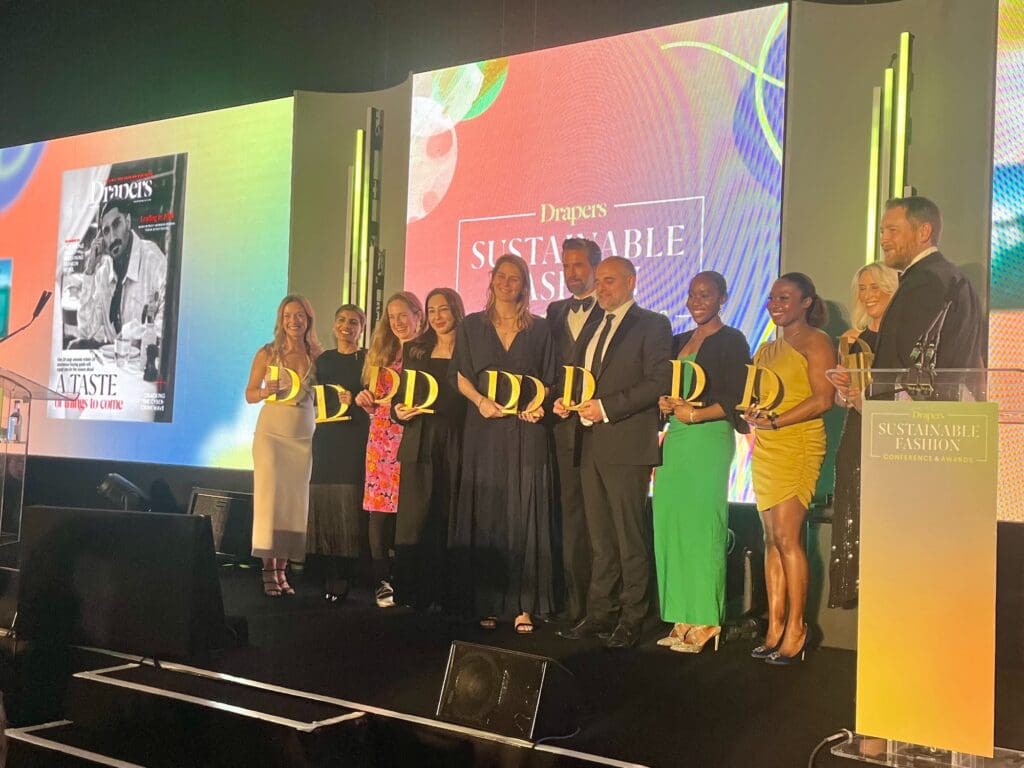
From the day’s conference, things moved into the evening awards. We found ourselves sharing a table with Bamboo Clothing, Designer Exchange, House of Kerry, and chatting to a whole collection of fascinating people. What was truly apparent was that everyone in this space accepts the industry, and the businesses they work for, are far from perfect. However, there is a collective willpower to make change happen.
Congratulations to all the finalists and winners, who included Cos, Primark, Zig & Star, Frugi, Nudea, The Salvation Army Trading Co, Asket, Fat Face, Pip & Henry, Outerknown, Hilos, Beyond Retro, Seasalt, and Jenny Holloway (Fashion Enter)!