
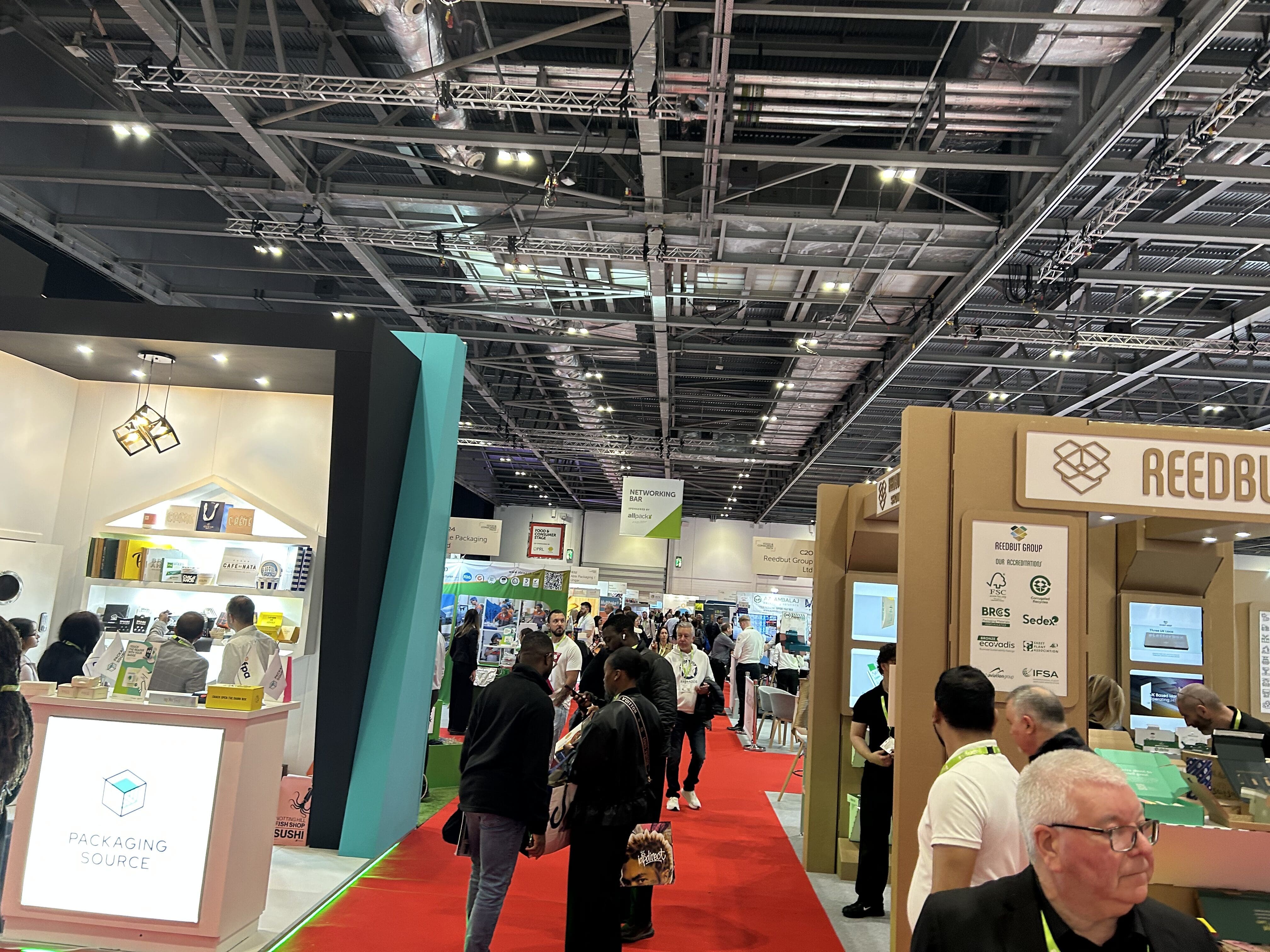
London Packaging Week this year offered a host of sustainable packaging innovations, with the conversations of EPR, lightweighting, recycled materials, and plastic-free options featuring heavily.
Products of Change was in attendance at London Packaging Week last week, hearing the latest updates in the speaker presentations, visiting the packaging pioneers exhibiting on the show floor, and keeping an eye-out for the most exciting innovations.
Mike Swain, POC’s Advisor for packaging was in attendance. Mike shares his thoughts on the event:
“Some great discussions were had during the presentations, particularly from DEFRA on pEPR. It is becoming much clearer what the route forward is and the plan to develop the Simpler Recycling and DRS (Deposit Return Scheme) for drinks containers. Although this is a huge challenge for any business placing packaging on the UK market, it is very much needed to readdress the balance between what packaging is put on the market and what it takes to clean it up.
“Also great to hear that overall, the industry is beginning to pick up the mantle and pay the first tranche of pEPR fees to Pack UK so the financial mechanisms are starting to come into action. The impression is the world of UK packaging is waiting for clarity before springing forward. It was also great to see so many new faces, a lot of eager young people coming into and starting their careers in the packaging world.
“Packaging Innovations at the NEC in February next year should provide much more insight into how the businesses are coping and progressing because of pEPR.”
Putting a label on recycling
Kathryn Brand, POC’s editor was also in attendance, and attended the talk ‘Designing for recycling and labelling,’ led by Jude Allan, interim MD, OPRL, and Alice Harlock, director of technical and member services, OPRL, a not for profit driving clearer recycling labelling in the UK. See below for a summary of the conversation:
The session emphasised the need to move beyond recycling as a stand-alone solution, despite OPRL’s work in recycling labelling, urging a holistic approach that incorporates reuse, refill, and – most critically – consumer understanding and support.
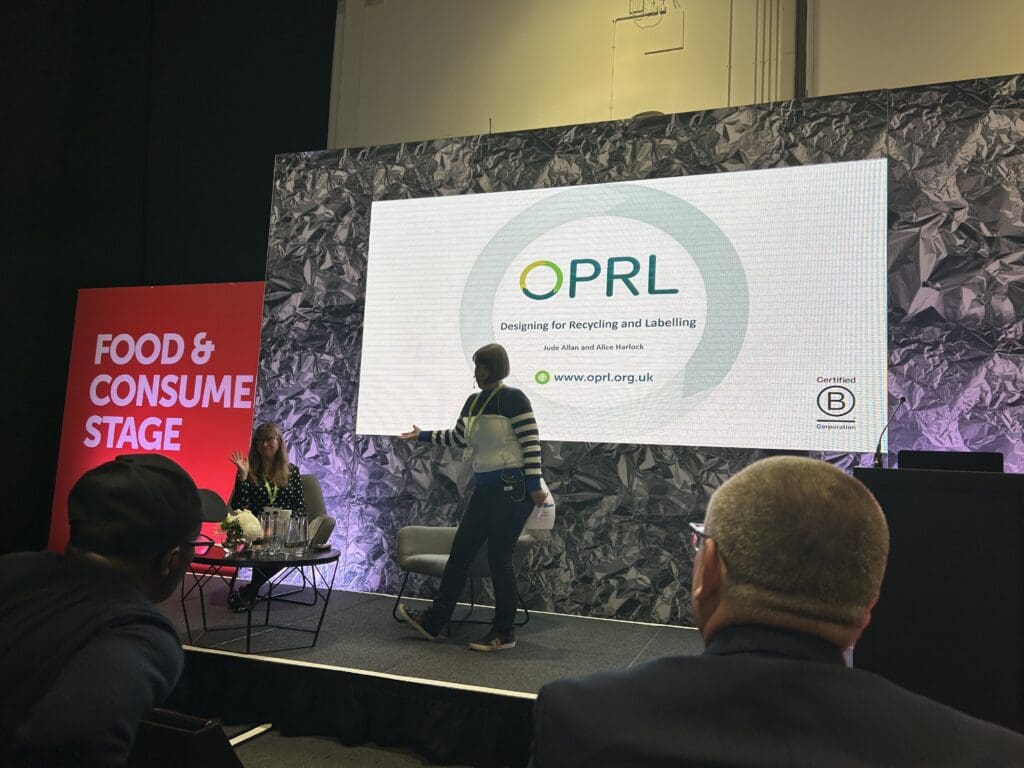
They highlighted the “three-legged stool” of incoming UK packaging legislation: Extended Producer Responsibility (EPR), which makes producers accountable for their packaging’s entire life-cycle; the push for consistent recycling (the “simple recycling” policy), aiming to harmonise waste collection across regions; and the eagerly awaited Deposit Return Scheme (DRS) for beverage containers, set to encourage higher recovery rates.
Central to the discussion was the introduction of the Recyclability Assessment Methodology (RAM) and its sister tool, the Recyclability Assessment Tool (RAT). These resources offer brands and designers a clear pathway to evaluate and improve the recyclability of packaging, supporting smarter decisions from the drawing board right through to end-of-life.
Jude and Alice were candid about the real-world balancing act: packaging must first protect products and prevent waste; sustainability cannot come at the expense of shelf life or product integrity. Yet, through tools like RAT, brands can optimise material choices while keeping an eye on both current and upcoming legislative requirements.
The speakers noted the challenge of pending mandatory labelling changes – further complicated by diverging UK and EU paths – but remained steadfast that clear, simple, and informative labels are crucial for consumer confidence and engagement.
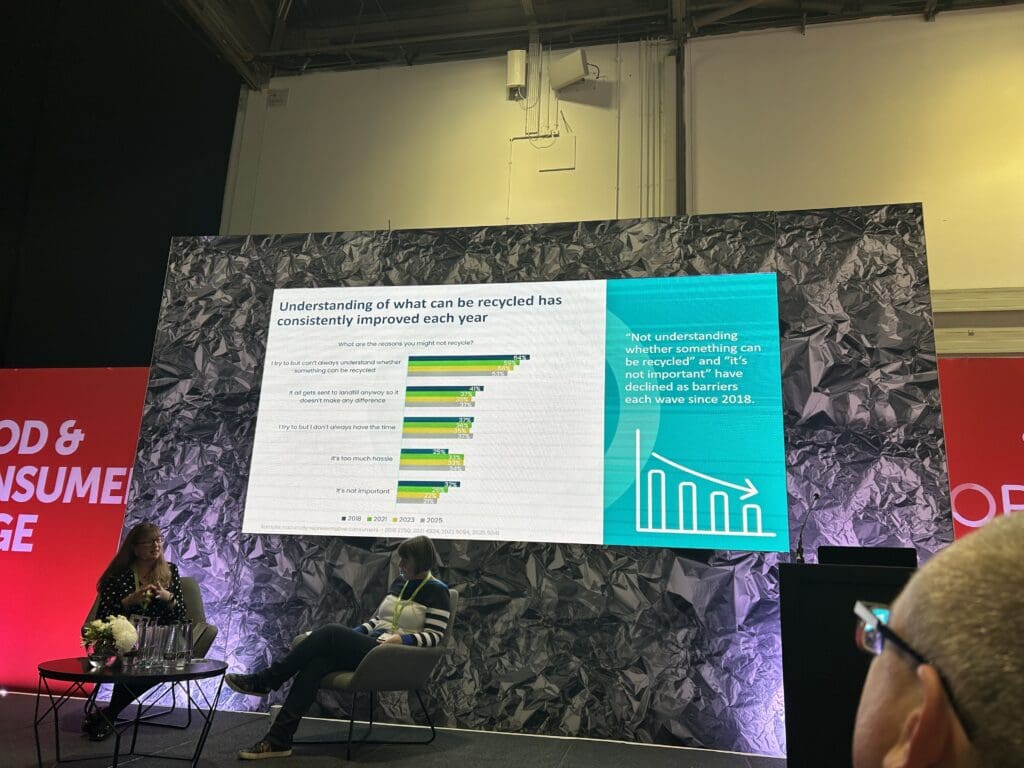
Research presented showed growing confidence among UK consumers in recycling, attributed largely to clearer on-pack instructions and educational efforts. Nevertheless, confusion persists, especially when recycling systems differ between regions or materials.
The session wrapped up by reaffirming the importance of collaboration across the value chain and the ongoing work needed to harmonise standards internationally, making recycling and responsible packaging accessible – and actionable – for all.
Trend spotting
So much of the content and conversation at London Packaging Week this year revolved around the conversation of sustainability – and rightly so. It is an area that is at the behest of both legislation and consumer pressures, and therefore it is the direction of all the most exciting – and necessary – innovation in packaging at the moment, as demonstrated by the Supplier Gallery at the show.
The Supplier Gallery spotlighted ten packaging breakthroughs “each one pushing the boundaries of design, material innovation, and functionality,” said the signage. There was a line-up of judges that assess the winner, but they also had the people’s choice winner, allowing visitors to vote by tapping their badges against the readers next to the products that they chose.
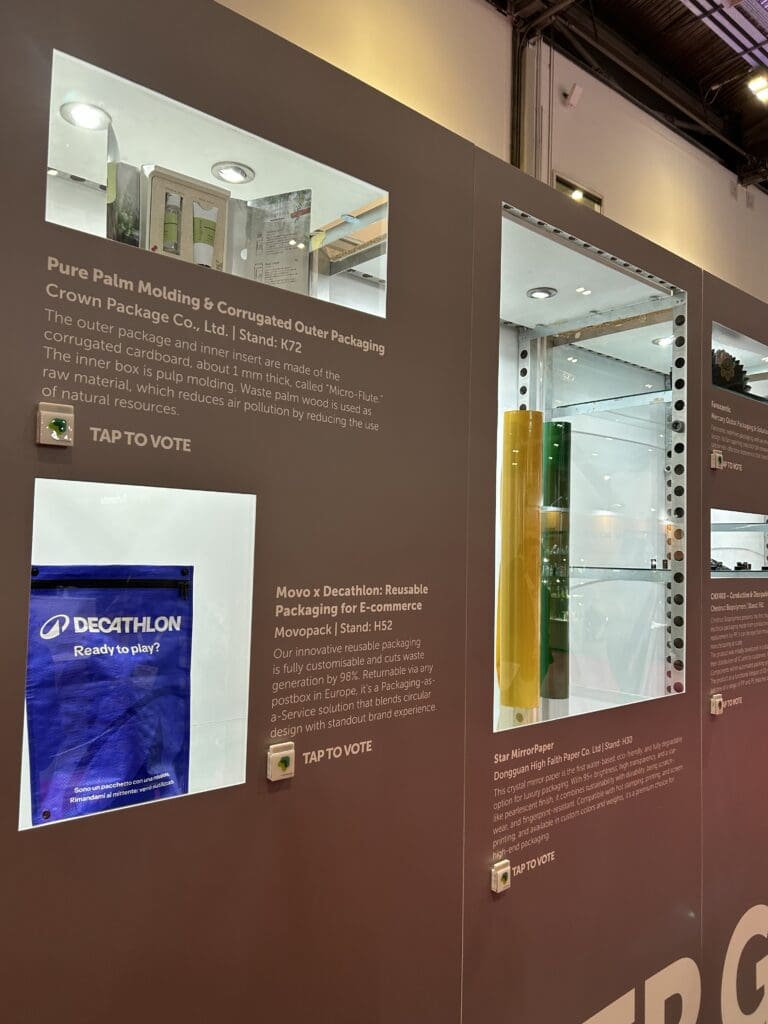
A stand-out in the Supplier Gallery line-up was Movopack’s Decathalon reusable packaging, which is returnable via any European post box to be reused and sent out again. This taps into the growing refillable and reusable trend in packaging, with a projected size of $62.60 billion by 2030 and a CAGR of about 5.7%. Innovations like this are one to watch as EPR legislation begins to hit companies and new solutions are sought.
London Packaging Week provided a fascinating precursor to the POC Conference, where packaging, its legislations and innovations will be rife on the agenda, particularly IKEA, Tesco, the LEGO Group, and RDP.