

It is the way of the world that everything has a cost. Money is at the core of everything and makes up the pillars upon which society has been built around the globe. So, why is it always the last subject to be raised when it comes to sustainability?
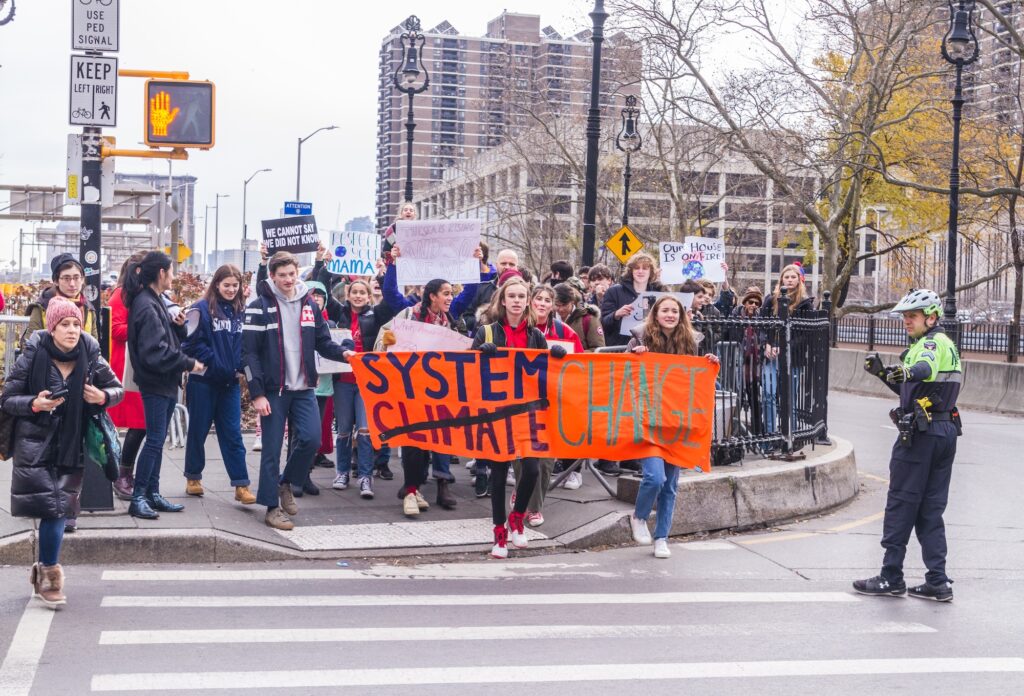
If we are, as we well ought to be, cognisant of the news, each day we are told the life-threatening effects of climate change are edging closer. Wildfires, searing temperatures, cyclones – we are fast becoming exposed to extremes in weather the likes we’ve not seen before and the worst of which is still to come.
Products of Change, over the last few years, has worked to make our industry more aware of our impact upon the planet and has explored the numerous ways in which we can start to reduce that. Rooted in the industry, POC has built a community of change-making members all of whom are, at some level, committed to transforming the industry for the better.
As an approach to sustainability, we are encouraged to have conversations. So, why do I feel the elephant in the room is still to be addressed? Why do I feel that until we seriously work out the commercial responsibility for the process change, it will all happen too slowly?
The way the world has evolved is built on the flow of money, it’s what makes society tick. Sustainability is now even part of the packaging that large corporate advice firms offer their clients – a strong ESG policy is a good way to attract investors. We cannot deny that sustainability is as much about the money as the next guy. So, let’s have that conversation.
Now, I’m not academic and I am certainly not qualified to suggest the changes we need to stop humanity hurtling towards its undoing. But, what 40-plus years in business has taught me is people like to know what the cost is in a clear package that allows them to decide if they buy into the offer.
If we take that theory and apply it to our own industry – and the players within it – perhaps we can start eking out what the deal should be? Just as many licensors have built-in fees charged to maintain the presence of their brand in the market through marketing, couldn’t some of that now be diverted to maintain the health of the planet?
It is the same throughout the commercial chain that exists from the exploitation of the IP in brands and licensing from production and sourcing house, through the agents and licensee to the retailers.
If we all commit to a measurable percentage of the profit available, the final cost charged to the consumer would be one that makes them buy into the offer. They’ll be able to see that everyone is sharing the cost, for the greater good.
Now, am I talking nonsense? Or should it be within our gift as an industry to come together and find a real solution to who should pay equitably to provide a small answer within the very complex situation we find ourselves? All I’m asking is we think about this and decide – is it something we could all, collectively, act upon?
Writing a sustainability strategy is the first step. But there is also a cost here that needs to be shared. Products of Change is – and should continue to be – wherever questions are asked and decisions on what to do are debated and made. And there are going to be a lot of elephants in the room along the way.
I’m addressing mine now. There is a possible equitable solution to the question of the cost of change within our industry. It is certainly worth a debate. And it’s one I will be bringing to the Sustainability in Licensing Conference next month.
Afterall, if simply asking the question can prompt a move to make sustainability as affordable as feasible to the end consumer, we can take that as a small win in this big topic. We’ve seen what government intervention can look like on this subject matter – just take a glance at things in France and New York State right now. We’ve a small window to set a new precedent for ourselves and let business lead us towards a better future.
There’s no harm in talking purpose and profit, you know.
About Jeremy
Jeremy Orriss is the licensing director at the apparel and licensed clothing specialist, Difuzed. Jeremy spent the first half of his working life in banking and finance, teaching him ‘something about money’, before he moved on to manage a global hairdressing business, teaching him ‘about people.’ For the second half, Jeremy fell into licensing and has spent 20 years trying to put into practice all he had previously learnt.
Jeremy will be speaking at the Sustainability in Licensing Conference on November 8 at the Royal Geographical Society where he will be joining a session starring the likes of the LEGO Group, The Walt Disney Company, DK Books, Mattel, and Bravado.
Book your tickets for the Sustainability in Licensing Conference here.