
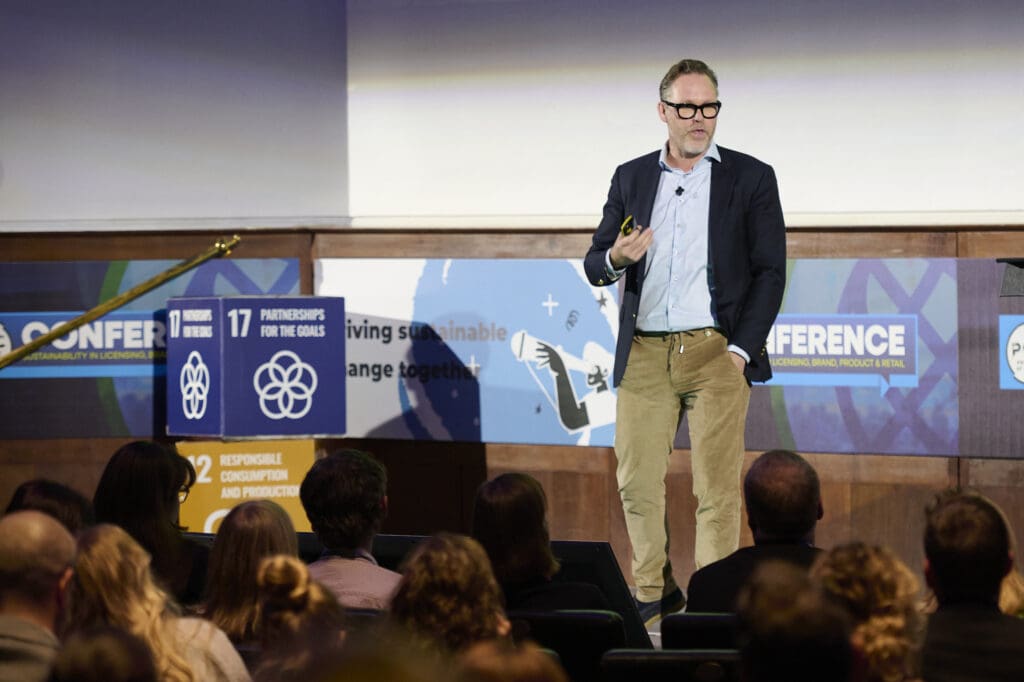
Hear from Nicolai Broby Eckert, senior partner at Simon-Kucher and author of The Demand Revolution, as he took Conference attendees through the research behind the consumer-driven mega trend that is sustainability.
Sustainability is, of course, at the centre of everything at Products of Change and within the community in which we operate – we know it is important, we know it is valuable, but having the empirical research into sustainability as a consumer movement really adds fuel to the fire of the business case for sustainability.
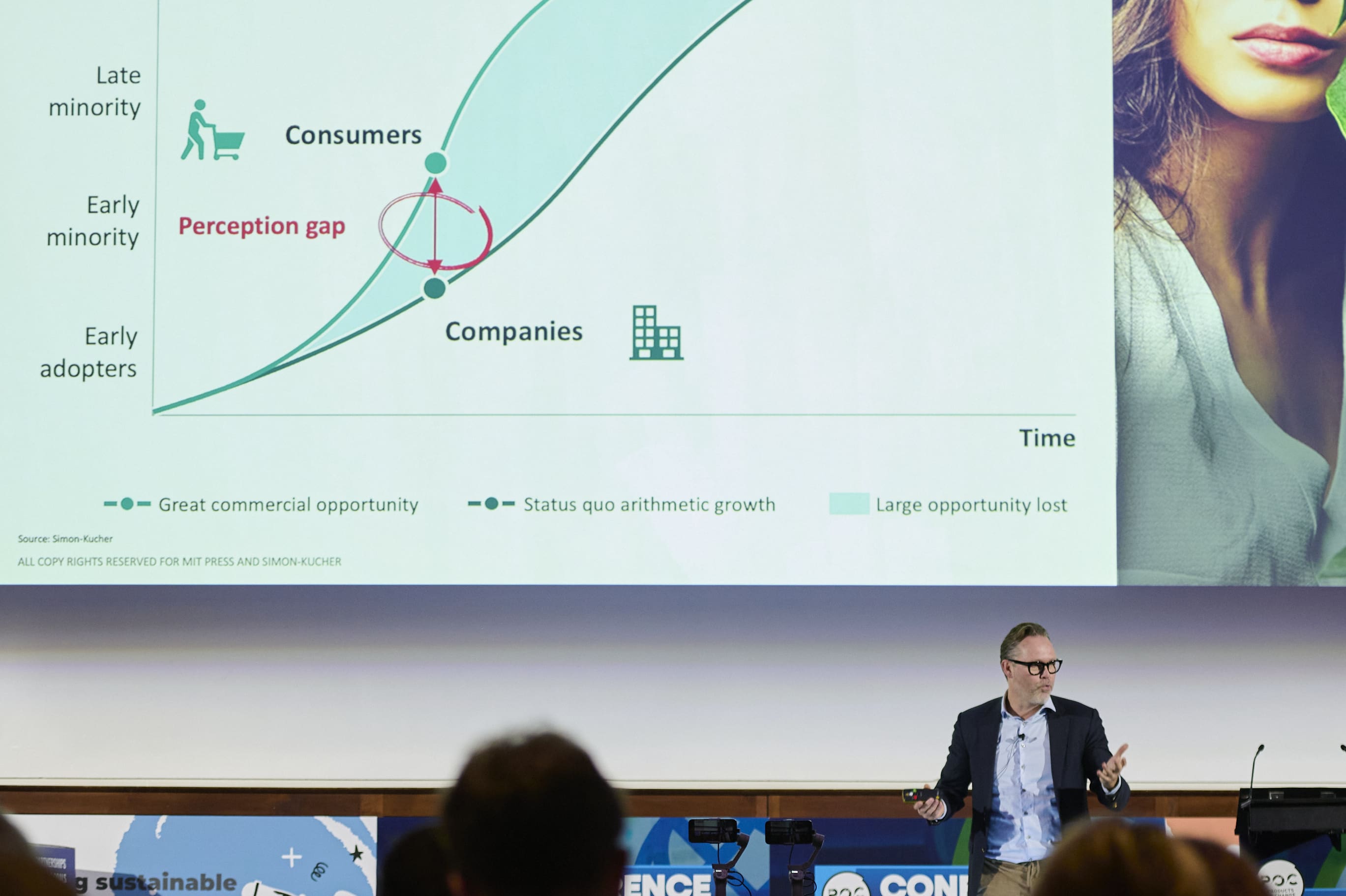
Nicolai Broby Eckert, senior partner at global strategy consulting firm, Simon-Kucher & Partners, did just that at the POC Conference last month, taking attendees through the research and findings publishing in new book The Demand Revolution.
The book itself is divided into four parts:
- The fatal disconnect – why are companies not seeing the opportunities in sustainability? Nicolai explained that we are seeing a lot of companies back track on sustainability targets as they believe that they are not seeing consumers wanting to pay the cost for it, or green product lines are not meeting their expectations. “This is why I wanted to write the book,” said Nicolai, “As consumer studies show an increasing interest in sustainability, with it becoming a more and more critical purchasing criteria, meanwhile companies are back tracking.”
- The demand revolution – what is the strategic opportunity in sustainability?
- The consumer’s call to action – Here they interviewed consumers on their feelings on sustainability and recount the findings.
- The growth imperative – the strategic plays and opportunities to grow through sustainability strategies.
There are two very common failure modes that companies do:
- The green premium – the idea that green is gold; that consumers want to pay a premium, but in reality very few consumers are – only about 8%. Companies misinterpret that as not being interested in sustainability and conflate willingness to pay with ability to pay. We are still in the midst of a cost of living crisis and making sustainable product purchasing choices often means a 30-40% cost increase.
- The quality premium – where companies are not willing to pay more so they make lower quality products that are sustainable. Consumers don’t want that either; a small amount of planet savers will but the majority are not willing to sacrifice basic product criteria.
There are another seven other failure modes laid out in the book but these two are the most prevalent.
“So why do we think sustainability is a big market opportunity?” asked Nicolai.
Simon-Kucher has done a lot of consumer research into the topic and uncovered a number of crucial findings.
Its study found that 78% of consumers have sustainability as one of their top 5 purchasing criteria in at least one product category.
“I have worked in this area for 25 years and have never seen a new purchasing criteria come up top 3 or 5 ranking,” commented Nicolai. The other criteria including the likes of price, brand, quality, and design.
“This is a major shift of consumer behaviour that I haven’t seen in 25 years,” emphasised Nicolai, making it the biggest consumer movement of the 21st century.
What companies misunderstand is that they think consumers are not willing to pay so they don’t think there is an interest – but actually consumers are already at the early majority stage, they just don’t have the options and/or they’re not affordable, explained Nicolai.
But it is important because if it is a consumer-driven mega trend, which Nicolai identifies it to be, it means there are already instant adoptors; “If you can deliver a sustainable product that is as good and affordable as other products, you will have a significant uptake in demand,” Nicolai said. So the companies that are first movers get a big market share very early on.
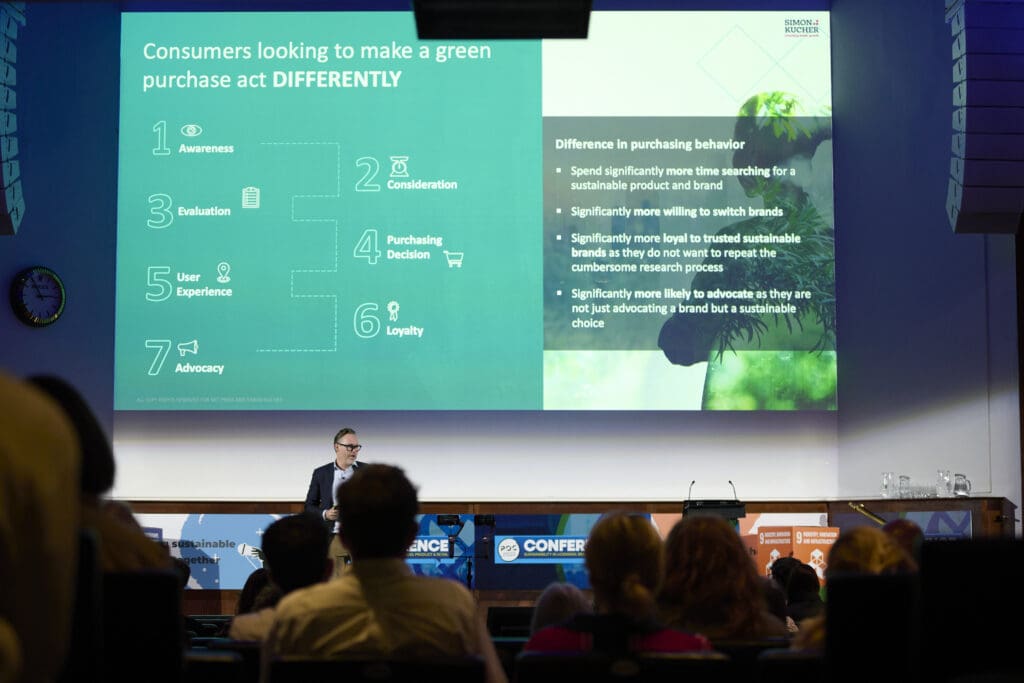
Consumers also behave differently when buying sustainable products:
- They usually start with one category and therefore spend significantly more time making purchasing decisions – this is a huge advantage as they will listen to what companies say and research the product.
- Consumers are much more willing to shift brands – they are looking for what’s sustainable and not just blindly trusting, they want to find the most sustainable product in that category.
- Equally once they have found a brand they like, they are much more likely to stick with it – they don’t want to keep doing research, so they stick with brand unless they don’t live up to promise. Sustainability consumers are much more loyal and are likely to buy another product category from the same brand.
- They are more likely to advocate for your brand – as they are not just advocating for a brand but a personal choice.
“Companies view sustainability as a profit loss equation,” said Nicolai, but they need to look more holistically and at customer lifetime value.
Across the range of sustainable consumers, they fall into eight archetypes: image driven, champions, selective, thoughtful, skeptic, cost conscious, and planet saver. Only 15% of European and North American consumers are not interested in buying and/or paying for sustainable products, leaving 85% who are interested, in differing degrees, as set out by the archetypes.
Nicolai then outlines the different strategic plays tot take in sustainability: longevity, brand play, mass affordability, antiwaste, ease of choice, engagement. These detail how you can integrate sustainability into corporate strategy.
It is important to understand what the degree of change in your specific industry is. Some are faster than others. And what is the speed of change? This is going to dictate how fast you need to move towards sustainability in your category.
Conference ticket holders can watch back the full Conference here with your unique passcode you can find in your emails (contact hello@productsofchange.com if any issues). You can also still purchase a digital Conference ticket and get full access to all the recordings of the day here.