
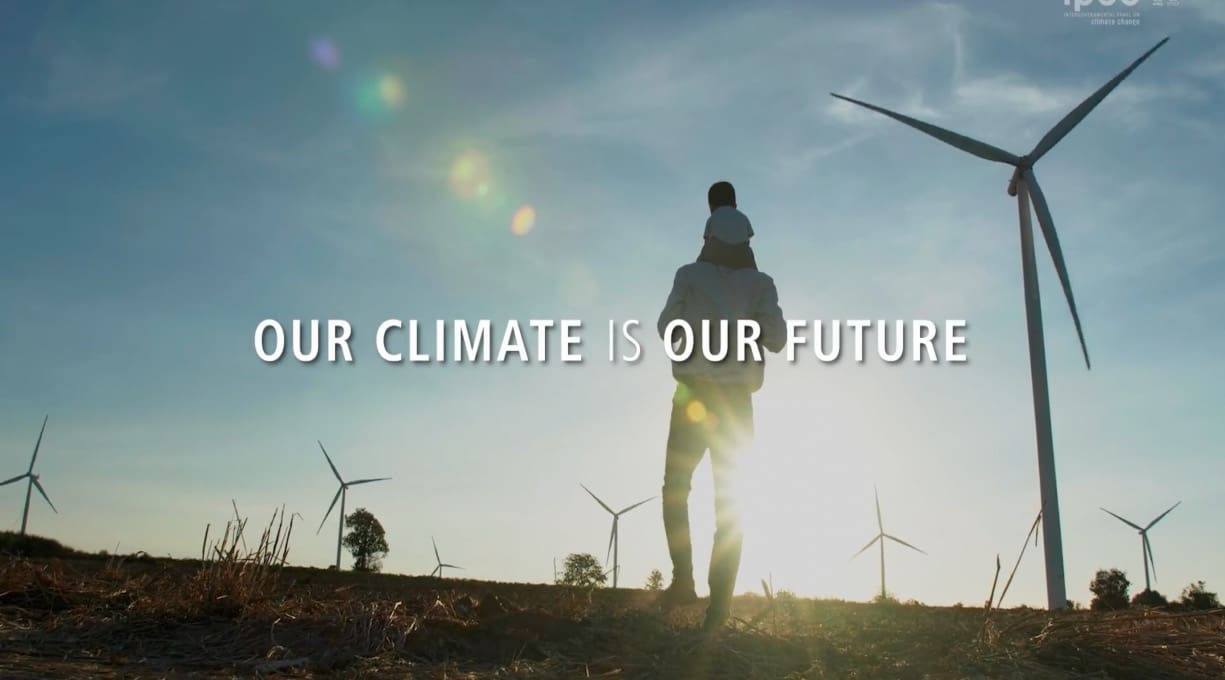
Taking swift and drastic action now is our only hope of averting irrevocable damage to the planet, scientists has stated in what has been delivered as a ‘final warning’ over the climate crisis before it is too late.
The Intergovernmental Panel on Climate Change (IPCC), made up of the world’s leading climate scientists, laid it all bare in the final part of its mammoth sixth assessment report on Monday: rising greenhouse gas emissions are pushing the world to the brink.
Amid what makes for some very startling reading, the IPCC has called upon – among other things – a ‘better understanding of the consequences of overconsumption’ to help people ‘make more informed choices.’
The comprehensive review of human knowledge of the climate crisis took hundreds of scientists eight years to compile. The UN secretary general, Antonio Guterres has called the final instalment a ‘clarion call to massively fast-track climate efforts by every country and every sector and on every timeframe.’
“Our world needs climate action on all fronts: everything, everywhere, all at once,” he said.
It’s widely understood that Monday’s report – called the Synthesis report – will likely be the last such assessment while the world still has a chance of limiting global temperature rises to 1.5C above pre-industrial levels.
The report has spotlighted the rapid emission reductions needed to meet intermediate climate targets – reducing greenhouse gas emissions by 43% by 2030 and 60% by 2-35 to reach net zero by mid-century and avoid global temperatures exceeding the tipping point. It also recognises that current policies are off track to meet these targets, despite the range of cost-effective solutions available.
Countries are expected to assess their progress toward achieving these targets in the global UN climate summit COP28 later this year.
The wildlife charity, WWF is calling on leaders around the world to rapidly slash emissions across all sectors, boost efforts to build resilience to extreme weather events and protect and restore nature. IPCC science shows that nature has absorbed around 54% of human-related carbon dioxide emissions over the past decade. It is being called climate’s secret ally.
Dr Stephen Cornelius, WWF global deputy lead climate and energy, said: “the evidence is crystal clear, the science is unequivocal – it’s just the lack of political will that’ holding us back from the bold action that’s necessary to avert a climate catastrophe. Leaders who ignore the science of climate change are failing their people.
“Nature is our secret ally in the fight against climate change. Natural systems have absorbed 54% of human-related carbon dioxide emissions over the past decade and have slowed global warming and helped protect humanity from much more severe climate change risks.
“We can’t hope to limit warming to 1.5C, adapt to climate change, and save lives and livelihoods, unless we also act urgently to safeguard and restore nature. Nature is a non-negotiable part of the solution to the climate crisis.
The IPCC report has also called out the world’s population’s problem with overconsumption, stating that “10% of households with the highest per capita emissions contribute 34 to 45% of global consumption-based household greenhouse gases, while the bottom 50% contribute 13 to 15%.
The United Nations’ advocacy lead for sustainable fashion, Rachel Arthur, has highlighted the huge issue that the fashion industry has with overconsumption, responsible for producing an estimated 100 billion items of clothes each year.
Referencing a previous report from Hot or Cool Institute, she explained that the emissions of the richest 20% across G20 nations are 20 times higher than that of the poorest 20%.
“According to this analysis, the richest 20% in the UK need to reduce their fashion consumption footprint by 83% to reach the 1.5C target of the Paris Agreement,” she said.
“We’re now at the stage where every single piece of this conversation matters. And that means all of our choices. Including what we wear. There are lives depending on this fact the world over with risks to human health and ecosystems increasing with every increment of warming.”