
Guest article: Gary Symons, editor in chief, The Licensing Letter.
Four years ago the United Nations’ environment chief, Inger Andersen, said the devastating impacts of climate change are essentially “Nature sending us a message.”
Clearly, that message did not get through. Despite a series of commitments to reduce greenhouse gas emissions, the pace of global warming has increased, as has humanity’s appetite for fossil fuels.
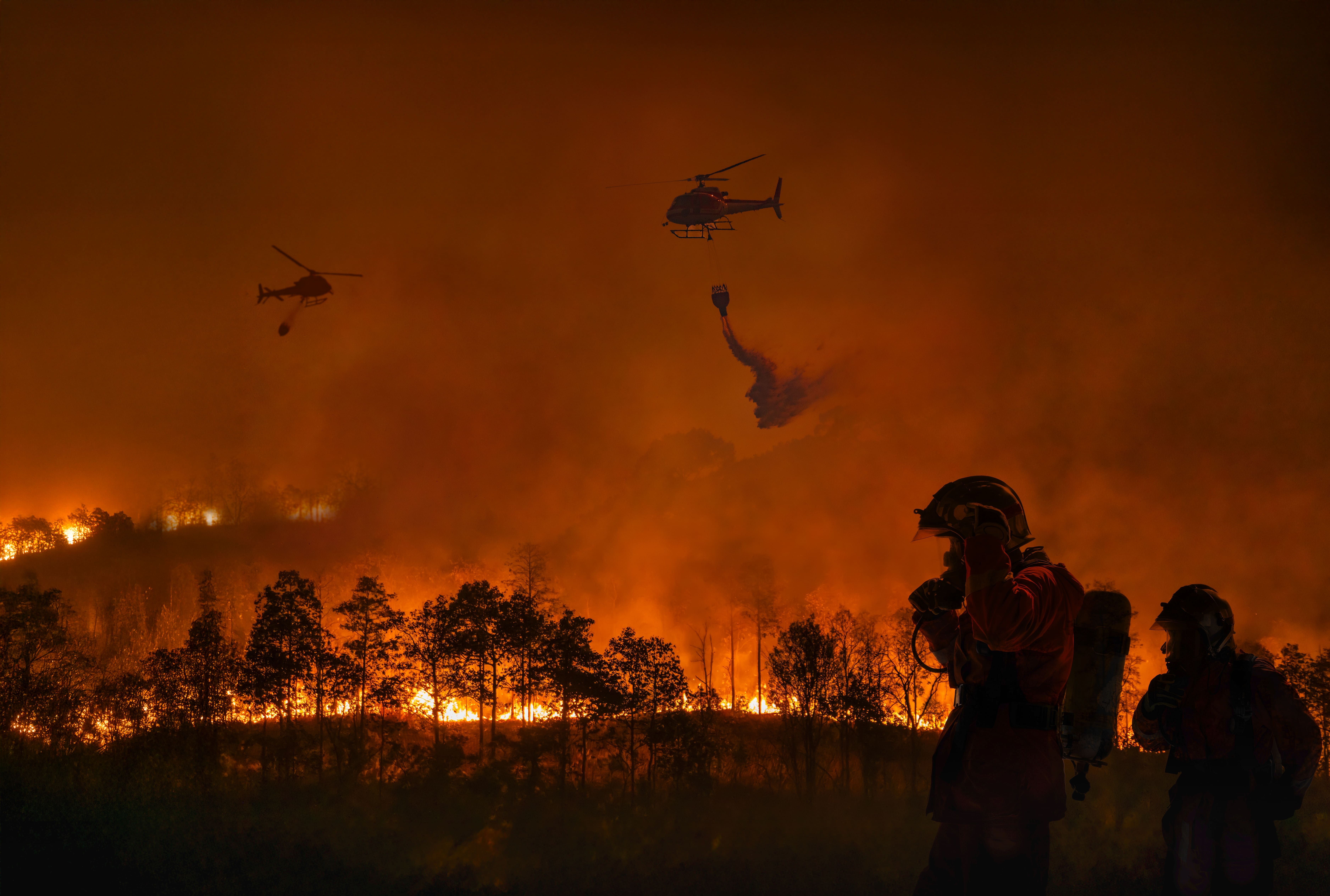
Perhaps annoyed by humans ignoring her repeated pleas for help, Mother Nature this year sent a stronger message directly to many of the greatest storytellers in the world by setting a large area of Los Angeles on fire.
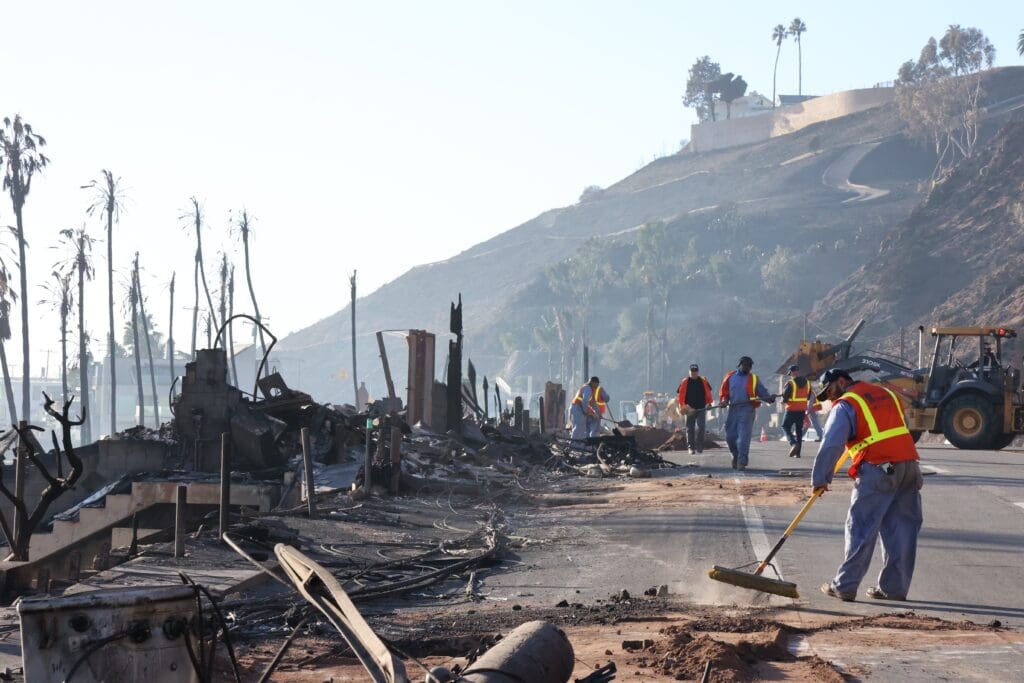
Even though January is typically not part of California’s fire season, high temperatures, low humidity and hurricane-strength winds combined to burn down more than 16,000 homes, many of them belonging to actors, directors, producers, and hundreds of other people who work in film and television. Worse, there were dozens of fatalities and many more people injured.
While much of the press centred on high profile celebrities who lost their multimillion dollar mansions, most of the affected people were those who work behind the scenes, and that is causing delays and cost overruns for film and television production.
That’s also bad news for the licensing industry, as entertainment licensing comprises $147.6 billion of the total $356 billion global licensing industry (Source: 2023 Study by Brandar Consulting for Licensing International). Anything that punches a hole in the US entertainment industry is also going to impact licensing.
So, what’s happening on the ground?
The entertainment union IATSE revealed that roughly 8,000 of their members were evacuated in the LA fires, and many of them lost their homes. Even while the fires were still raging, more than 200 GoFundMe campaigns were underway for entertainment union members whose homes had burned to the ground.
Philip Sokoloski, the VP of integrated communications with FilmLA, said the fires had an immediate and dramatic effect.
“On a shoot days basis, we were seeing about 50% of the activity that we did at that same time last year,” he said. “Permit application volume over that same period is down about 80%, so folks are taking a cautious approach to the resumption of filming.”
As well, Sokoloski says that in southern California, filming is returning to studio lots that have controlled environments. With on-location, that might take longer with evacuation zones still in place. “I think filmmakers understand and respect that the firefighters need room to do their work, and so the permits that we are coordinating are for areas outside of those places.”
It’s expected production will slow in California as entertainment workers scramble to put their lives back together, but there’s a long term impact on film and television production that will continue to get worse due to global warming.
Just as home insurance companies are raising prices or even cancelling coverage, so too are the companies that provide production insurance.
With wildfires now posing a threat year-round, any area prone to fire will face higher costs, says Kirk Pasich, an insurance lawyer at McGuireWoods. “So, if there’s a production in January or February in an area susceptible to winds, the price will go up.”
Experts say small studios will be hit hardest, as larger studios can balance the risk across multiple projects. Independent studios typically spend about two per cent of their budgets on insurance.
“I doubt it’s going to be tough to get a policy, but there are going to be higher premiums than you saw before,” says Bryan Sullivan, an entertainment lawyer who handles a variety of business affairs for production companies. “And when you actually make a claim, there may be more pushback on certain obligations you have to take. You may have to find a similar location if there is an evacuation.”
There’s yet another factor at play that will influence film and TV production in California. In addition to production insurance, lenders require a “completion bond,” which is like another layer of insurance designed to make sure there is enough money for the production to be completed. However, the completion bond industry, like the insurance industry, is already in distress, as seen in the 2024 bankruptcy of industry leader Film Finances.
Experts in film production say these companies may decide that producing film and TV projects in areas prone to wildfires just isn’t worth the risk, and will be declared ‘unbondable’.
It’s as if the planet is sending Hollywood a pitch for a big budget climate disaster movie, with the distinct threat that if producers don’t green light the film, then nature will do it herself.
As The Hollywood Reporter noted in a feature article on January 17, film and TV production in southern California had already declined before the LA fires, due largely to competition from lower cost regions and countries, the impact of COVID, and the strikes by writers and actors.
Then, just as production was recovering, the LA fires have caused further work stoppages. It’s so bad that entertainment unions and workers are begging studios to keep producing series and films in the Los Angeles area.
“One of the biggest things you can do to help our city is to shoot here,” wrote prominent cinematographer and director Rachel Morrison (The Morning Show, The Mandalorian, The Fire Inside) in an Instagram post. “We have some of the best crews in the world who need work now more than ever.”
Unfortunately, there is no sign that the type of super-charged disasters we’re seeing as a result of climate change are going to stop any time soon. In fact, the cost America pays for these disasters has been climbing steadily, reaching an all-time high over the past 12 months.
According to data accumulated by AccuWeather, the financial cost of climate related damage to homes and businesses in the United States has reached between $693 to $799 billion dollars, and may climb higher as adjusters complete their assessments of the damage in Los Angeles.
To put that into some perspective, the federal budget for the United States is a little more than $6 trillion, so the damage from major disasters driven by climate change is now more than 10% of the cost of operating the entire US government, including the largest military on Earth.
As well, it’s very clear that the costs to the United States will keep climbing as hotter temperatures add more energy to the weather system, driving stronger hurricanes, wildfires, and tornados.
Given the sweeping scope of the damage across America and the rest of the world, Nature must be puzzled indeed at the almost total lack of any feature films on the topic. There are plenty of so-called ‘Cli-Fi’ novels out there, like American War and the Pulitzer Prize-winning Bewilderment, but almost no films or TV series that touch on the topic.
When I saw the film remake of Twisters last year, I was frankly bewildered that a film about stronger and more dangerous tornadoes didn’t even mention climate change. It turns out, that choice was deliberate.
“I just wanted to make sure that with the movie, we don’t ever feel like (it) is putting forward any message,” director Lee Isaac Chung explained in an interview with CNN. “I just don’t feel like films are meant to be message-oriented.”
It’s understandable that some film makers just want to produce entertainment, and it’s also true that many people just aren’t interested in acknowledging climate change. However, it’s equally true that fictional film and television have long been one of the most important ways storytellers can explore important and often uncomfortable topics.
An apropos example would be the film Don’t Look Up, which ironically explored the reluctance of humanity to acknowledge climate change, through the metaphor of a planet-killing meteor.
Given the massive damage being inflicted on the world by global warming, and the impact it is having on our economy and our industries, perhaps it’s time Hollywood got serious and explored the disaster epic of our times.