
Hear from experts within the POC Community as they share their insights and advice on the latest legislation at the POC Conference 2025.
Legislation is a hot topic over here at POC as for many of our members it is surrounded by the most questions and uncertainties. While it is an ever-evolving landscape, POC will continue to provide you with the most up-to-date information on legislation globally that affect you.
With that as the goal, we brought to POC Conference attendees this year a whistle-stop update of the most need-to-know legislation, presented by the experts at the heart of our community.
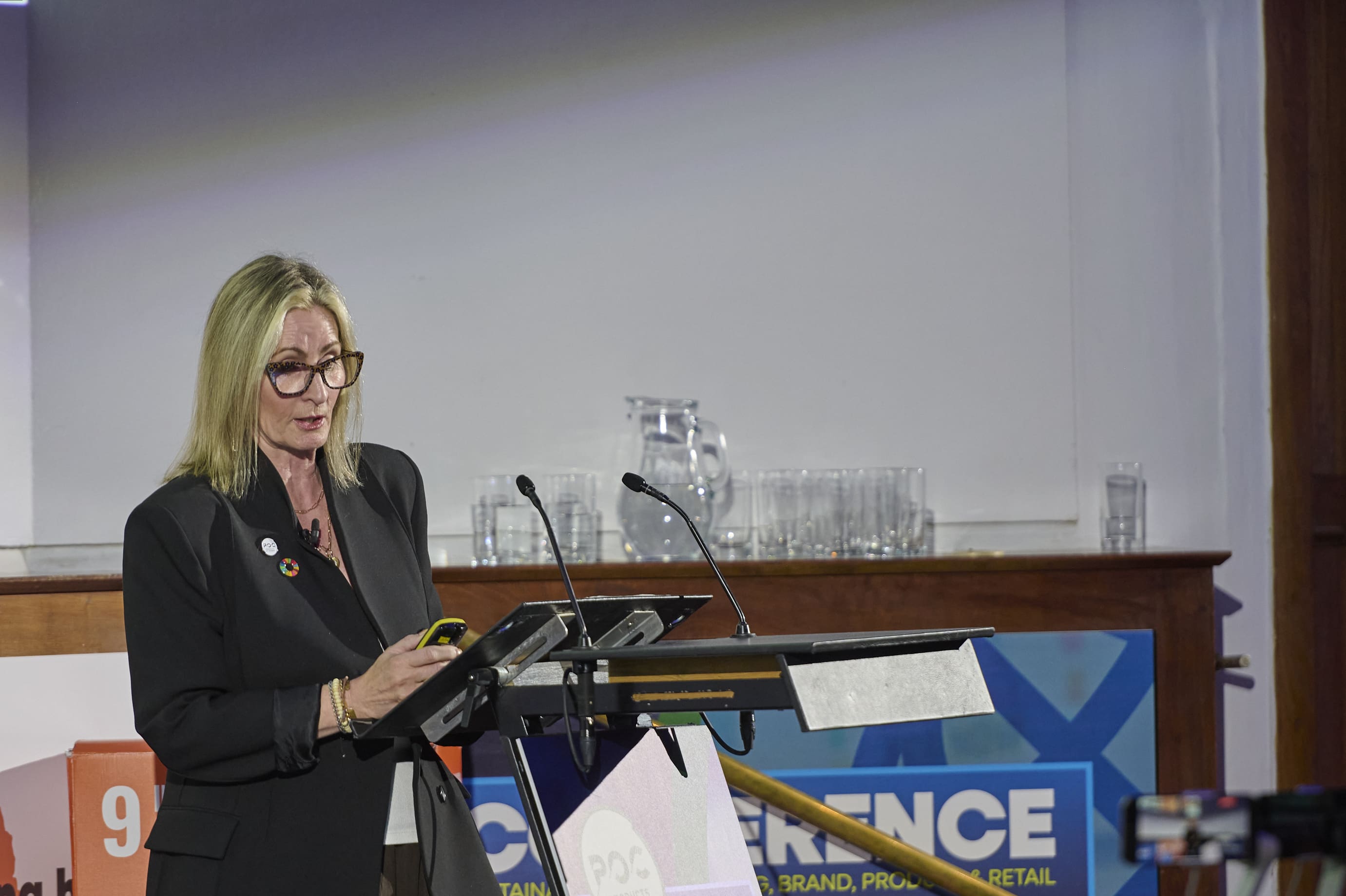
“While creativity and consumer demand are powerful forces for change, policy is what changes and shapes the systems we operate in,” said Helena, “And around the world those systems are shifting and shifting fast.”
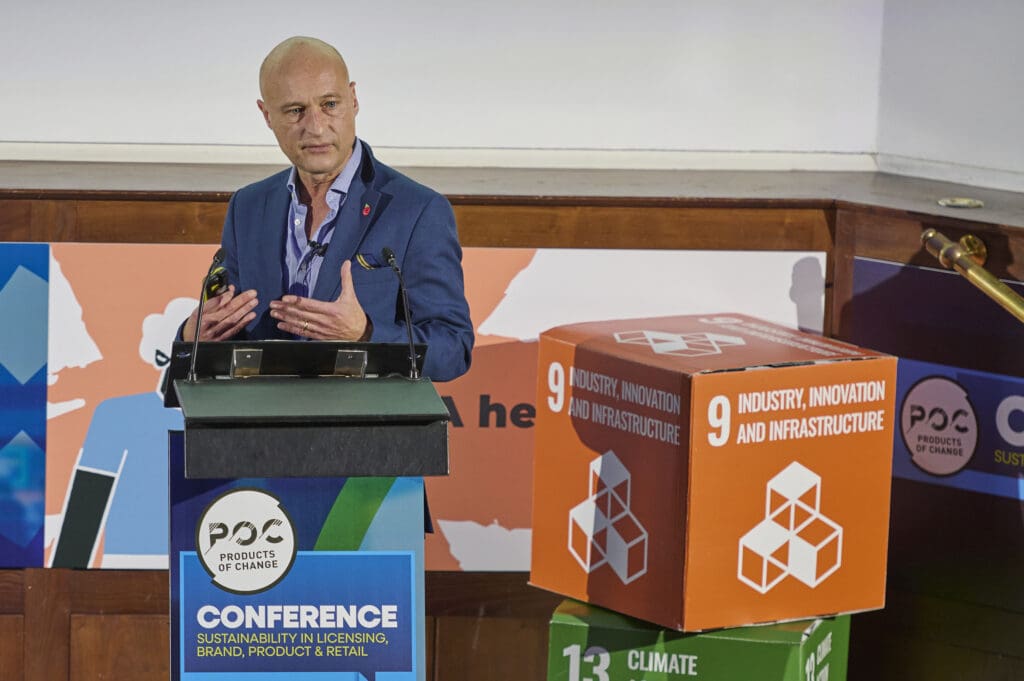
Jonathan Baker, chief commercial officer at Fabacus began the session with a look to Eco-design for Sustainable Product Regulation (ESPR).
“It is an area that crosses a myriad of regulation that mainly covers product, and connects a lot of people in the audience and is a focus for the licensing industry,” said JB.
While it is covered in different parts of the world, in the EU it is known as ESPR, and was enacted last year on 18 July.
It is a framework regulation, meaning that different things are being rolled out at different times and it will affect all products in Europe with the exception of food, feed and medicine by 2035.
JB says his main focus is on Europe since that is where Fabacus is based and it is part of the leading regulation in the big trading blocs. But there are other regulations taking place as well. For example, the United Nations has a Transparency Protocol: a digital language around traceability and a protocol that is being established across the world.
It is in its early stages and in piloting to fully scale it, but “Having a global standard makes a lot of sense in connecting the world across product and product impact,” said JB.
There is also big development in one of the biggest global sourcing hubs: China, which has already started areas of trialling and piloting Digital Product Passports (DPPs).
China conducts £410 billion worth of trade with Europe, and £360 billion with the US. “The economics in China relies on in terms of trading and access to markets is a very keen area that also gives the Chinese motivation to develop in this area, given the regulation that is coming through for Europe,” explained JB.
Then when it comes to the EU’s ESPR, there are different regulations rolling out at different times with different amounts of relevance to licensing but they all have one thing in common: they are physical goods sold at retail.
ESPR for car batteries, white goods, and elements for textiles have begin to come through for April 2027. But there are still details being worked through by specialist units, advising the EU on completing exactly what will be required to go in the DPP.
“It starts with lofty ambitions, like all regulations, but in practicality a phasing approach is often used, starting with a specific set of definitions. These were clarified this year but we already know the broad components,” said JB.
With toys, “they are an important piece, whether you work in it or not,” he said. They set the consumer demand commercially, and are already heavily regulated for safety directives. The safety regulation towards the end of this year will transfer itself into a DPP style framework.
Nobody’s Child, a sister company of Fabacus, is an example of the DPP in action; “It is not conceptional anymore, it is real and happening in the marketplace,” JB affirmed, adding that the commercial aspect goes beyond regulation: “marrying up commerciality with this is an opportunity to connect more directly with your consumers, not just for information purposes but to suggest other things they might like, to upsell, cross sell, or offer repair services.”
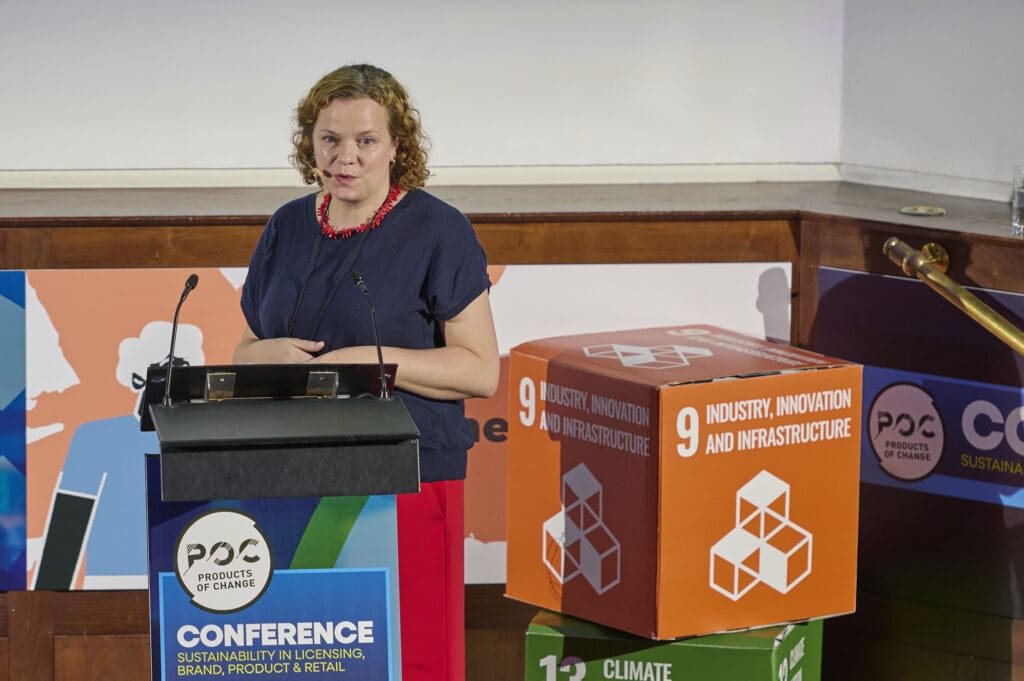
Taking to the stage next was Anna Halford, lead counsel, at the Walt Disney Company to speak on EPR.
“Circular economy is the theme of the day but also a defining theme in UK and EU regulation in the coming years,” Anna said, which was confirmed in the EU 2026 action plan, and is consulting on the upcoming Circular Economy Act now.
Extended Producer Responsibility (EPR) forms a central part of circular economy strategies. They work on a ‘polluter pays’ principle; producers are responsible since they made the product available and for the end of life management of the product.
The is particularly key when it comes to packaging; the EPR fees for packaging fund waste infrastructure, such as recycling processes and consumer education.
Eco modulation also a key feature of the regulation, whereby hard to recycle products have a higher fees, compared to easier to recycle products. “This encourages circular design at the outset,” said Anna, “A carrot and stick situation.”
It was orignally applied to batteries and electrical equipment but it is also now rolling out to other areas such as mattresses and tyres.
Regulations such as this are more prevalent worldwide than ever before. However, they are not harmonised or created on common rules, which creates challenges for businesses shipping internationally. “Strong communication between design manufacture sales and compliance teams really helps,” said Anna.
The Waste Framework Directive was published in September, which creates guidance for food and textile waste and a mandate for EPR schemes for textiles and footwear which have to be in place by April 2028. The modulated fees are a part of this, and are applicable to online selling as well as physical stores.
You have to be on the national producer registry for this, and it is going to create a big operational shift, Anna explained, “but it will also be interesting because it brings opportunities such as circular design, traceability, accountability, and brand integrity” to the fore.
It also serves as an acknowledgement of good actors trying to comply that have extra proof of effort, improving their access to the market.
Concluding up, Anna commented, “EPR schemes are here to stay and likely to become more central as we move towards a circular economy world.”
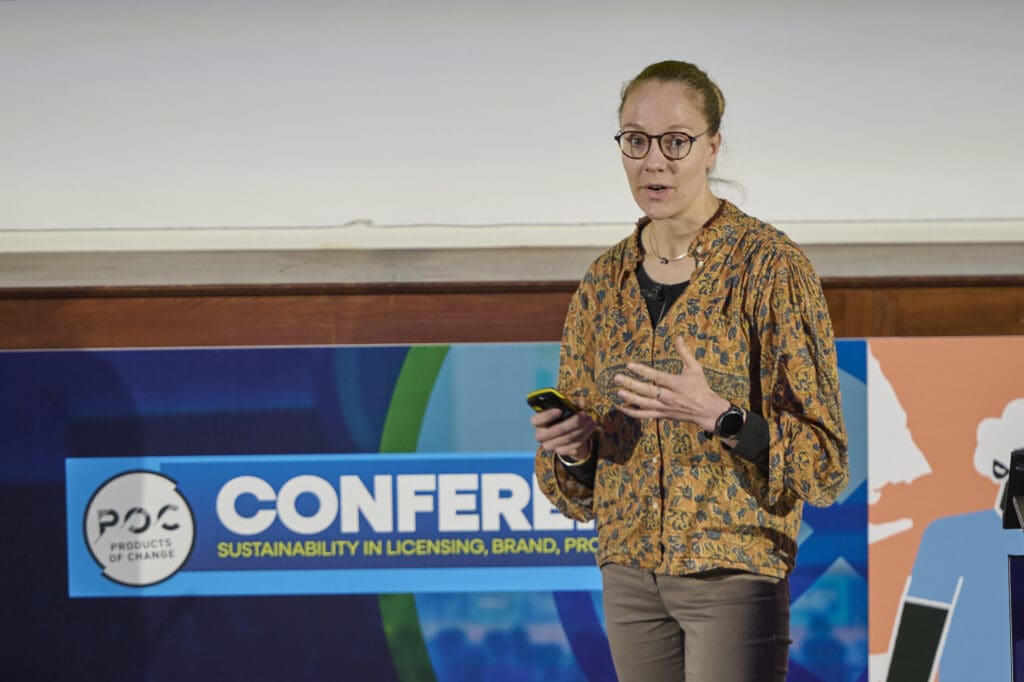
The next hot topic was EUDR, with Dr Mirjam Hazenbosch, sustainable business programme manager at the Zoological Society of London (ZSL).
ZSL is a conservation charity “working towards a world where wildlife thrives,” said Mirjam. While it is most famous for its London and Whipsnade zoos, ZSL does much more, such as partnering with businesses to support them to do more for nature. One such topic for it has been the EU Deforestation Regulation (EUDR).
“So why do we need the legislation?” asked Mirjam. Deforestation is a massive problem – we are losing our forests very rapidly, fuelling climate and biodiversity crises, she explained.
The main driver of deforestation is agricultural expansion, so the EU is attempting to curb deforestation especially when it comes to products sold on the EU market.
EUDR regulates seven commodities often linked to deforestation: rubber, palm oil, cocoa, wood, beef, soy, coffee, and any derived products that contain them.
Companies have to show that products that contain those commodities are deforestation free and produced legally. “Only then do you get due diligence statement and are allowed to put them on the EU market,” said Mirjam.
There is a lot of info you have to provide to get a due diligence statement, such as where the commodity was produced, its geo location and time of production, and a risk assessment to show the production was not linked to deforestation and was done legally.
“If there are any risks in your supply chain you need to mitigate them, such as through field audits or engaging local communities,” she explained.
If you don’t comply, you may be fined, your product confiscated, you may be temporarily excluded from public procurement, or prohibited to use simplified due diligence procedures, revealed Mirjam, “So it is better to comply.”
But the big questions is: is it relevant to my business?
“We are not entirely sure,” said Mirjam, “There are many twists and turns with the EUDR.”
It classifies companies as either operators or traders: operators if they first placed product in the European market and export it elsewhere, or trader if they buy from operators and sell it on.
The original version of EUDR meant both operators and large traders and retailers would have to have due diligence statements in place to sell on EU market, but now they are attempting to simplify it. The EU Commission is proposing only primary operators need to do due diligence statements and traders are off the hook.
“But it is only a proposal and it is not set in stone yet; a lot is up in the air as to who it applies to still.”
There is also still a lot of uncertainty as to when it should come into force. Originally it was 2024, then delayed to 2025, then 2026, but now they are saying for large and medium companies to stick to the 2025 deadline but with six month grace period. For micro and small companies, it’s by the end of 2026.
“We need the parliament and counsel to agree on it before anything is set in stone,” said Mirjam, “There is a lot of uncertainty, and a lot to navigate. The best advice I can give you is to stick with it, and if you have any questions about EUDR, reach out on LinkedIn.”
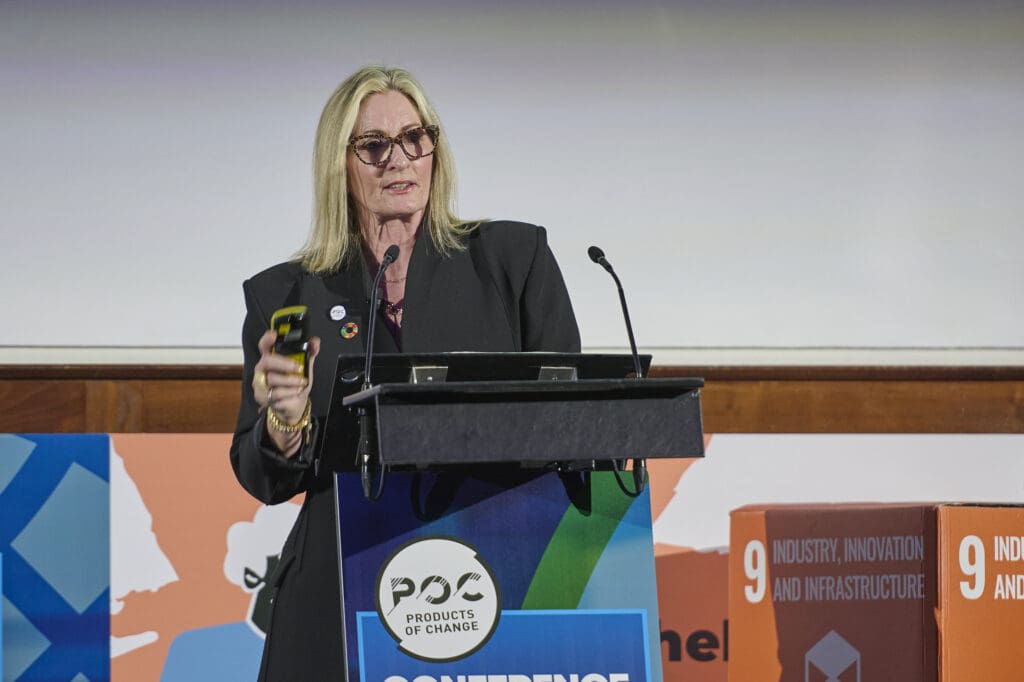
Last up was Andrea Green, POC advisor and US ambassador, with a look to the US.
Andrea began by acknowledging the large numbers of Americans and Canadians in the audience and online, and how this audience has grown since POC began.
“The last year has been very challenging,” Andrea admitted, “Last year I got on stage and cried – that was a very difficult day,” she said, referring to when the US presidential elections results were announced, “but today we have an election, things are looking up and I am very encouraged.”
Even with legislative headwinds, and the headlines everyone sees about dismantling US climate legislation, US companies are actually doing the work, Andrea explained, “and practising green hushing, which is doing it but not talking about it.”
There are a record number of companies reporting their sustainability: 99% of S&P500. And corporate America continues to innovate and push forward with more informative reporting on widespread topics.
“The 2030 targets are getting closer, and we are looking to the leaders of today making the decisions,” she said.
In terms of US and Canada legislation happening right now, “for continental America there is nothing, it is all happening state by state.”
In California there is the climate accountability package: SB 253 & SB 261, which means companies of a certain size, making up most of our licensors, will be reporting and that will be mandatory. Scope 3 starts in 2027 and will be mandatory – non-compliance is a hefty fine of $550,000.
There are EPR packaging laws in the works right now; Oregon, Colorado, California, Washington, Maine, Minnesota, and Canada all require producers to report their packaging. Fines have started to come down in the last six months with Oregon leading on this.
“It is great to see that the US is doing something and it will affect what we are all doing in the marketplace,” Andrea concluded.
POC published its Legislation Lookbook for BLE this year, which you can find here, and we are continuing to update you through our webinar programmes so stay up to date and join us as we continue to navigate the legislative field.
Conference ticket holders can watch back the full Conference here with your unique passcode you can find in your emails (contact hello@productsofchange.com if any issues). You can also still purchase a digital Conference ticket and get full access to all the recordings of the day here.