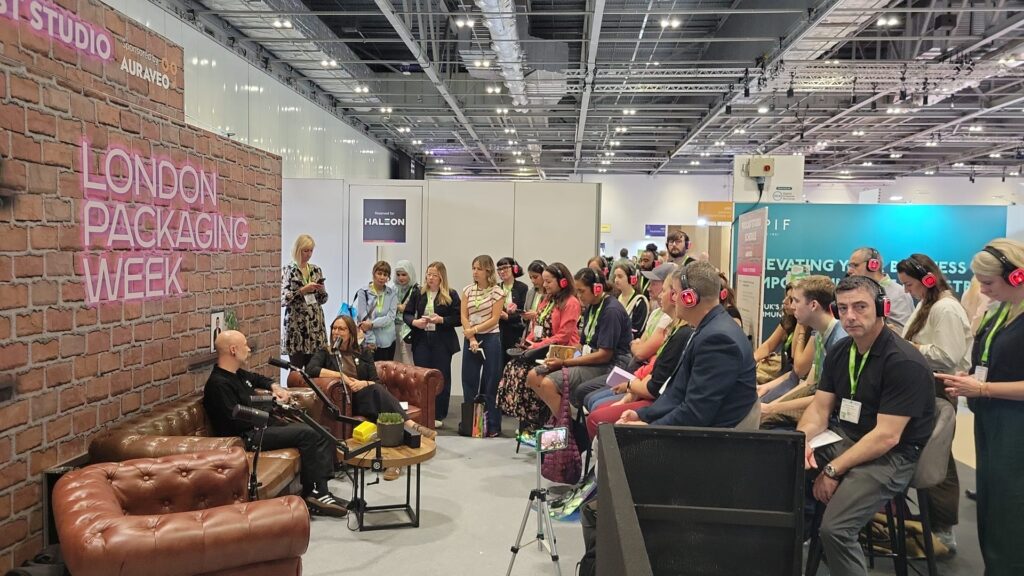

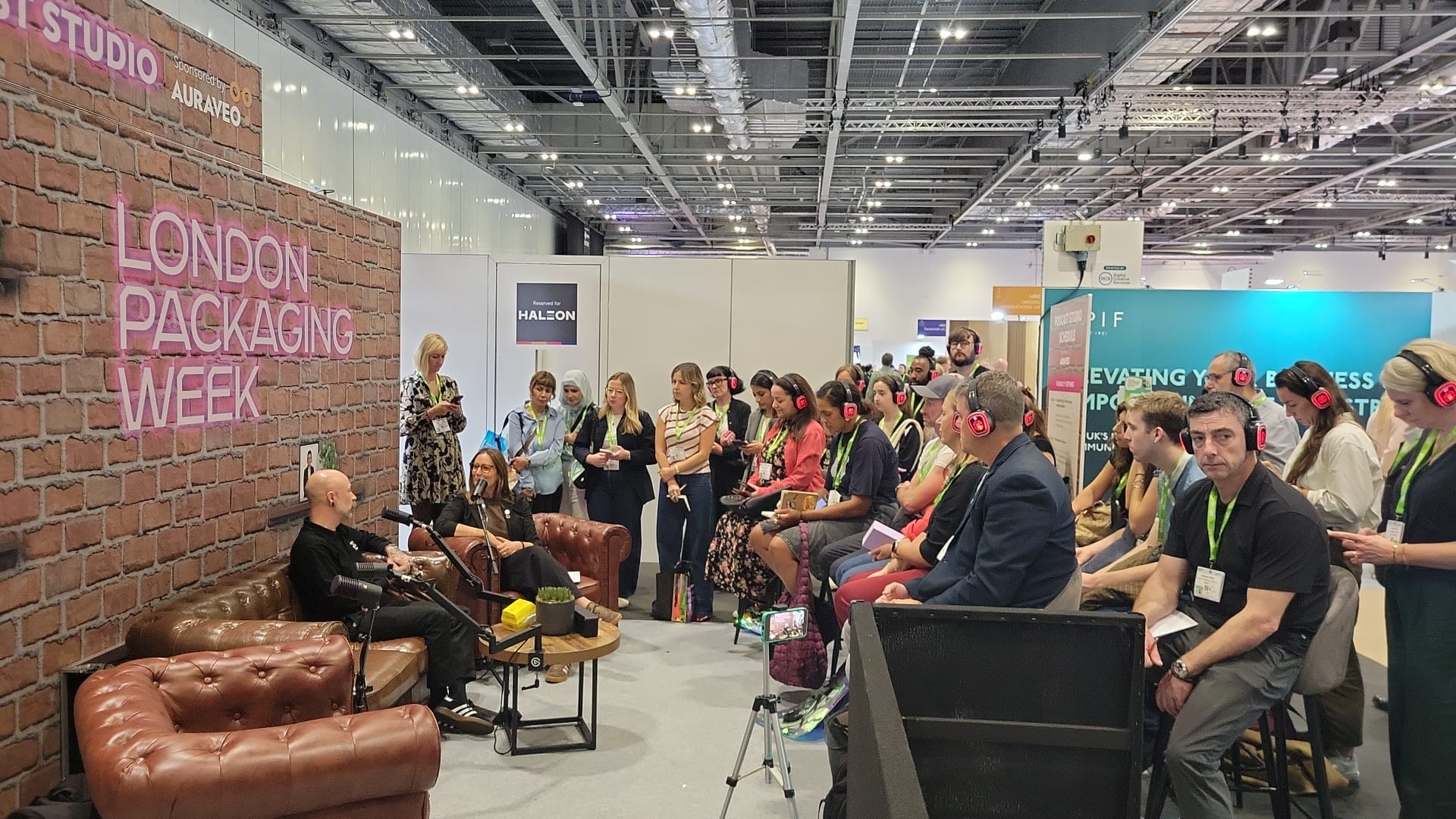
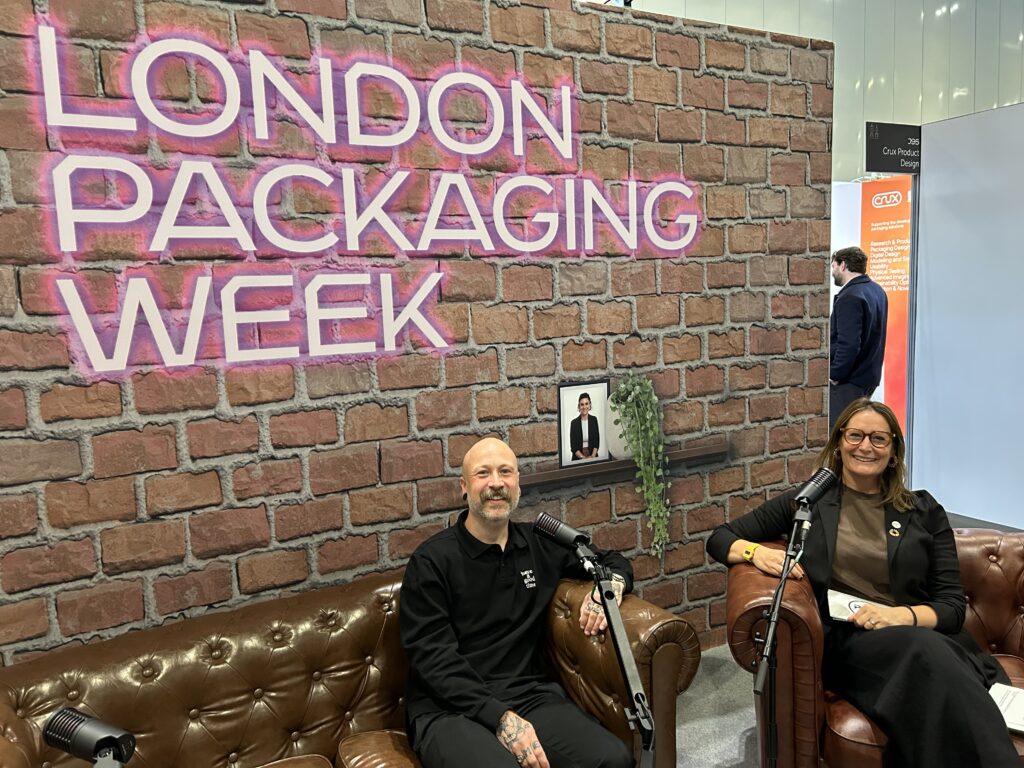
It was standing room only for the live Products of Change Podcast episode that POC’s founder, Helena Mansell-Stopher and Steve Sheffield from Lush held at London Packaging Week today (16 Sept).
London Packaging Week‘s new Live Podcast stage was filled beyond capacity for the session: Beyond the black pot: How Lush is rethinking products, packaging and circularity. The discussion, asked: what happens when one of the world’s most disruptive retailers embraces brand licensing?
POC’s founder and CEO, Helena Mansell-Stopher, had the pleasure of interviewing Steve Sheffield, licensing and commercial partnerships executive at Lush, live at London Packaging Week for a special episode of the Products of Change From Intent to Impact Podcast.
Lush has always challenged conventional thinking. From its pioneering “naked” products to its closed-loop recycling systems, the business demonstrates what can happen when environmental and ethical values are embedded into the heart of commercial decision-making. But what happens when you mix the core of Lush with the Brand and Licensing industry? Pure brand immersion magic, Steve demonstrated in the podcast.
For Lush, licensing is not about applying an IP to an existing product, but a creative development process that produces fantastic results. Lush’s process begins with finding genuine alignment with its partners, establishing shared values, especially when it comes to Lush’s core criteria of ethical and sustainable product.
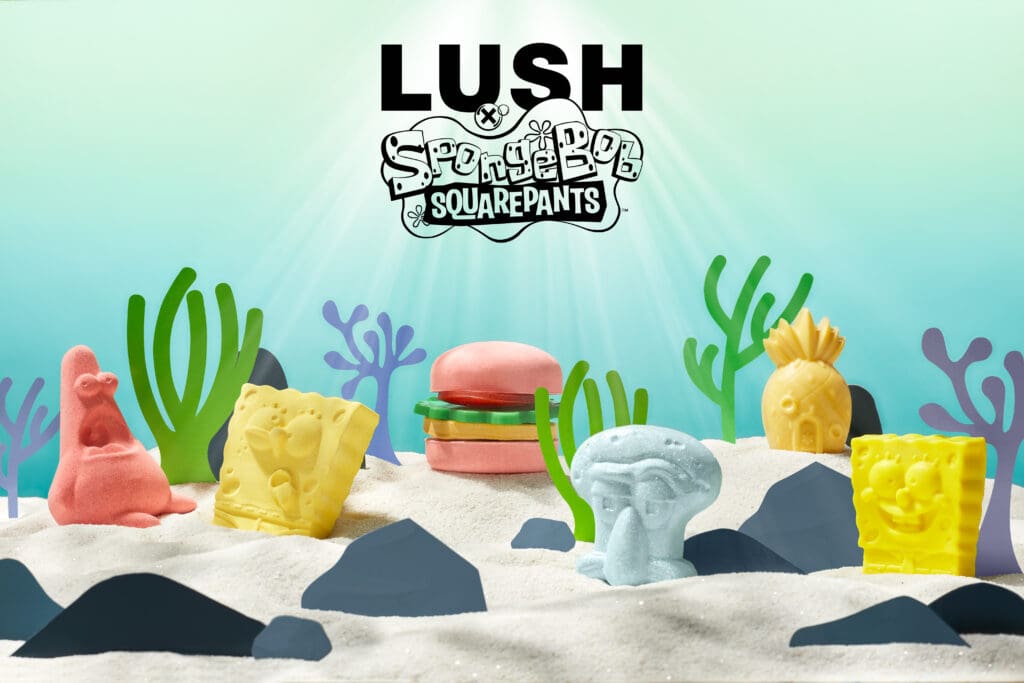
Steve took the audience through Lush’s creative process and how the team has really pushed the boundaries of what can be achieved within this category. With some of Lush’s best examples to hand, Steve demoed the the SpongeBob Crabby Patty, featuring five products in one: the bun a bath bomb, the tomato a red soap, the lettuce a green soap, the burger patty a bubble bar and the bottom bun another bath bomb – all in a cardboard burger bun carton.
One of the strongest messages from Steve was that packaging cannot be considered separately from the product: the two must be designed together from the outset, with teams considering the materials being used, how much packaging is genuinely needed, what will happen to it after use, and how they can bring this whole package to life through the brand’s identity for the consumer experience.
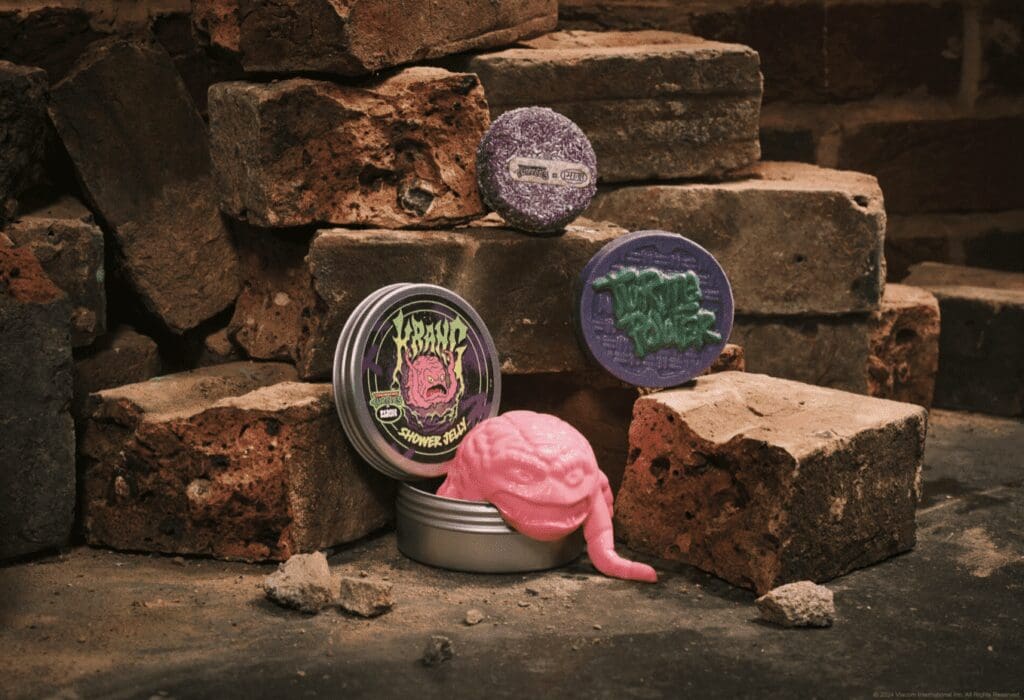
By setting clear parameters at the beginning of the creative process, Lush is proving that sustainability does not restrict innovation but instead unlocks it. As showcased in its Krang Shower Jelly, part of its bestselling Teenage Mutant Ninja Turtles collection. Previously, its bath jellies were sold in recyclable plastic tubs, but with a goal of making the whole range plastic-free, this pushed the team to innovate a solution, which they did, launching a leak-proof tin to house the jelly. The team would have never gotten to this, stated Steve, without the restriction, demonstrating that innovation that can come out of prioritising sustainability.
If you want to listen to the full conversation, the recording will be coming soon as part of POC’s podcast series From Intent to Impact across all podcast providers. While you wait, check out our previous episodes with the likes of Moose Toys, the LEGO Group, Universal Music Group, and Nobody’s Child: www.productsofchange.com/the-poc-podcast
You can also hear more conversations such as this at the upcoming Products of Change Conference on 11 November 2026 at the Royal Geographical Society, London.