
Spring Fair wraps up today after four days of varied exhibition and inspirational talks at the NEC, Birmingham.
Taking to the stage a grand total of three times on Tuesday 3 February, was POC founder and CEO, Helena Mansell-Stopher, bringing the conversation of the sustainable transformation of the retail sector.
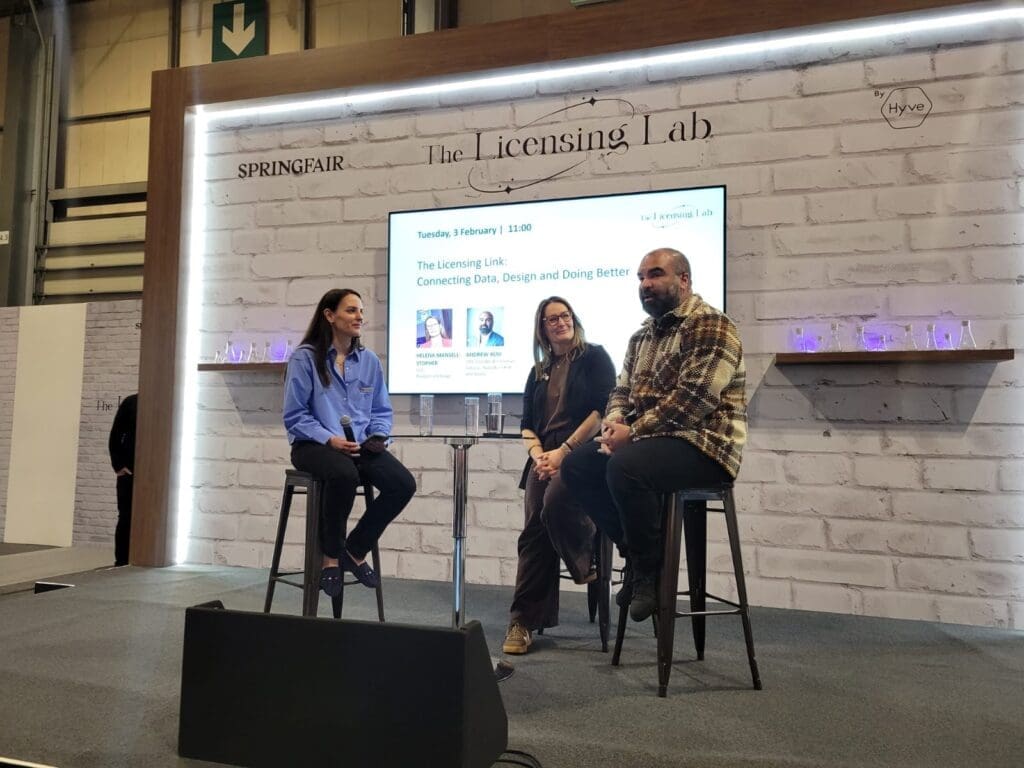
The first session up was titled The Licensing Link: Connecting Data, Design and Doing Better held at The Licensing Lab, bringing together Helena and Andrew Xeni, founder and CEO / founder and chairman, Fabacus, Nobody’s Child and Soreto.
Moderated by Keterina Albanese, head of product at the Hyve Group, Helena and Andrew discussed the importance of data infrastructure in sustainable transformation and the role data plays in the licensing model. A particular focus was the Digital Product Passport (DPP), a key component of the European Green regulatory omnibus and a growing part of global sustainability legislation.
Fabacus a major provider of DPPs and the data infrastructure surrounding them, something which Andrew has been putting into practice in his conscious women’s fashion brand, Nobody’s Child – which, as of its autumn/winter 25 collection, now includes DPPs on every one of its items.
Yet Andrew explained in the session that he avoids the word sustainable when it comes to Nobody’s Child, saying they are making good progress but are not there yet – an honest and realistic take from a brand that is arguably a long way ahead of many other fashion brands on its sustainability journey. Andrew said that Nobody’s Child also demonstrates that it is possible for a brand to be responsible at a reasonable price: “it can be done,” he affirmed.
Andrew also spoke on the purpose of Fabacus’ data systems for licensors, and their purpose is to enable and encourage licensors to take more accountability for their IPs and to support licensee partners on their sustainability journey.
As well as being a cog in the legislation system, DPPs also serve an exciting commercial role, explained Andrew, as through the transparency and engagement they provide, they encourage returning customers, loyalty, and can be used as a customer acquisition channel. The opportunities are endless.
The main takeaway was that with the right data infrastructure, sustainable design thinking, innovation and digital visibility, it is possible to build real commercial strength.
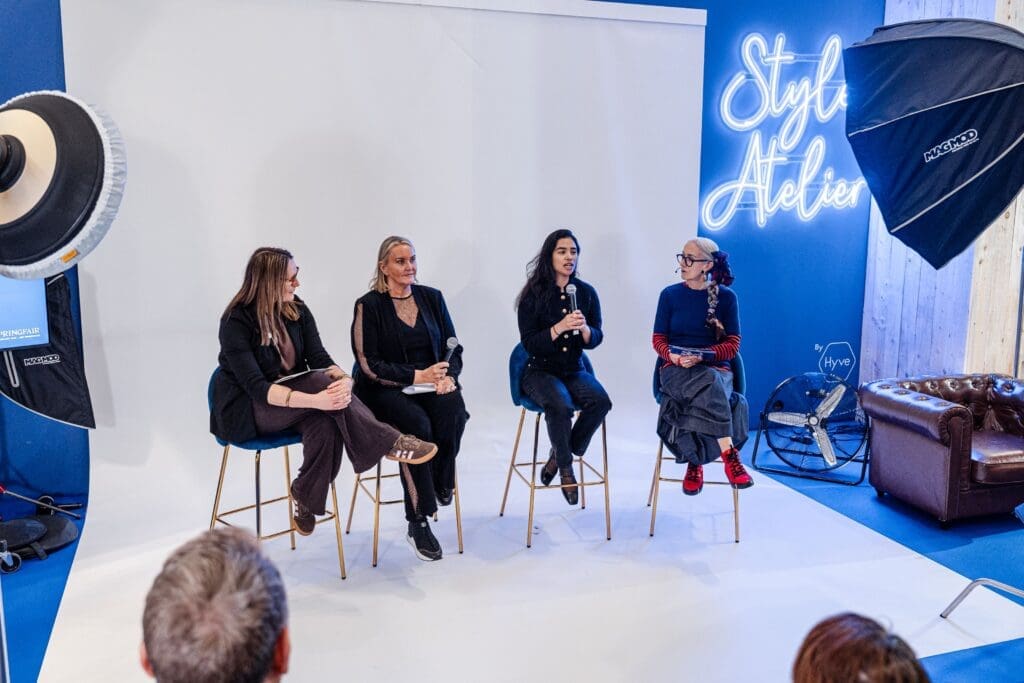
The next session, titled The New Fashion Economy: Ethics, Leadership & Change at the Style Atelier Stage, was a panel conversation between Helena; Tiffany Moore, Renes Fashion; and Annabel Thomas, ACS Clothing, moderated by Caryn Franklin MBE.
The conversation centered around the new reality of the fashion economy – that sustainability is inevitable but fashion companies need to rethink the way they do things to ensure the increasingly price-sensitive consumer of today is brought on this journey.
This particularly focused on the opportunities in second-hand fashion – a rapidly growing segment – and how it can be better maximised by fashion brands, particular by in-store offerings and takeback programmes.
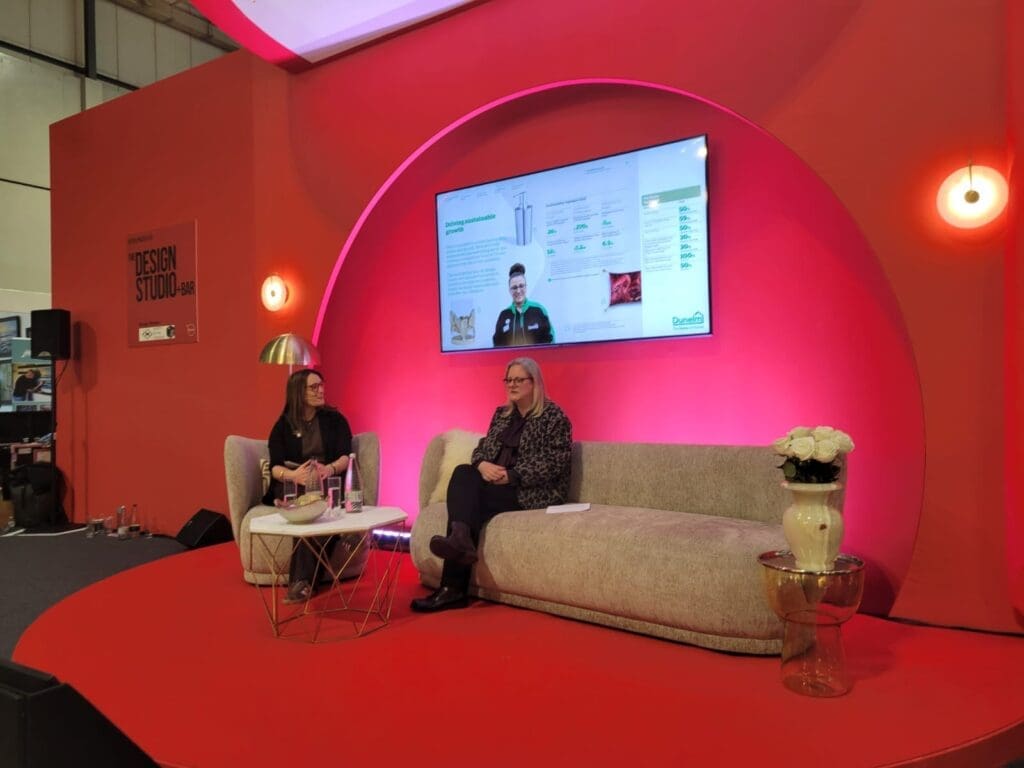
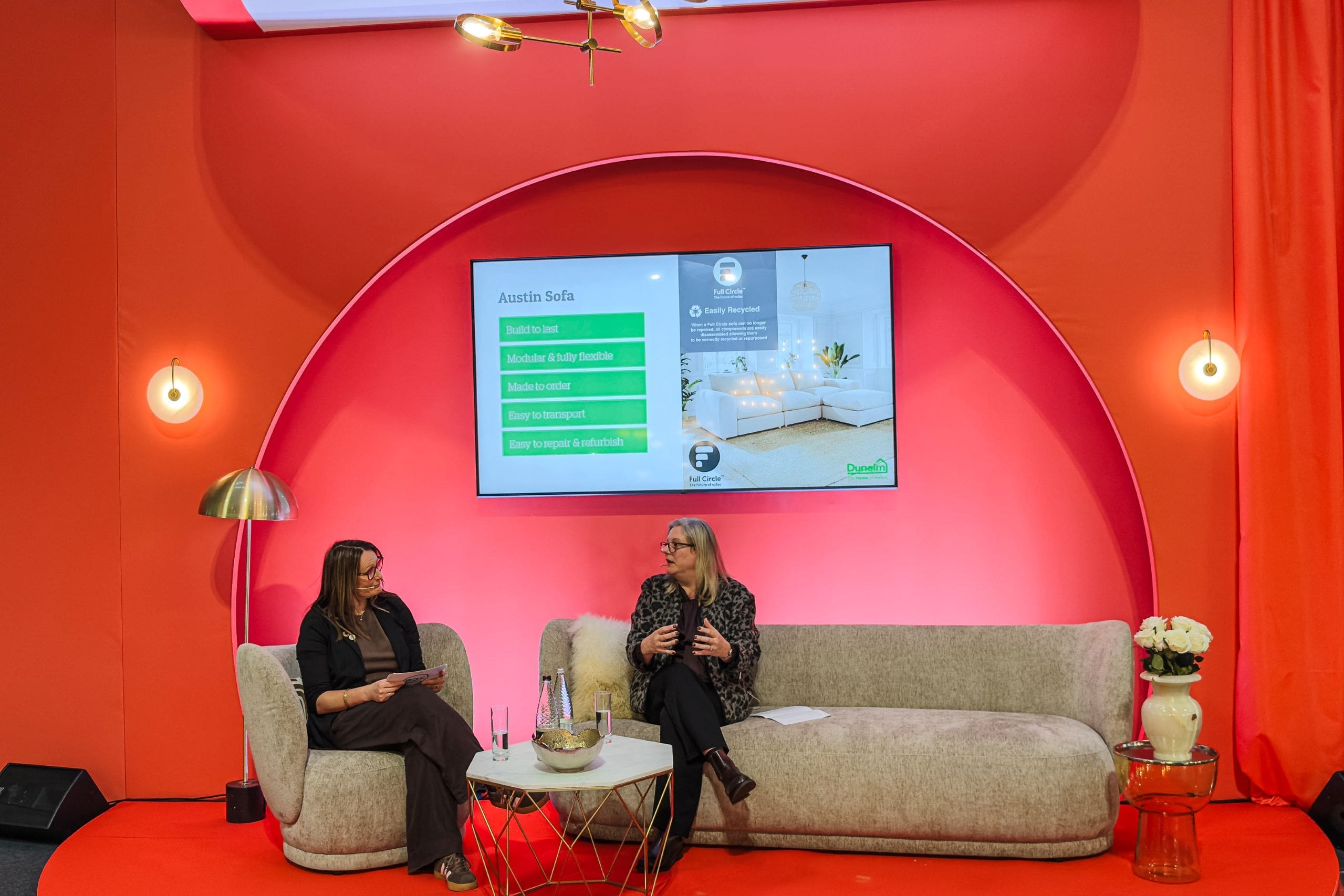
Helena’s final booking of the day was with Dunelm’s design manager, Jo Seddon, titled Design Without Permission: Rethinking Design at Scale, at the Design Studio.
Helena discussed with Jo the barriers to sustainability, from the perspective of a large retailer, and how collaboration can shape the scaling of innovation.
Jo explained how, for sustainable change to happen within a company, executive level buy-in is so important and an inherent, embedded drive to be better. She also highlighted the role of relationships with suppliers, and how the journey must be set on hand-in-hand with them, sharing the common goal.
One of Dunelm’s products that particularly embodies this sentiment, is its Austin sofa: modular, sustainably sourced materials, repairable, easy to disassemble for moving or recycling at end of life, and fit for the modern, adaptable consumer, with its design. While Dunelm is ever increasing its more sustainable product offerings, Jo spoke about how they are not necessarily marketed first and foremost as such, as consumers need to like and desire the product first, and then the sustainability is a pleasing bonus and the icing on the cake for the purchase. It is not often the first selling point of homewares as design, quality, and price come first.
Dunelm also offers in-store care and repair workshops as well as events in its cafes, bringing its community together on the journey with it.
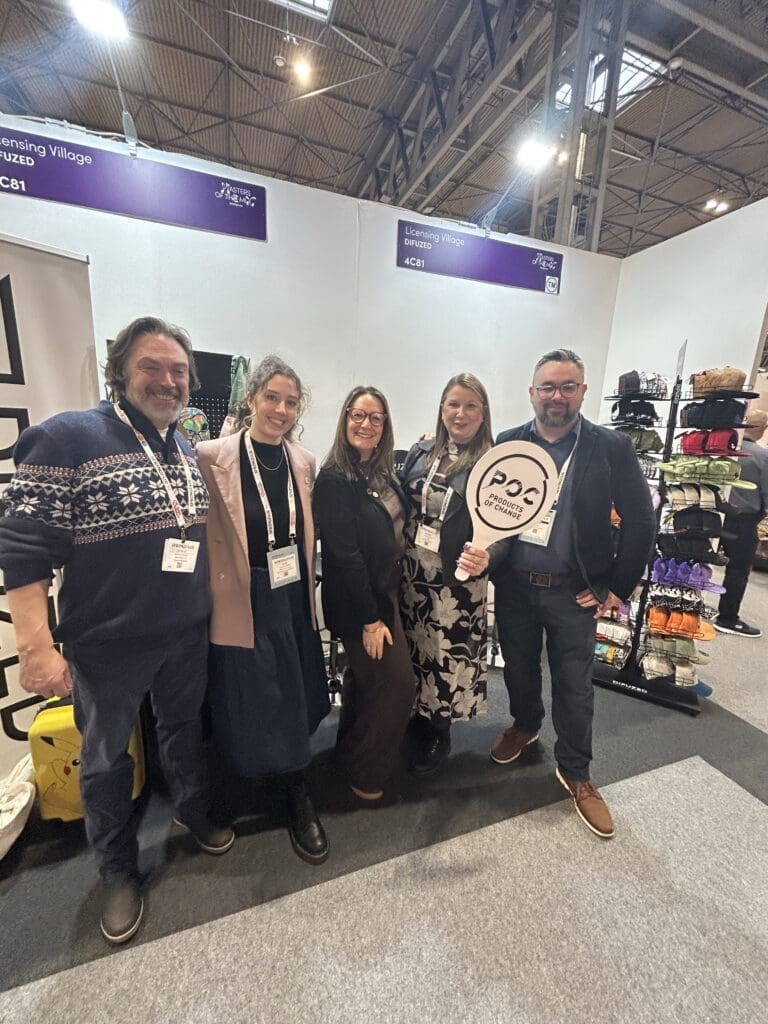
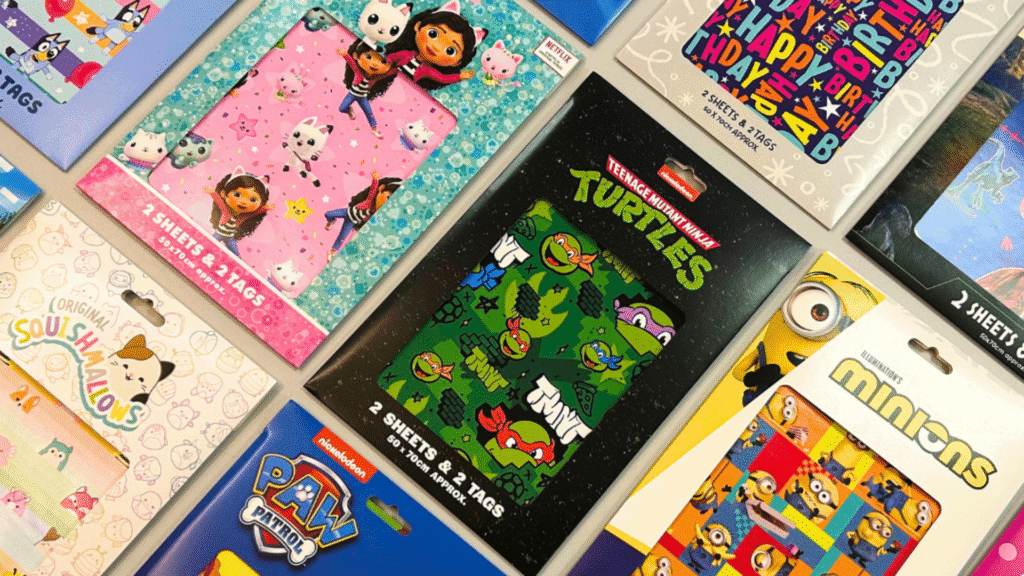
As well as getting involved in the content sessions with Helena, POC Members were also exhibiting on the show floor, including Eco-friendly Cards, Difuzed, Blues Group, Rainbow Designs, Gibson Games, Proud Penguin, The Art File, and Willsow. It was fantastic to catch up with so many of you and see your latest offerings on stand.