Products of Change is proud to welcome board games company, Big Potato Games, into the POC Membership Community.
Having prioritised sustainability in its operations and design for some time, now, Big Potato Games is joining POC to continue to learn from others and collaborate with the industry on collective improvement.
POC spoke to Adam Wright, co-CEO, Big Potato Games, to hear more:
1. Tell me a bit about what you do
Big Potato is a board games company making party games for families, young adults and kids. We’re behind games like Herd Mentality, The Chameleon and Chicken vs Hotdog. Our games are easy to learn, quick to play and designed so that everyone’s involved. Our golden rule is that you’re never waiting your turn!
In a world where we’re constantly scrolling, getting notifications and juggling everyday life, we believe people are craving more opportunities to switch off and properly enjoy spending time together. Our games are all about bringing people together, having a laugh and enjoying a little escape from the everyday, even if it’s just for 20 minutes.
2. What does sustainability mean to you?
As a business, we’ve always strived to make a positive difference to the world we live in. Our purpose, to light up the moments we share together, is directly linked to this. As we grow, we want to create more of these shared moments, whilst reducing the environmental impact to create each one.
We also believe that doing good for people and doing good for the planet should go hand in hand. One of the reasons we certified as a B-Corp is to help us deliver against this ambition.
3. Why have you joined POC?
We’ve made some good progress, but we know there’s still plenty to learn and do. A lot of the challenges we face, from materials and packaging to manufacturing and emissions, are shared across the industry. We joined Products of Change because we believe we can make more progress by working together.
When it comes to sustainability, we’ve probably been a bit guilty of getting our head down and getting on with it. We’ve tripled in size in the last three years and it hasn’t left much time to look beyond Big Potato, our partners and the people who play our games. But we believe collaborating with other businesses and working with POC will help us collectively improve.
So joining POC is us putting our head up, to see what else we can do and how we can help.
4. What would you like to get out of POC membership?
In a nutshell, access to POC resources and thinking, to learn from other businesses and to collaborate with other companies to help the whole category improve.
We’re interested in circularity, new materials, best-practice for working with manufacturing partners, approaches to new legislation like Product Passports and more broadly reducing our environmental impact.
But we’re also keen to contribute. We’ve learnt a lot through our own sustainability work, and we’re open to sharing those findings and tools with others.
A good example is we’re in the process of introducing a ‘Play It. Pass It On’ mechanic to our games. We’ve been developing this together with fellow B-Corp, Gibson Games, and have started sharing it as an initiative other board game companies might like to get involved in.
It’s a simple thing and might be relevant to other POC members.
5. Sustainability achievements so far?
Becoming a certified B Corp in 2024 was a big milestone for us, and we’ve continued to make practical changes to the way we operate since then.
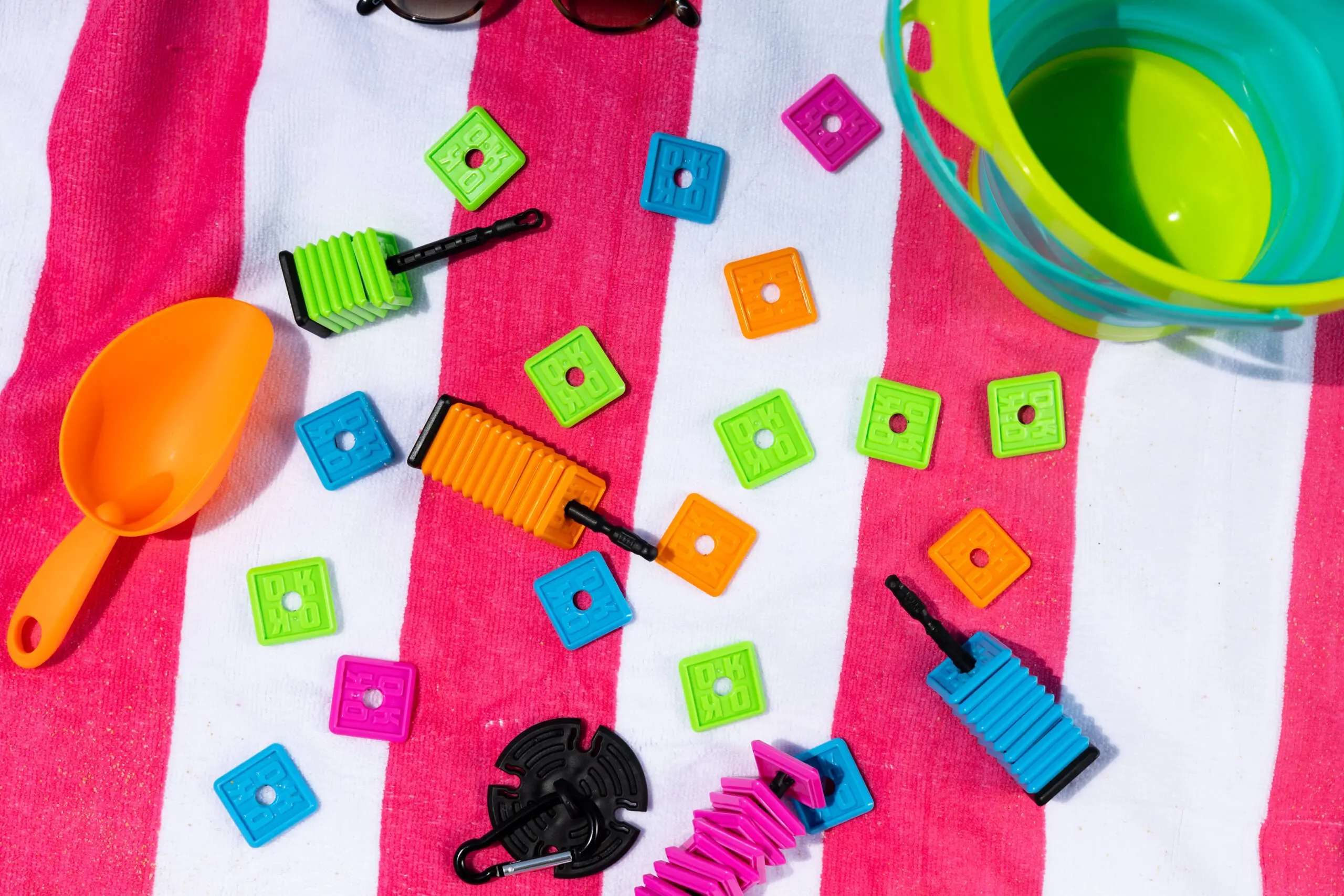
We’ve removed single-use plastic from all our titles for three years running, moved our 4-in-a-row tile game OK Play to recycled plastic and introduced our Game Rescue Service which provides free replacement parts, so people can replace lost pieces rather than buying a whole new game.
More recently, we’ve developed our own Carbon Calculator, which lets our designers compare the environmental impact of different materials and components before a game is made. That’s been a big step forward, because we’re now using real data to guide our decisions.
6. Sustainability ambitions?
Our biggest environmental target is to reduce the carbon footprint of each game by 30% by 2030. From our work with Climate Partners we’ve seen that just three of our games account for 45% of our total footprint, and we’re now focusing on where we can make the biggest difference.
But how we think about sustainability isn’t restricted to our environmental impact. We have three strategic pillars, Product, People and Planet and combined they are the lenses we use to manage our impact. How we treat people across our business and wider network is just as important to us. As is how we design our games so that replayability and sustainability are baked in.
Our ambition is to make a positive impact and go about our business in a way we can be proud of. We don’t think we’re saving the world but we might just save a Friday night! And who knows, if we do that often enough we might make a bigger difference beyond Big Potato.
7. Thoughts on sustainability in the games industry – challenges and opportunities?
The biggest challenge and opportunity is making sustainability an industry norm, something considered from the first design conversation, whilst keeping games affordable and fun.
Household budgets are under pressure and we can’t assume people will pay a premium for sustainability. So we need to bake sustainability into the way we do business, at scale, whilst also landing the value a great game provides. Replayability and sustainability should be part of every brief and this is core to how we can make a difference.
The best games get played again and again and create the moments of connection people are looking for. We love seeing our games at the heart of social moments, seeing multiple generations playing, knowing our games get passed onto others and get a new lease of life.
We see an opportunity for the games industry to tap into this and create products that have longer-term value in a world where so much is disposable.By working together, sharing what works, what doesn’t and the lessons learned we can help everyone make progress much faster.