
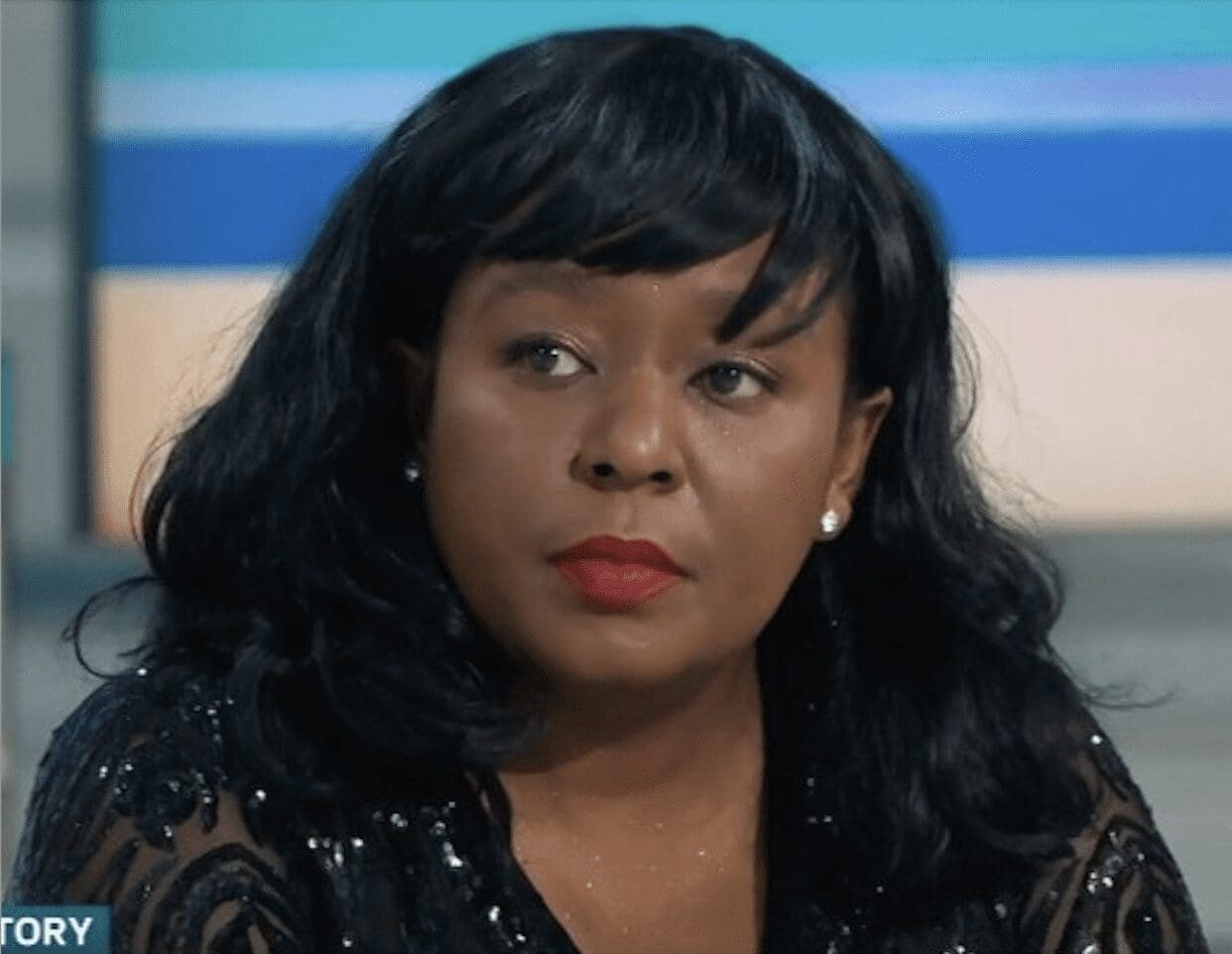
Saphia Maxamed is the ceo and founder of the celebrity brand licensing agency, London Entertainment and the founding force behind the Black Lives Matters Licensing Movement, an organisation fighting for social justice and equality while bringing conversation and action around diversity, inclusion, and representation to the global brands and licensing industry.
Continuing to celebrate inspiring women in sustainability in brands, licensing, and retail this month, we sit down for some real and insightful discussion with the pioneering business leader.
Saphia, your LinkedIn profile reads like a who’s who of retailers and brands, from Dixons Group through to LIMA and some big names in-between. And we notice it isn’t even up to date! Clearly you’ve been too busy…
Haha, you are too kind. But as my son keeps reminding me in his swag, alawe it!
Now, we know that you have had a rather interesting journey with licensing and the licensing industry so far. You almost single-handedly laid the foundations for the UK’s celebrity/influencer licensing market; you launched your own agency in that market (London Entertainment Inc) and – in the last four years or so – you’ve established and began to entrench the Black Lives Matter Licensing Movement firmly in the industry.
I think we’d all be interested in a bit of a whistle-stop tour of your path through this industry so far.
Oh wow… okay, strap yourselves in. First and foremost, I will sound old school when I say that I discovered licensing by accident. But that’s how it was discovered back when I started. Its profile has been raised so much further now, that the youth entering the industry these days do so intentionally… but I joined it purely by accident.
I’d been made redundant from my role with the Dixons Group in 2009. I was category manager for the Apple brand first then the whole computing business for the group and had played a key role in the merger of PC World and Curry’s and the overhaul of their legacy stores.
I was applying for anything and everything. I spotted a job – through Total Jobs – that was brand manager, entertainment, at Topps Europe. With a degree in media production and performance, I thought there was enough of a synergy. I got the call back within a minute of sending my CV…
From Topps I went to Lima UK, then to RMI whose clients were the biggest music brands such One Direction and JLS (who split up one week into my job… eeek). It was at this point I was given a bit of a blank canvas to develop our clients’ brands and I had just been handed Samantha Faiers from The Only Way Is Essex.
Now Rob, I have to tell you something about being a black woman in any business if you’ll indulge me?
Please do, Saphia…
It is the story of a black woman that you have to be extraordinary before you can have a seat at the ordinary table. And this is why we have to wear so many hats. We have to do that. We have to work hard. We have to be extraordinary in order for anyone to notice.
So, when I was handed the Sam Faires from TOWIE brand – having worked and seen success with brands like Apple and the Dixons Group – I had the biggest worry that it wouldn’t be good for me. But I was told this was the client, and if I didn’t work on the brand, there wouldn’t be a job.
Which must have been… interesting, to say the least? Given that at this point, reality TV celebrity licensing was relatively unknown here in the UK?
Absolutely! This was in 2013, The Kardashians had set the mould in the US but really this had never been done in the UK market. And at the time, no one was listening to me, people were laughing in my face. But Sam Faiers became super successful. RMI then signed Billie Faiers, her sister, and – by carving an approach using social media and Instagram alongside TV, while looking for partners outside of the industry circles (like partners in the pushchairs market, In the Style and so on) – we effectively created a pathway for bringing this totally new angle of licensing to the industry.
This is fascinating. Especially when we look at the size of the influencer market and the celebrity licensing market today. So, it was this experience that gave you the confidence to set up your own agency in this space?
Yes! In these celebrity-influencer circles I had built a reputation for turning out a successful brand. I was pulling in brands left, right, and centre for Sam and Billie Faiers; Revlon were after deals, retail was really listening, and the industry had to take notice.
Suddenly, Sam and Billie Faiers started picking up industry awards. And this is what I mean, remembering that previously I had been met with doors shutting in my face. It took time for the industry to understand the market I was creating. A celebrity/influencer brand picking up an industry award now seems pretty commonplace. But that was the result of putting in some extraordinary effort and work.
Throughout this time, I was always looking for the next job upwards, but I just wasn’t being offered them. To me, it was very clear that the reason I wasn’t getting these chances when people around me were was down to the way I looked. I didn’t exactly fit in.
So, I said to myself ‘let me do it myself. Let me create my own place.’ I realised that I had to create that space if I wanted to become a CEO. In creating something that now seems ordinary, I had to be extraordinary…
Which is eye-opening and maybe that’s something that resonates with a lot of women or a lot of minority groups in business? And it leads right into the next point, which is that all the while, you have carried out some wonderful work bringing the conversation and awareness of diversity issues to the brand and licensing industry, largely through the Black Lives Matter Licensing Movement. What has that journey been like specifically?
This itself has been humbling and eye-opening. It’s a tough journey but it is necessary and really and truly, I feel strongly that it is my duty. Imagine, being in that vulnerable position as a black woman who has to be a full-on strong woman. I was forever expected to be a superwoman in order to be at the same table as the juniors of my counterparts.
I do have to say though, the licensing industry is a leader of change. I was embraced from day one when I came into the industry and it felt like the place where I could build my career and shine on my own merits. But equally, the idea that I would move up the ladder, that was just a step too far, really. And that’s the change that needs to be looked at.
Having said that, the licensing industry is an international business. The focus is global and therefore, having this uncomfortable conversation has been humbling because the industry really wants to be a force of change. We know our power and we are ready to use it for good. The support has been incredibly eye-opening and there is a really genuine effort to make the changes.
There is still a lot of learning to be done, especially when the industry is very specific. I am forever impressed by the Informa Markets team – Anna and Ella and their team – for the efforts they are making and the tangible results being yielded. Paramount Global really pushed the envelope and became leaders of change, and I have also been touching base a lot with you guys at Products of Change on that message of change. The impact is visible now, so well done teams.
So, we are seeing a shift? The industry is becoming more open?
It absolutely is. Rob, when I joined, I joined from one of the biggest tech retail brands in the country – Dixons Group. And there weren’t many people who fully grasped the level of experience I brought with me. They saw me as a black person in the industry. You would have struggled to find many black people sitting at those top levels, c-suite levels, in the industry…
When I look at the landscape now, I see a lot of young people coming through, a lot of young black people coming through, and in decent levels as well: execs, coordinators, managers. It feels like we are being embraced for what we bring to the table. So even though the industry is still playing catch-up, it’s so much more open now.
But it’s not just for black people. The industry is embracing youth and young people so much more. And these are the people driving messages of change forwards. And for the young people I have working with me, they are unapologetic: top of their agenda is climate change, then it’s sustainability, then it’s the conversation around race.
And do you know what? It’s making this industry so much more creative. It is now one of the most creative industries I know and work in.
And that is a very salient point. ‘Change’ and diversity and inclusion, it’s not about diminishing what the industry is, but encouraging it to grow and become bigger, with bigger thoughts and ideas and more creativity…
Exactly. Creativity is king in licensing now. People know retail is a completely different beast today to what it’s ever been. People have less money, so you have to do more with less. You have to be creative. Creativity really is king. Why would you not embrace something that just opens up that creativity so much wider?
Okay, Saphia… you’ve totally derailed me from the questions I had written. And in the spirit of creativity, you’ve crafted a much more interesting conversation. However, if we can return to the script… as we focus on International Women’s Day, we also focus on equity, equality, and the official International Women’s Day theme this year to ‘Inspire Inclusion’. What role do you think brands have to play in this wider conversation?
It is so important for brands to take part, to be in the movement – authentically, and for the right reasons. I’ve said this before, but we are in a new era now. Consumers expect honest and authentic inclusion. Brands are built with emotions in order to connect with their consumers. That’s a powerful position. Being inclusive gives any brand a voice and permission to be in the centre of the movement and driving change.
Our licensing industry has a huge responsibility to inspire that inclusion. This is an industry at centre stage. Our products are in every household around the world. That’s a hugely powerful place to be and with it is a major responsibility to influence positive change.
But you have to be the change you want to see. That’s the motto that I take with me wherever I go.
Wherever you go… and that includes – as we know – to the Houses of Parliament this International Women’s Day as well as to Battersea to celebrate IWD with some of the local arts and creative businesses housed there…
Yes, I am part of the Women in Business roundtable so I have been invited to a IWD roundtable talk about inclusion – not just gender equality – but inclusion at every table. I was sceptical when I turned up last year that I was just there to be the ‘token black girl with a business.’ But, all the policy-makers were there taking it very seriously. They wanted the opinions of business owners to help them with their future manifestos.
Wow, Saphia! So you’re not just shaping the future of licensing, but the future of the country as well, in your spare time!
Haha, not quite… not quite there. Yet. This is a very small part in some very big conversations. But who knows, one day…
We can’t wait to hear all about it the next time we catch up. Thank you Saphia and happy International Women’s Day.