
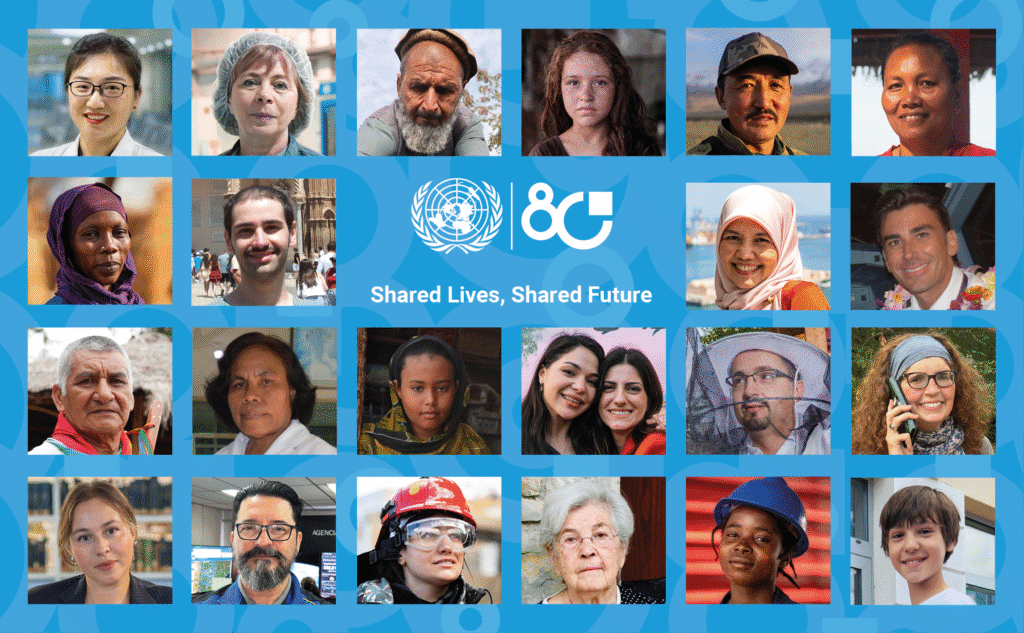
To mark the 80th anniversary of the United Nations, the UN has launched a global photo exhibition entitled Shared Lives, Shared Future. The exhibition showcases the many ways the UN touches people’s daily lives, bringing together over 200 stories from around the world.
By Katy Newnham, founder of Wastebuster, via the United Nations.
One such story comes from Katy Newnham in the United Kingdom, an underwater photographer and founder of Wastebuster – a non-profit that creates educational resources for schools and families to promote responsible consumption and production. We spoke with Katy to learn more about her journey and the work she is doing to inspire positive change.
How did it feel to be selected for the UN@80 exhibition?
It felt both humbling and deeply affirming. The United Nations has shaped much of the framework that guides my work – from the Sustainable Development Goals to the UN Water Action Decade – so to be included in this moment of reflection and renewal is an honour.
As the UN marks its 80th anniversary, my message is one of urgency paired with optimism. The challenges we face – water scarcity, pollution, climate instability – are immense, but so I think, is the opportunity. If we invest in education, youth leadership, and collaboration across sectors, I believe we can move from crisis response to long-term resilience. The next 80 years must be about empowering people, especially young people, to be active participants in shaping and delivering solutions, not passive recipients of policy.
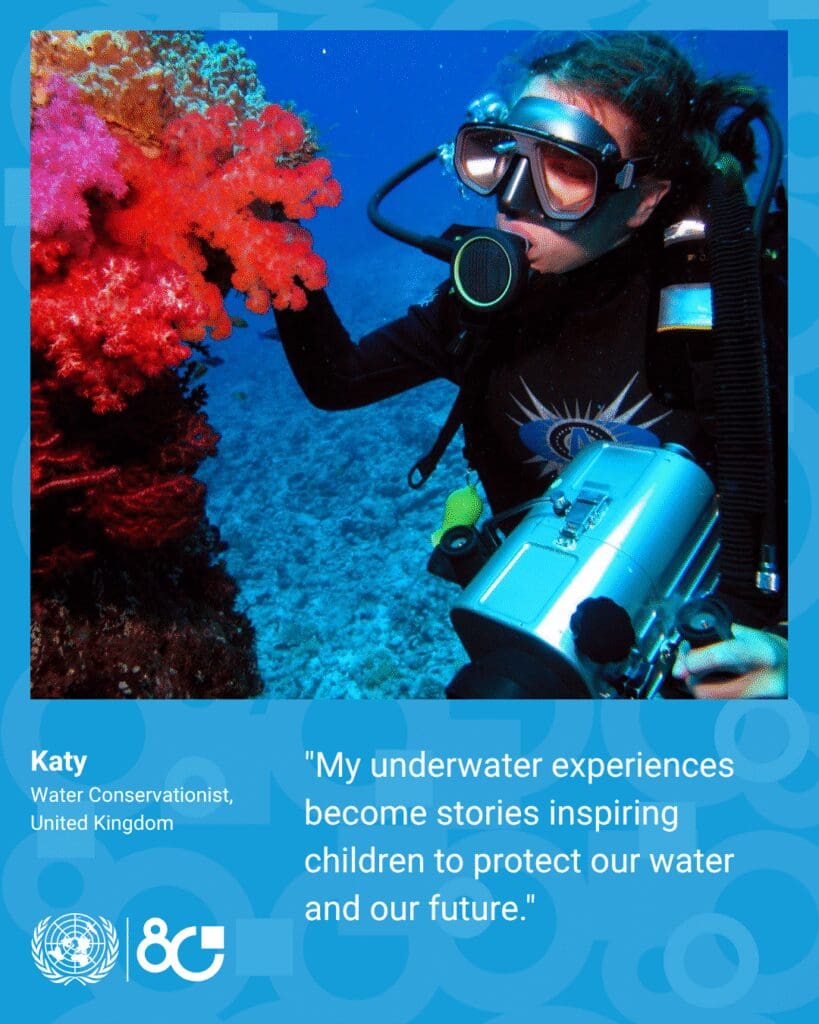
Where were you when this photo was taken?
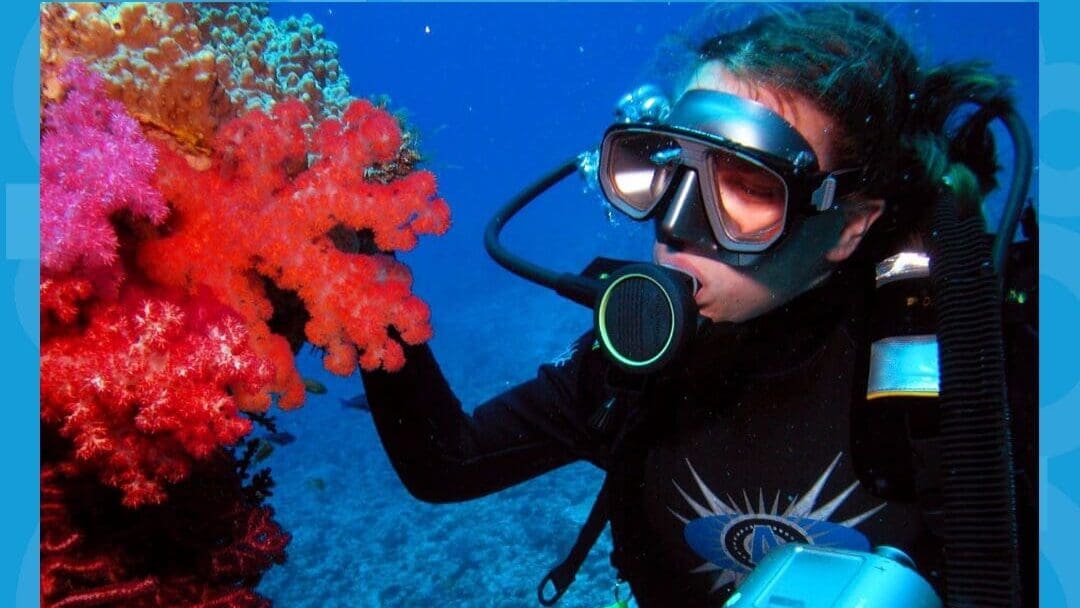
I was working as an underwater photographer, documenting marine environments in some of the world’s most remote oceans. It was taken on the Agincourt reef system, in the Coral Seas – part of the Great Barrier Reef in Australia.
Why was it important to capture this scene?
It represents a moment of truth. Underwater, there is no separation between cause and effect – you see immediately how pollution, warming, and overconsumption translate into loss.
I spent years beneath the surface, across regions including the Indian Ocean and the Coral Seas, witnessing both extraordinary beauty and accelerating damage caused by human activity. That perspective – literally and emotionally – changed everything for me. It was the point where observation turned into responsibility.
As a photographer, I realised I could no longer simply frame beauty while editing out destruction. To do so felt complicit – an untruthful portrayal of the natural world at a time when honesty was urgently needed. That sense of helplessness intensified during a severe El Niño event [a weather pattern that has a warming effect on average global surface temperatures]. This image was taken on a reef system that was among the worst affected – over 60 miles of vibrant coral decimated in a matter of months. It felt like standing on the front line of a war between humanity and nature, and nature was losing. But ultimately, so were we.
The UN’s role in my work is about transforming moments like this into action at scale. Through shared global goals and frameworks, I believe the UN enables deeply personal experiences to connect to collective solutions, bridging the gap between what we witness locally and what we can change globally.
Why does engaging young people on environmental issues matter now more than ever?
Today’s environmental decisions will shape their entire futures – and they already have the power to influence outcomes. Young people are not just future leaders; they are current consumers, citizens, and changemakers.
What matters now, I believe, is giving them confidence rather than fear, agency rather than anxiety. When young people understand how their everyday choices connect to bigger systems – water, waste, energy – they don’t switch off. They step up.
Was there a particular moment that reshaped your sense of purpose and career?
Witnessing widespread coral bleaching and plastic pollution while working underwater was the turning point. Seeing ecosystems collapse in real time made it impossible to stay behind the lens.
I realised that documenting damage wasn’t enough. Education – especially education that inspires action – was the lever for long-term change. That realisation led directly to founding Wastebuster and focusing my career on turning awareness into measurable impact.
Can you tell us a little about your initiative UK Water Week?
UK Water Week is designed to translate global water priorities into practical, local action, particularly for children and young people. Delivered in support of the UN Water Action Decade, it combines science, storytelling, and civic participation to help people understand not just why water matters, but how they can protect it.
The UN provides the global legitimacy, alignment, and long-term vision that ensures this work is not isolated or symbolic. It allows Water Week to function as a scalable blueprint – connecting education, behaviour change, and data – so local action contributes meaningfully to global goals.
A selection of stories from the UN@80 photo exhibition will be on display in London from 16–19 January at Methodist Central Hall
Explore the online exhibition here: UN@80 Shared Lives, Shared Future Photo Exhibition
See also: In Pictures: first-ever UN General Assembly in London 80 years ago