
Marking World Ocean Day (8 June), conservation charity and POC Member, ZSL, warns unity is needed for climate and nature policies to prevent costly clashes and protect communities.
As The UNFCCC June Climate Meetings (SB64) are taking place in Bonn, Germany, 8-18 June, scientists warn fragmented approach to environmental policy wastes public funds, damages ecosystems and threatens human health.
Current climate and nature policies are working at cross-purposes, warn the authors behind a major new report led by conservation charity ZSL (Zoological Society of London) – urging that alignment is key to protecting people’s health and livelihoods.
Published on 2 June, The Risks of Climate-Nature Silos, authored by leading scientists and policy experts from 13 countries across the globe, cautions that fragmented environmental policies are creating costly failures, missed opportunities and unintended damage – all at a time when planetary boundaries are rapidly being crossed.
Announced following a record-breaking heatwave across Europe, accelerating biodiversity decline and worsening land degradation, the audit arrives at a critical moment. The year 2026 is expected to be pivotal for environmental diplomacy as the three Rio Conventions – on climate change, biodiversity and desertification – convene to shape future global action.
The authors are calling on policy makers and governments to seize this opportunity for a joined-up approach to accelerate progress – and outline the steps needed.

Building on ZSL’s previous work calling for a unified approach, the report auditing the risks of misaligned environmental policy argues that governments, institutions and funders must urgently stop treating climate, biodiversity and land degradation as separate challenges.
Instead, they should be addressed as part of a single interconnected “nature–climate system” that underpins human wellbeing, economic security and Earth system stability.
Professor Nathalie Pettorelli of ZSL’s Institute of Zoology and lead author of the report said: “Climate change, biodiversity loss, and land degradation are not separate emergencies; they are deeply entangled crises that feed off each other. Continuing to tackle them in isolation isn’t just financially inefficient; it is increasingly hazardous, locking in policies that solve one problem while worsening another. As the UN warns that the approaching El Niño will pour fuel on the climate crisis, it’s critical that biodiversity loss and land degradation aren’t put on the backburner.”
Supported by leading environmental organisations – including the National Trust, the Woodland Trust, the British Ecological Society and Royal Botanical Gardens, Kew – the report warns that well-intentioned environmental solutions can backfire when developed within narrow policy silos.
For example, monoculture tree plantations for carbon credits may replace species-rich grasslands, while conservation initiatives that ignore climate realities may fail to deliver long-term benefits. Other vivid examples highlighted in the report include taxpayer-subsidised biofuel mandates that drive habitat destruction, and concentrated solar power plants in desert regions that severely harm local wildlife through direct burns and extreme water stress.
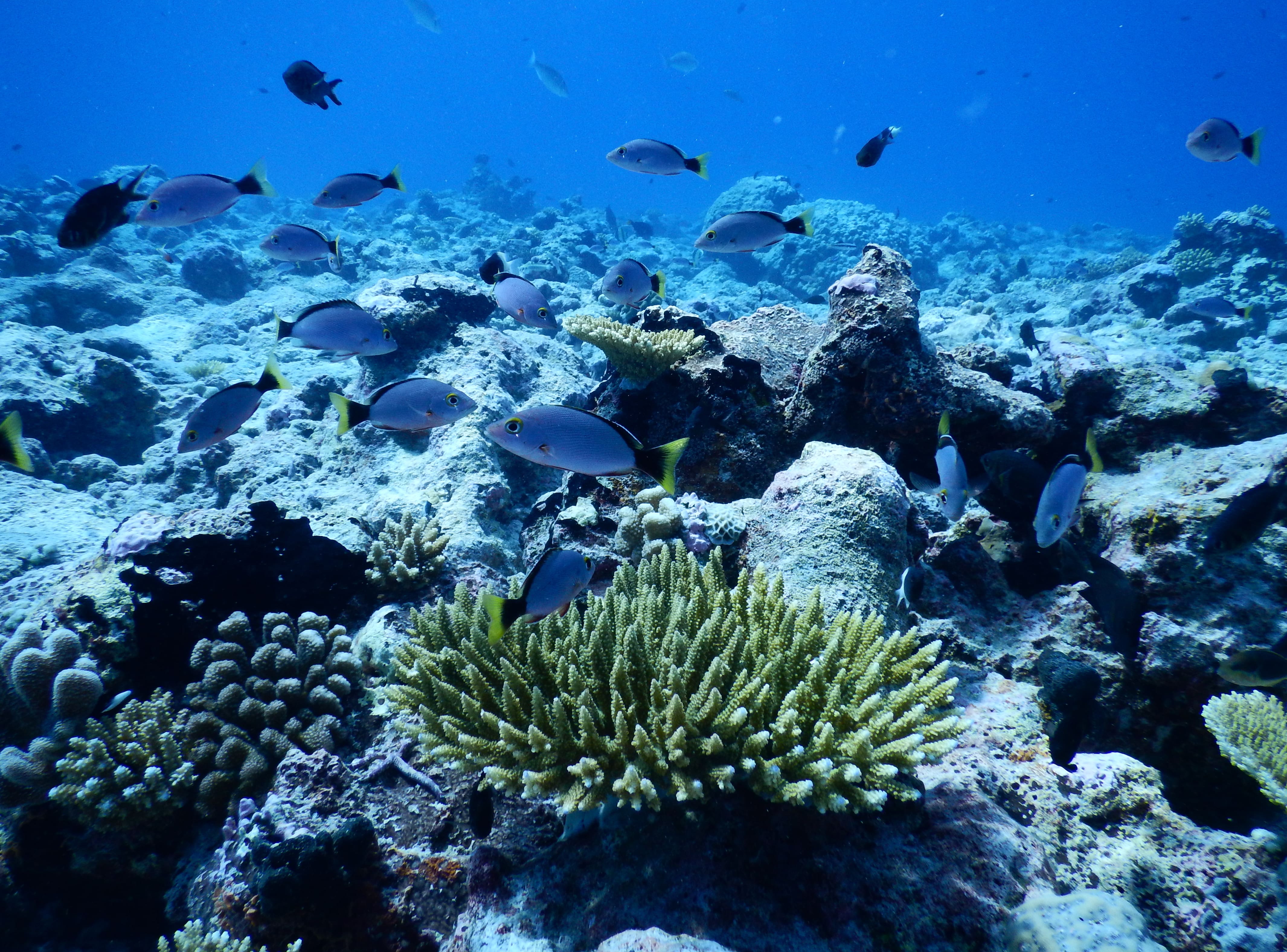
The authors identify several areas where environmental silos are particularly pronounced, including marine and coastal systems. The ocean absorbs over 90% of the excess heat generated by greenhouse gas emissions and supports billions of livelihoods – yet marine governance remains fragmented across separate climate, biodiversity, fisheries and conservation systems.

Nathalie added: “These unintended consequences are not isolated cases. They reflect a systemic problem in how environmental governance is structured. Despite the evidence in front of us, we are still operating with institutions and incentives built for separate crises.”
To address this, the report lays out a roadmap for more coordinated international and national action. This includes better coordination and alignment between the reporting systems and action plans of the Rio Conventions (CBD, UNFCCC, UNCCD); stronger scientific evidence and consensus on how to jointly tackle environmental crises; and funding and higher priority for projects and programmes that deliver benefits for people, climate and nature simultaneously.
The report also highlights how environmental degradation and policy silos are already threatening national prosperity and calls on governments and finance ministers to better factor environmental risk and volatility into their decision making.
“The science is clear, the solutions are increasingly available, and there is growing agreement across sectors that integrated action is essential,” said Nathalie. “All we need now is the political will to move from agreement to implementation.”
ZSL believes nature can recover, and that conservation is most effective when driven by science. We call for science to guide all global decisions on environment and biodiversity and build a healthier future for wildlife, people and the planet. Find out more and support ZSL’s world-leading, collaborative science and conservation work at www.zsl.org