
Finding sustainability solutions has been a major focus in the greeting card industry but working out how to deal with one thing can lead to other issues which then need resolving.
And that’s just what’s happened with the move away from individually wrapped cards to sticky labels and card clasps – what do you do with all the waste backing paper?
By Tracey Bearton, PG Buzz.
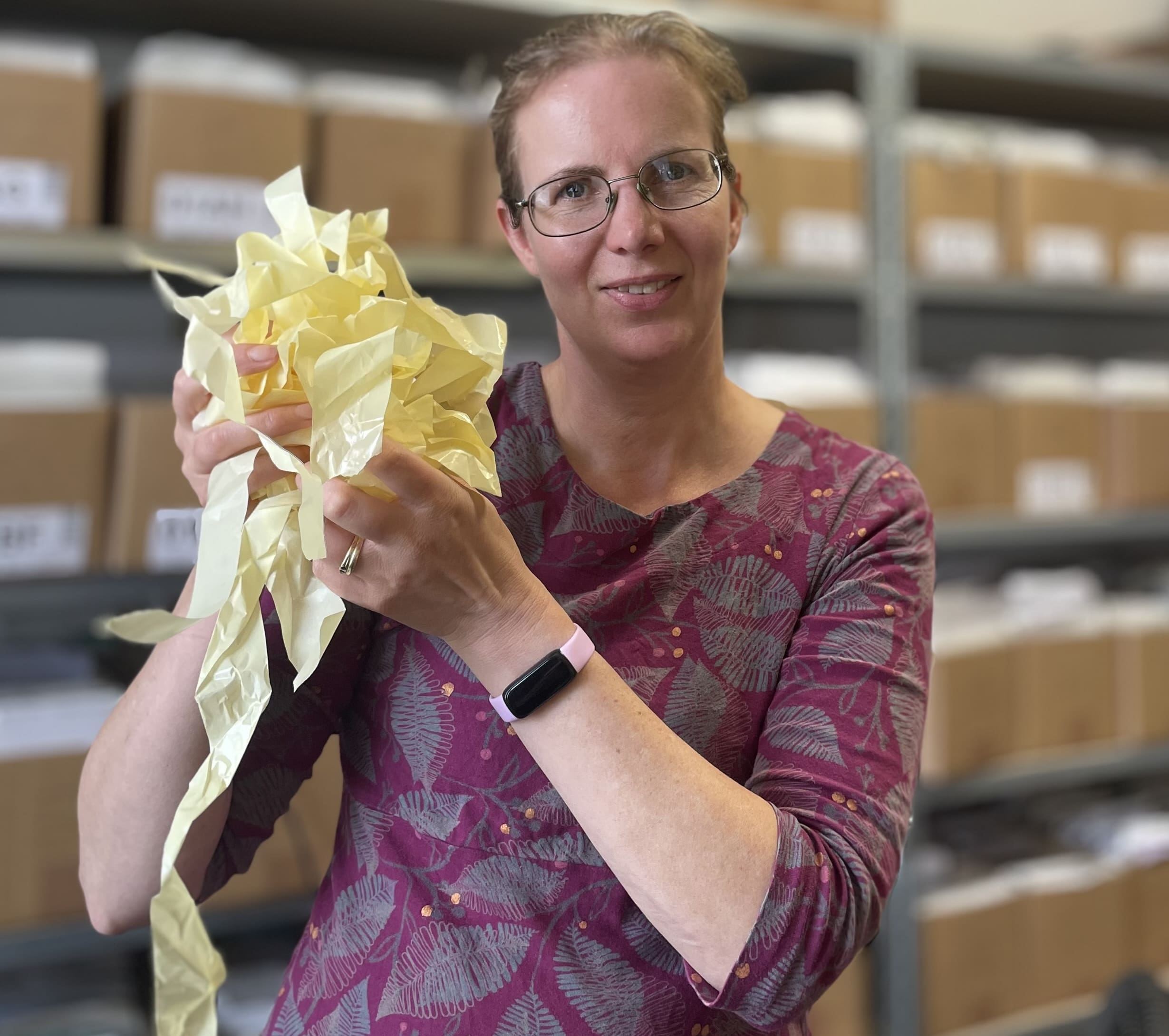
Known as release liner, how to recycle it is a particular bugbear for POC Member, The Eco-friendly Card Company’s co-founder Sue Morrish – and having joined the GCA’s Sustainability Committee the committed recycler and environmentalist is even more determined that the industry can work together to come up with a solution.
“Where there’s a label, there’s a release liner left behind and this is a notoriously difficult to recycle,” Sue told PG. “Release liners end up with general waste and, even in zero-to-landfill schemes, this normally means they are incinerated. And it’s not just the labels we use on cards that generate this waste, there are also labels we use on inner and outer packaging – courier address labels and even the stamps from Royal Mail now come on release liner, since they abandoned lick-and-stick.”
Some release liners are made from polyethylene terephthalate (PET) which can be recycled, but the most common is silicone-coated glassine, made from a cellulose super-calendared paper with a silicone coating so the labels easily peel off the liner, but it’s tricky to recycle because it repels water so contaminates standard recycling streams.
The specialised processing facilities required do exist where release liners can be made into home insulation, pet bedding, or tissue, but these specialist schemes, such as Cycle4Green, Soprema and Rafcycle, are not accessible to most publishers, with minimum requirements for collections starting at 15 pallets!
Sue added: “I’ve been trying to find a route for our release liner waste for several years, with little success – but now the GCA’s Sustainability Committee is trying find out if there are any recycling solutions already being used by other publishers that we could share with our members.
“Whether it’s recycling your release liner via your label supplier, or whether you’ve found a recycling company that will take – and actually recycle! –this waste we’d love to hear from you. We can then collate this information with the hope of sharing solutions we can access across our industry no matter the size of the publisher.
“Likewise, if you’ve tried and failed to find a solution, this would be helpful to hear about too, as the more we can show there is a demand to recycle this waste, the more persuasive we can be!”
Anyone who wants to get involved should email Sue via sue@ecofriendly.cards, and if you’d like to join the GCA council or work groups to lend your expertise, please contact CEO Amanda Fergusson at amanda@gca.cards.
Helping publishers and suppliers with sustainability is a big part of the GCA’s focus, and the committee has been researching ways to help, with details available in a recent blog on the website.
Danilo MD Daniel Prince, who is also a GCA council member, as been looking into what funding is available to help small businesses make practical sustainability improvements – and even managed to snag a £1,000 grant for the publisher in the process.
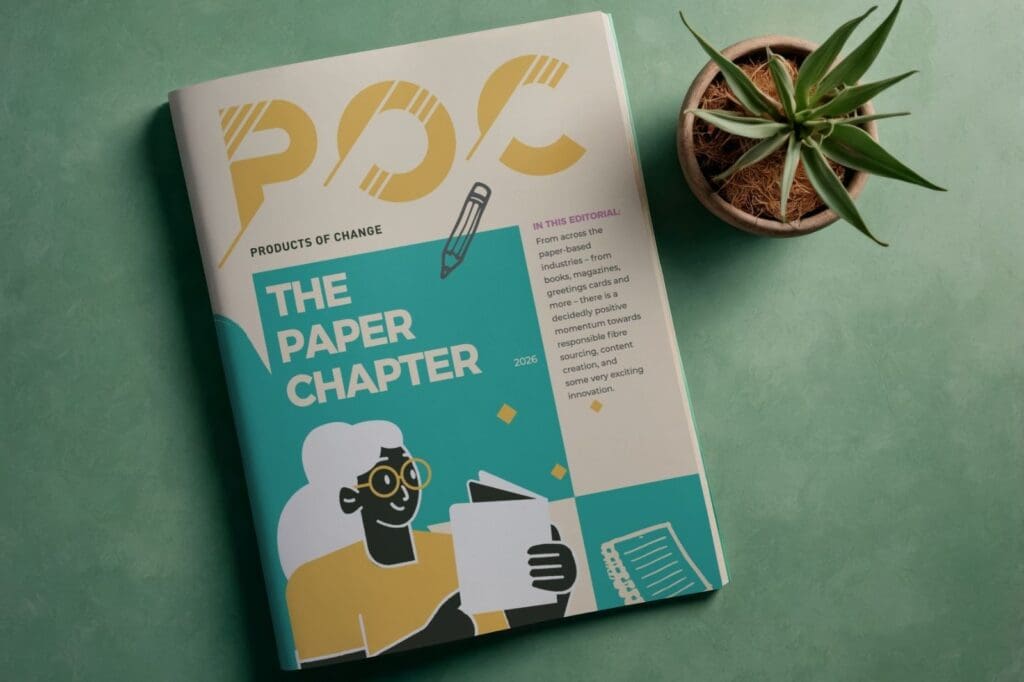
The greeting card industry can reduce its environmental impact across materials sourcing, printing, packaging, warehousing and logistics. This conversation is discussed in POC’s upcoming Paper Chapter, due out in the next week.
Sustainability improvements can also help reduce operating costs, strengthen retailer and licensing conversations, support customer expectations and future-proof businesses against changing legislation and packaging requirements.
Examples of projects that may qualify for support include switching to FSC-certified, recycled or lower-impact materials; moving to plastic-free, recyclable or compostable packaging; installing energy-efficient print, finishing, lighting or warehouse equipment; reducing waste and improving recycling in production or fulfilment; installing renewable energy, low-carbon heating or EV charging infrastructure; and developing circular economy, reuse or low-waste packaging solutions.
As well as advice on how to get your project underway, the GCA blog lists a variety of schemes that support sustainability, energy efficiency and low-carbon innovation – but remember to check out each website for the latest deadlines and eligibility criteria.
The Eco-friendly Card Company is exhibiting this week at Harrogate Home & Gift on Stand A18 in DP4.