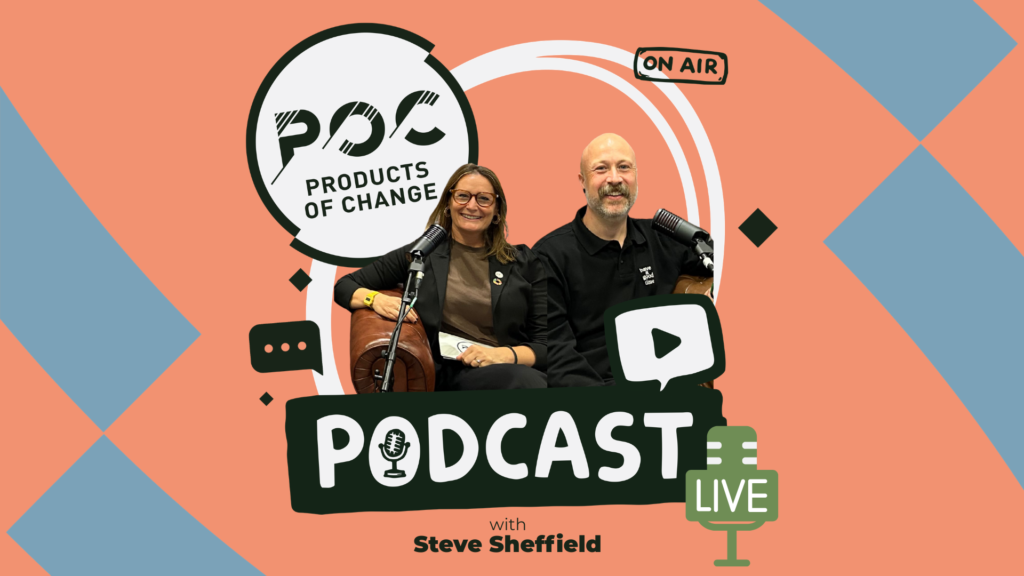

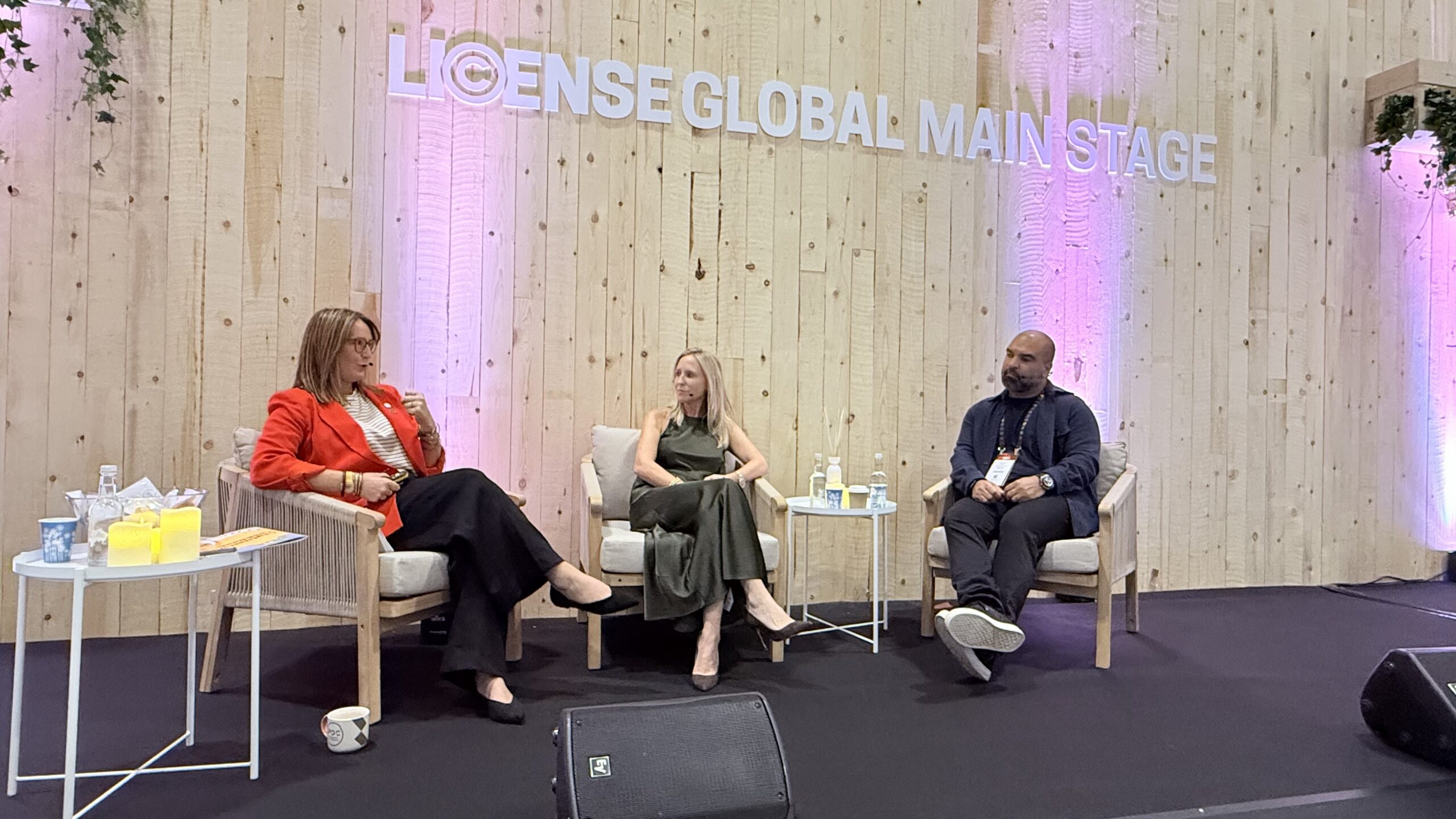
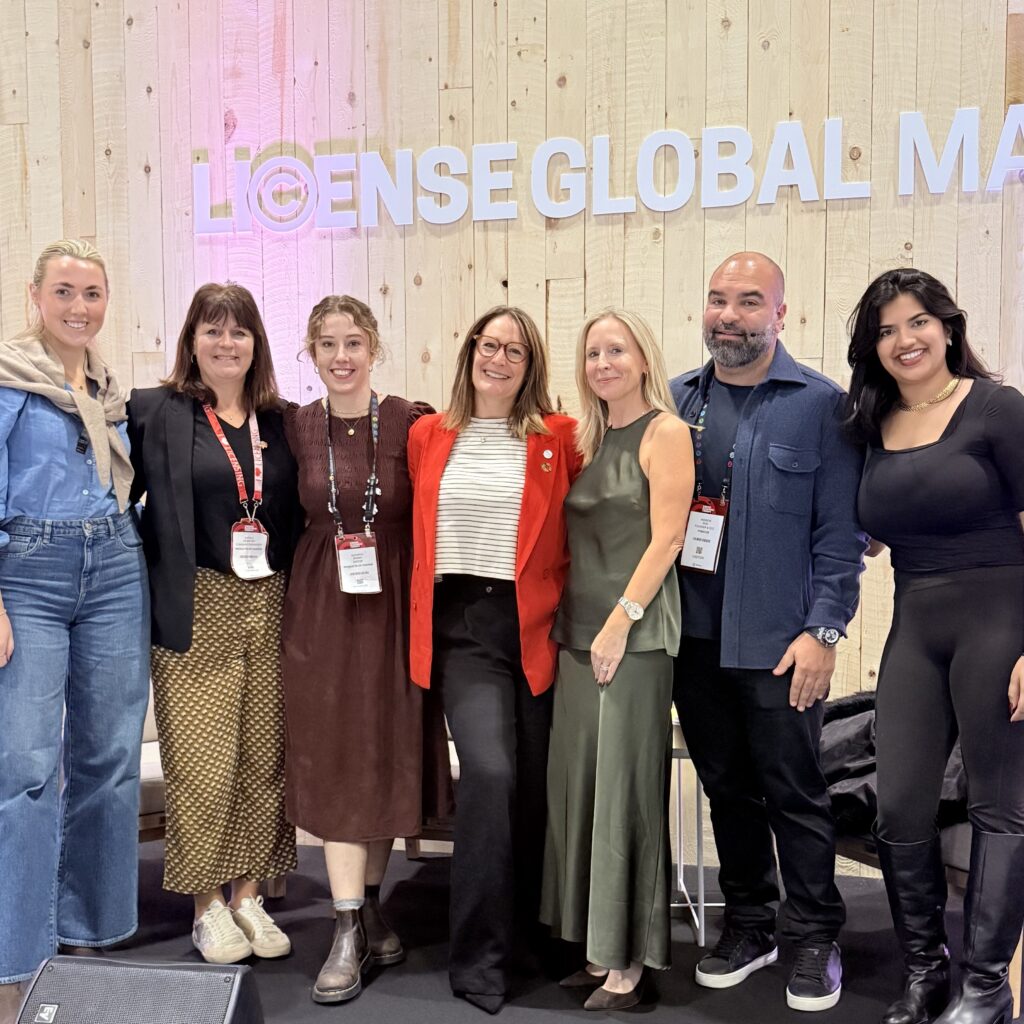
Nobody’s Child’s CEO, Jody Plows, and its founder and Fabacus founder, Andrew Xeni, joined POC’s Helena Mansell-Stopher on the stage at BLE for a lively chat on building brand authenticity and purpose alongside business success.
Not only is Nobody’s Child a successful womenswear brand, shortlisted for the Times Top 100 fastest-growing businesses for the second year in a row, winning multiple Drapers Awards, partnering with M&S and launching more and more retail locations, it also has ethical and sustainable practices at its core.
And, as the brand grows, these practices are only being built on and developed rather than pushed aside, which the brand says has played a key role in its success.
To dig into this deeper, Helena invited its CEO and founder, Jody and Andrew to discuss how exactly this has worked for them, and demonstrate that profit and purpose can and do go hand-in-hand.
Andrew explained how Nobody’s Child’s origins came from his manufacturing upbringing and his and his brother’s founding of their own manufacturing business, prioritising operational excellence and investing in their own factories. Andrew simultaneously pursued his passion of technology and founded Fabacus, which led to him setting up a website for his fashion business, where Nobody’s Child was born.
“As we entered the market, it was the time when all the sort of loud nagging and shame was there, all the fast fashion players were producing anything anywhere, and we just wanted to be different,” said Andrew, and since they had their own factories, they knew their people. “Ethical was really the positioning that we wanted to establish. It was before sustainability being featured in our vocabulary.”
The brand then began to introduce responsible fabrics into its products, and once it reached 30% responsible fabrics, Andrew recognised it was the brand’s calling: to be affordable and inclusive while using sustainable materials.
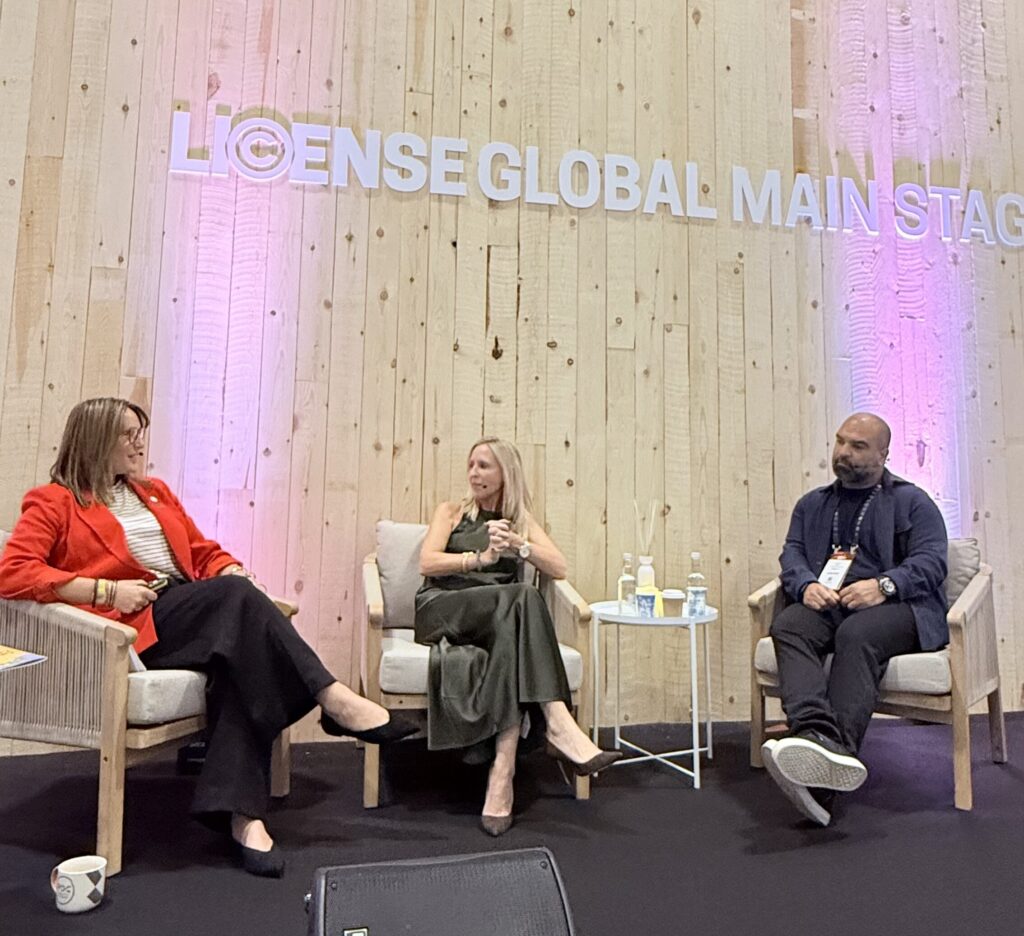
“We didn’t want to penalise consumers with big prices because that’s what the sustainable brands were doing. We wanted to rival the mass, but with better quality, responsible fashion,” said Andrew.
It was at this point that Jody joined the Nobody’s Child team, putting a strategy in place, working the brand towards B Corp and setting it up for the years to come. “We’re certainly not perfect, but I think by staying true to that goal, that’s when we have been able to deliver everything around it, whilst delivering beautiful fashion,” commented Jody.
This core DNA is essential, and ensuring the brand identity and mission is not diluted as the company and team expands, Jody explained, “not only have we had the privilege of growing the brand, we’ve also had the privilege of building a culture that every single person that joins us needs to feel as passionate about our cause as us. They need to want to work for a purpose-driven brand.”
Jody added: “I said to Andrew seven years ago, everyone’s going to be doing this sustainable fabric thing. Like it’s not going to be our USP; the whole world is changing, and it’s sad that it hasn’t changed as fast as it could. Because since we’ve set it up in our foundations, I suppose it’s been easier for us to say, ‘Well, we just won’t use that fabric because it’s not right for us. We’ll only use this one because it’s better for the planet.’ And I think for some brands and retailers, they have made steps in the right direction, but it’s hard to undo if you’re a bigger organisation and make those decisions.”
Nobody’s Child continues to demonstrate that you can be a profitable sustainable brand, while making better materials choices. “It’s actually not that much more expensive,” said Jody, “and once you work very closely with your suppliers, you can find a way.”
Andrew added to the conversation: “Of course, we need to be viable, and yes, we want to be profitable. But we’re not chasing numbers for vanity, so that gives us a bit of time to look at things from a much more considered lens: fabric, margin, strategy, channel, international. You know, we’re exposed to the same elements as everybody else, and lots of people that have called us up, which is super flattering over the years to say, ‘How have you achieved it?’ I always attribute it to one thing: it’s culture. If Jodie didn’t wake up every day and believe in it and want to make it happen, neither would the other 199 people. Right? It just is as simple as that, and that becomes contagious. But you have to care, and that normally comes from an ownership structure. When it starts to become institutionalised, I do get it. It becomes that moving a little bit harder, but at scale. And we’ve demonstrated this; it is still possible.”
Sustainability is the DNA of the brand, but it is also not something that Jody said they need to talk about all the time; sometimes the collaborations take centre stage, but all the fabrics are still sustainable, the brand is just more than sustainability. It doesn’t have to be the primary selling point to be important to the brand.
As Nobody’s Child evolved, so did its sister company, Fabacus, where Andrew was exploring a new technology, digital product passports (DPPs). Fabacus had established itself as an industry solution for the licensing industry, helping IP owners bring a trusted system of record for their products.
So Nobody’s Child took a gamble and launched DPPs for its new collection with Fearne Cotton. “Utilising Fearne and our relationship was a genius idea because we trusted her, and we know that she shares our values. She’s really ethical, and she’s got a community of people that feel the same way,” said Jody. Fast forward three years, DPPs are now in every one of NC’s products with ever richer data attached to it.
DPPs form part of the EU’s Eco-design and Sustainable Products Regulation (ESPR) which is requiring products to be made from more environmentally friendly materials and have end-of-life solutions. The DPP is a digital identifier for that product and will give you information such as the environmental impact of the product. Read more in POC latest Legislation Lookbook here.
But for many companies, this does not yet exist, so whole new frameworks are having to be built in preparation. In this respect, NC are ahead of the game. Every collection since the initial launch has allowed the brand to build and hone the data, putting the infrastructure in place for better and better DPPs.
NC has now had 25,000 customers register on the DPP, and has seen a half a million pound return on investment in regards to customer acquisition. “So actually, the commercial benefit, let alone trying to attribute loyalty, returning customers, equity value, all of these other value add to that exclusion. It’s been incredibly successful,” said Andrew.
“The culture, the working out, the purpose – you’ve got to want to do it. If you get that right, the tools start to make it a reality, and you know, as a vendor, I sit with biggest brands and retailers in the world every single day. And the first thing I get them aligned on is if you’re not culturally ready, don’t even start the journey because you’re not going to get anywhere,” said Andrew.
Nobody’s Child has collated all its learnings from this process into a DPP whitepaper with insights and learnings from NC’s implementation of the technology.
Not only is NC doing the right thing, but its business is booming off the back of it, with 1.3 million customers, stocked in all the big retailers, and a growth from 1.8 million to 200 million in six years. Fabacus has also been up for technology awards for its DPP, and it is still ahead of the game.
“There’s no benchmark. Nobody knows if 30 kilogrammes of carbon is good or bad because we don’t have enough to benchmark against. Not yet, of course. But what we do know is that we’re trying our hardest. We’re trying our best. We’re honest. We’re transparent, and we’re going to stay to that. And we’re going to focus on improving where we can. If you do that and genuinely care about it, passports are an amazing way of telling that story without all of the other legislation,” finished Andrew.