
Greetings card powerhouse and POC Member, UK Greetings, has joined the line-up of speakers at the POC Conference, represented by UKG’s head of safety & sustainability, Chris Shaw, to share its sustainability journey from a linear to circular model.
In this sneak preview of UK Greeting’s POC Conference presentation, we will glimpse how the company has undergone a significant transformation in recent years, realigning its business with objectives with more responsible and future-focused practices.
Chris explained that one of the company’s standout achievements is how sustainability has evolved from being a series of individual initiatives into something much more embedded into how UKG operates and designs its products.
“Our progress on circularity is a particularly strong example. We have worked hard to move away from the traditional ‘take, make, waste’ model by designing out unnecessary materials and improving recyclability. More than 95% of our card designs are now recyclable, we have removed more than 250 tonnes of single-use primary plastic packaging from around our cards, and we have invested in alternatives such as paper banding and plastic-free roll wrap,” explained Chris.
Responsible sourcing has been another important part of that journey. UKG’s paper and board is sustainably sourced, with FSC as its minimum product standard, and 100% of the paper used for its cards and envelopes is Carbon Balanced through its partnership with the World Land Trust. UKG has also introduced post-consumer recycled content, with around 30% of its board now containing 100% post-consumer waste.
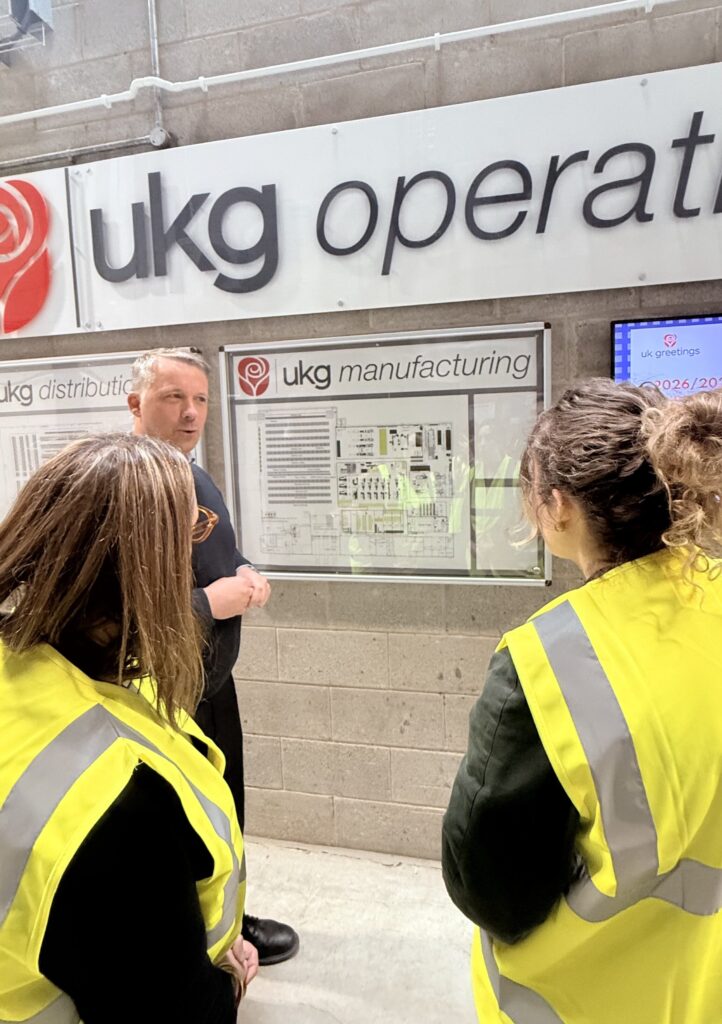
Operationally, UK Greetings procures 100% renewable electricity, its operations are zero waste to landfill, and it has continued investing in energy efficiency. A good example is its Cannon Way manufacturing facility, where replacing an ageing roof with a high-performance system has contributed to a 28% reduction in natural gas consumption.
“But perhaps the achievement I am most encouraged by,” added Chris, “is that we are increasingly putting the structure behind sustainability. At corporate level, our near-term Science Based Targets have been validated, including reductions in Scope 1 and 2, Scope 3 and FLAG emissions. At UKG, our six Climate Action Teams are bringing people from across the organisation into areas including energy, supply chain, product, logistics, waste and employee engagement.”
Chris will use the stage at the Conference to talk about the very practical reality of turning sustainability ambition into action.
UKG’s journey has involved looking at the whole system: the materials it chooses, how products are designed, where they are manufactured, how they are packaged and transported, how its buildings operate and, increasingly, the carbon impact throughout its value chain.
“One area I’ll explore is our journey from a linear towards a more circular model. That sounds straightforward on a sustainability slide, but achieving it means getting into the detail of product design—asking whether a finish is necessary, whether a material can be substituted, whether packaging can be eliminated and whether the consumer can easily recycle the finished product. Our product guidelines now address everything from glitter, plastic gems and foam pads to varnishes, foil, ribbons and packaging.
“I also want to discuss carbon reduction and the importance of tackling it as a business challenge rather than leaving it with the sustainability team. That is one reason we established six Climate Action Teams covering supply chain and procurement, energy and decarbonisation, product innovation, transport and logistics, waste and circularity, and employee engagement.
“And I’ll talk about some of the things that haven’t been easy. Sustainability is a journey of continual improvement. There are trade-offs, technical constraints and commercial realities, and sometimes the solution you initially expect to be the most sustainable isn’t necessarily the solution that delivers the greatest overall impact,” revealed Chris.

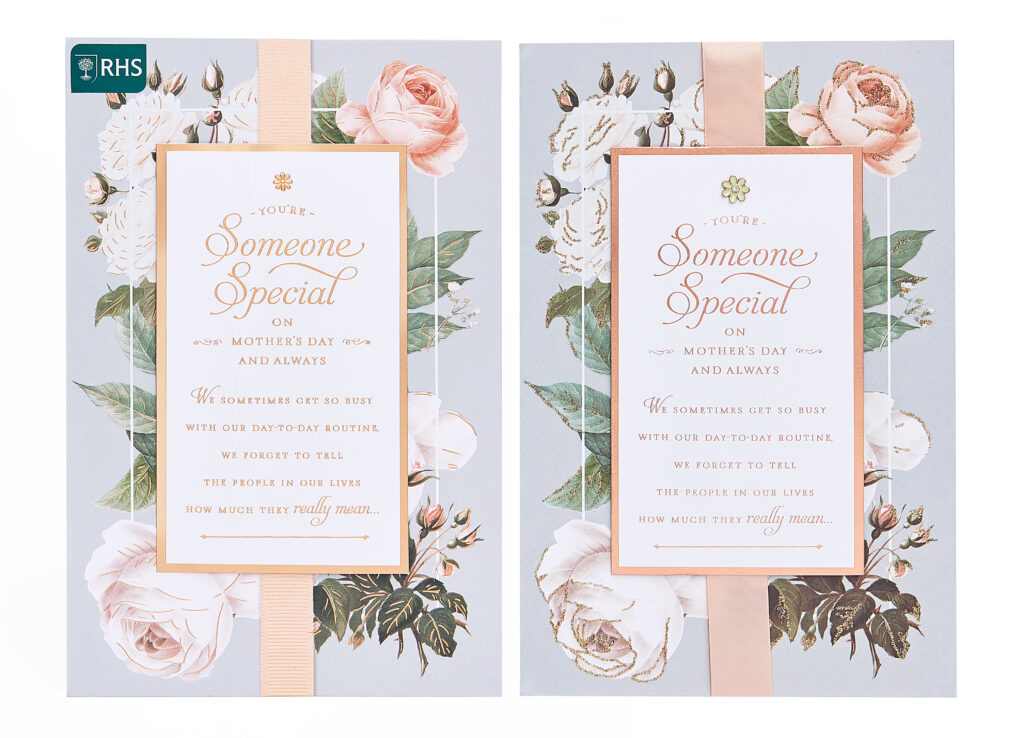
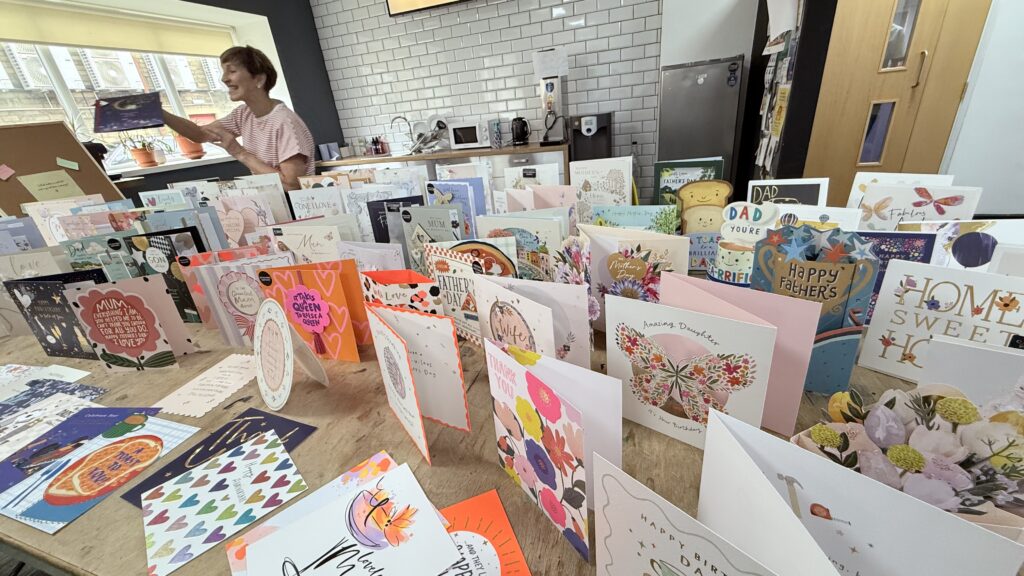
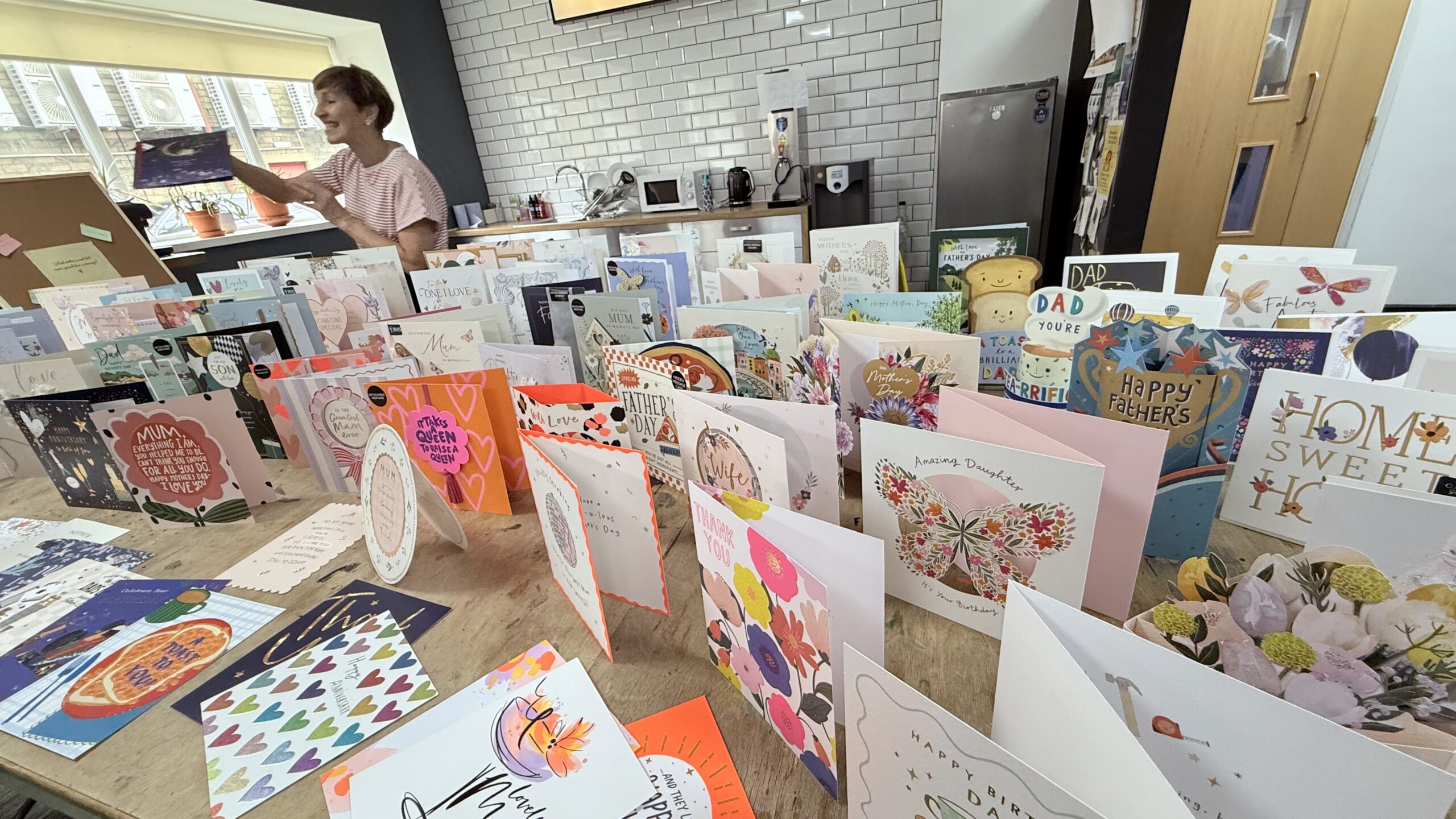
Above: UKG’s greetings card transitioning away from plastic and non-recyclable elements. Credit: UKG
Chris added that he wants attendees to leave crucially believing that meaningful sustainability progress is achievable, but also recognising that it requires persistence, collaboration and a willingness to challenge established ways of working.
“One of my key messages will be that you don’t need to wait until you have every answer before you start,” said Chris. “Our journey has been iterative. We have removed materials, redesigned products and packaging, invested in our UK manufacturing capability and buildings, introduced recycled content, developed carbon targets and are now increasingly engaging our supply chain. Each step creates the platform for the next.”
“I’d also like attendees to think about sustainability as a business transformation challenge, not simply an environmental programme. Sustainability becomes much more powerful when product designers, procurement teams, engineers, logistics specialists, commercial teams and colleagues across the organisation understand the part they can play.
“And finally, I hope people take away the importance of collaboration. None of us will solve these challenges independently. Our work involves organisations such as the World Land Trust, the Confederation of Paper Industries, Schneider Electric and our logistics and supply-chain partners. The more knowledge and experience we share across the greeting card industry, the faster we can collectively progress. UKG’s strategy itself recognises this as a process of continually improving, leading, learning and innovating.”
Chris continues: “For me, the value of the Conference is the opportunity to share, listen and learn. Sustainability challenges don’t stop at the boundary of an individual business. We share supply chains, materials, manufacturing technologies, logistics networks and ultimately many of the same environmental challenges. There is therefore enormous value in bringing the industry together and being open about what is working, what remains difficult and where collaboration could accelerate progress.
“UKG has learnt a great deal through its own journey, but we certainly don’t claim to have all the answers. I want to share some of what has worked for us—from circular product design and removing plastics to operational carbon reduction and creating cross-functional Climate Action Teams—but I’m equally interested in hearing how others are tackling the same issues.
“I think this is exactly the right platform because the greeting card industry has an opportunity to demonstrate that commercial success, great product and environmental responsibility do not have to be competing objectives.
“If people leave the conversation asking better questions of their own products and operations—and if we leave having learnt something from others that helps us accelerate our own journey—then I think the Conference will have achieved something genuinely worthwhile.”
Join POC and UK Greetings for the POC Conference on 11 November at the Royal Geographical Society, London. Find out more here.