
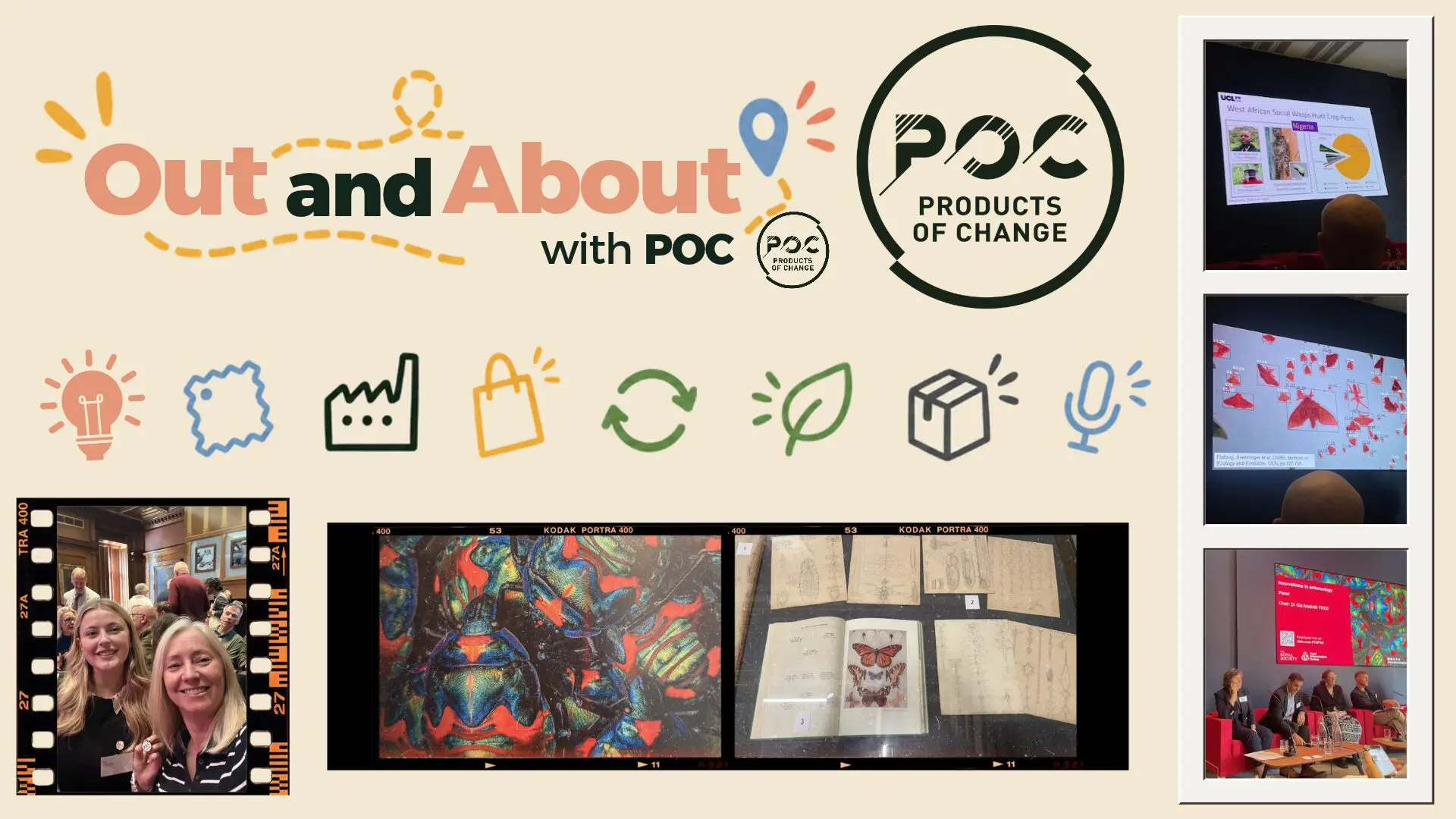
Out and about: in London
Looking for: innovations in entomology
We found: though insects are small, they actually have a global impact?
This week I was invited by Nikki Beckett from The Snowball Effect, a products of change ambassador, to the Royal Entomology conference of innovation. The conference was held at the Royal Society in London. In this issue of POC Out and About I will be going over the highlights of the day.
The day started bright and early with welcome tea and coffee, and some great networking. Then we jumped straight into the sessions, individual talks broken up by panels, which allowed for an active conversation between the audience and the speakers.
Key sustainability takeaways from the day…
Dr Helen Jamet on reminded us of the importance of staying ahead of diseases spread by vectors. She outlined the limits of the tools we currently have available for vector control: durability, coverage, residual transmission. Climate change means that there is also going to be a change in vector behaviour, such as: expanding vector range as more climates become viable for vector survival and breeding (e.g. Mosquitos). Climate change can also lead to more volatile transmission from vectors, meaning the warmer a mosquito is, the quicker it changes from being infected to becoming infectious. Hence they spend more of their life infectious putting humans at a higher risk of as a result.
Potential solutions discussed:
- Do our bit to stop climate change
- Genetic control of mosquitoes and other harmful vectors
- Prioritising prevention over cure
- Funding research on NTDs
These solutions must be combined to achieve the most efficiency when protecting people from disease. Currently 2.2 billion cases of malaria have been reported globally, we must do our part to help reduce these numbers.
Throughout the rest of the day we listened to discussion on pesticides and insecticides and how we can reduce their use through genome drive and spray on microbial solutions, how AI can be used to identify hidden biodiversity and how wasps are secretly farmers friends.
My favourite part of the day was listening to the active discussions during the panel. Questions were asked as people challenged one another, asking them to open their mind to new solutions such as wasps not being the bad guys (I know!): wasps love to eat the kind of insects that degrade crops, which could be an alternative to pesticides.
A big thank you to the Royal Entomology Society for holding such an important event. It is rare to see so many people from different and yet it is the only way to make significant change within the discipline.
Join me and the team for more blogs like this, what will we get up to next?