
The reuse and sharing of pre-loved products and repurposing materials to make new ones is tipped to become the next tentpole in toy industry sustainability.
As demand for pre-loved continues to grow among younger audiences, experts at the international industry organisation, Toy Industries of Europe expect to see businesses shift to a ‘more circular approach’ at a faster rate in the coming years.
The industry has already made major headway in driving circular models, including the expansion of toy take-back schemes that now run across the sector’s biggest players, including The LEGO Group, Mattel, and Hasbro. Meanwhile, toy repair platforms are beginning to pop-up at a growing rate.
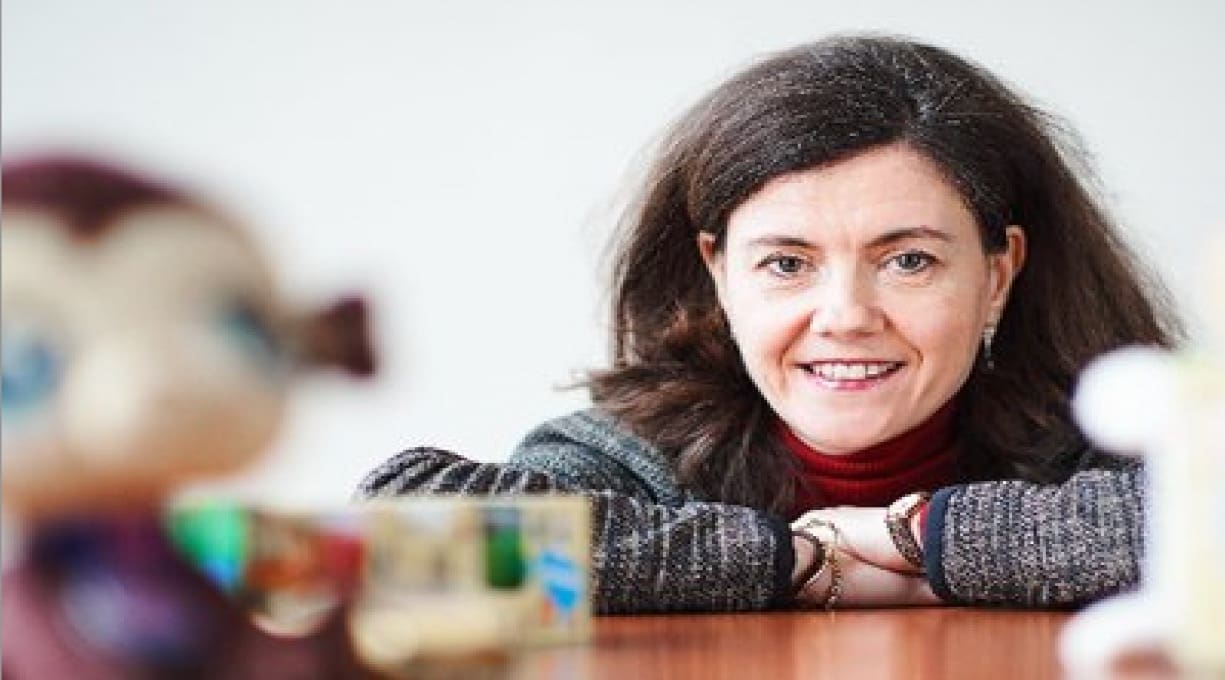
“A circular approach for our sector means toys are around for as long as possible to be reused, shared, and don’t end up as waste, but as primary materials for more toys or other products,” says Toy Industries of Europe’s director general, Catherine van Reeth talking exclusively to Products of Change.
“It’s exciting to see how the sustainability agenda of toy companies is becoming more ambitious.”
The TIE recently engaged with the Products of Change platform to reformat its Play for Change Awards’ Sustainability Category, a move reflective of the evolving relationship that the international toy space now has with the sustainability agenda.
Submissions to this year’s Play for Change Awards’ Sustainability Category will now be assessed on their ability to deliver an overall positive impact for the environment across all stages of their lifecycle.
“To reflect an industry maturing to sustainability, we have raised the bar on how we will assess and measure good industry practice,” says Catherine.
To explore this and the many other factors contributing to the toy industry’s journey with sustainability further, Products of Change sits down with the TIE’s director general.
Hello Catherine, thanks for taking the time to chat with us. To start, it’s been very exciting linking up with the TIE team to work on a new system for the Play for Change Awards’ Sustainability Category. What inspired the move from your side to refocus the sustainability award?
I think it’s a reflection of the fact the toy industry is ‘growing up’ in terms of environmental sustainability. Companies are becoming more sophisticated in their approach. We already noticed this with the winners of previous years and felt it was necessary to adapt accordingly.
Of course, our sector is also responding to the change of gear in the general climate change debate. What were admirable moves a few years ago may not seem as impressive these days. I’m thinking here of lots of actions concerning packaging: minimising the size of the toy boxes, using recycled cardboard, or eliminating single use plastic. Technological innovation allows toy makers to be more ambitious now.
When I first joined Toy Industries of Europe, I was told it was absolutely impossible (mainly for safety reasons) to use recycled plastic for toys. A little bit later, it was made possible, at least for certain toys. Now we see that category is growing.
There is also a general snowball effect as the climate change debate is becoming ever more urgent: everyone knows we need to do more. Also policymakers are coming up with a whole series of measures that should make a difference. These policies are ‘upping’ the threshold and some moves that used to be voluntary have become or will soon become a mandatory ‘minimum’. Think of the banning of microplastics, for instance.So, it was only natural to become even more ambitious also in the Play for Change Awards.
How has the partnership with Products of Change reshaped the category and what sort of criteria does it take into account?
We have raised the bar as submissions will be assessed against their ability to deliver an overall positive impact for the environment, across all stages of the lifecycle. That’s the real difference.
It’s not always immediately obvious where the biggest impact is created. For instance, replacing a packaging material with a more recyclable alternative can be a positive step, but could represent only a small change in overall impact when considering the emissions generated elsewhere in the life of the product.
The guidance of Products of Change has been essential here as their expertise on full lifecycle assessments and being able to judge real impacts is extremely useful to the jury.
How important was it to the team to get this right? What positive impact do you hope the Play for Change Awards will now drive across the international toy industry?
The Awards serve as a tool to celebrate those companies who are going ‘above and beyond’ their social responsibility. We also hope they will have a ‘positive nudging’ effect and will give others a ‘can do’ attitude and enthusiasm to follow in the tracks of some of the trailblazers in this field.
We can see that the sector was ready for this anyway as the companies’ explanations make it very clear that things such as lifecycle assessments have become quite ‘normal’.
What do you think the future holds for sustainability across the international toy industry?
I can see the sector continuing to move in the right direction, probably faster and faster. It’s not just about social responsibility in care for the planet, it is also something many consumers are looking for. With this, we expect business models to shift to a more sustainable ‘circular’ approach which for our sector means the toys are ‘around for as long as possible’ and can be re-used, shared, and don’t end up as waste but as primary materials for more toys or other products.
We already see a start of this movement with a few companies working on ‘take back’ and repairing and restoring toys. Of course, a good quality toy will in any case already have several lives so the ‘re-use’ part should not be difficult.
What’s exciting you the most about sustainability within the toy industry?
It’s exciting to see how the sustainability agenda of toy companies is becoming more and more ambitious, without compromising on safety and creativity. Toys need to continue to be safe as well as fun and engaging for children, also the ‘green’ toys. In the past, these sometimes used to be a bit more ‘dull’ and it’s great to see this change.
Exciting times ahead for the industry. Thanks Catherine. Before you go, can you give us a lasting message on the Awards, the nature of play, and the journey towards better sustainability?
I’m always happy to see entries to the Awards that – besides having been created in way that has a limited impact on the environment – aim to teach children about the need to care for the planet and that try to get them enthusiastic about ‘the sustainable way’. We see more and more of these entries and it is something very specific to our sector.We know what an influence play and toys can have on children and their understanding of the world. If we can make sure that in a playful way children learn about the importance of ‘green’ habits, we may help create a greener generation of consumers. This is a special talent we have that we can be proud of.