
As the Products of Change Conference this year on 11 November approaches, we will be giving you sneak peeks into the varied and curated agenda for this year’s events, with interviews with some of the illustrious speakers set to spill their wisdom on the stage of the Royal Geographical Society.
First up is a retailer and brand which has been demonstrating how circular practices and services can be thoroughly integrated into the consumer experience, both online and on the shopfloor.
Chris Allen, Decathlon UK’s director of sustainability and head of circular economy, shares how the company began its circular transition and the huge growth it has seen as a result.
It was back in 2021 when Decathlon first put together its sustainability agenda, which it is expecting to update next year, setting out its decarbonisation targets and putting circularity front and centre of its plans.

Since 2020, revealed Chris, Decathlon designers have had the mandate to design for circularity, meaning they are designing for products to be repairable, for spare parts to be available to consumers, and designing for durability so that products last a long time but then still ask: ‘how can we make it last even longer?’
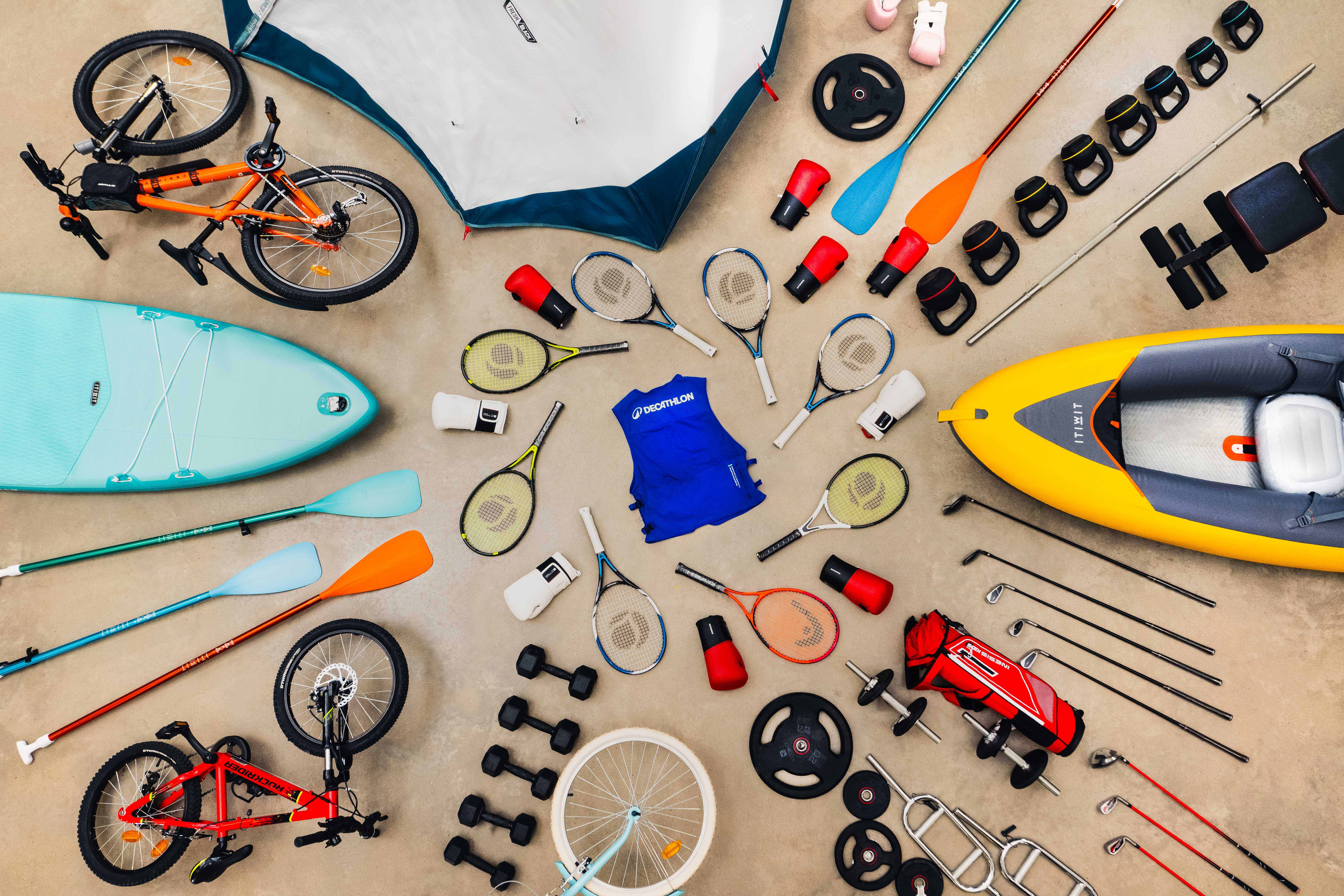
The repairability is a crucial part of this offering as not only are the products designed to be repairable, but Decathlon offers the repairing services in-house for its customers – something it has in fact been doing since it opened back in the 70s, mainly for bikes. But since 2018/19 this has continued to expand to also cover SUPs, kayaks, tents, poles, textiles and large sports equipment, as that is where the volume of waste lies if they are to be disposed of instead of repaired.
“We have spare parts available; we’ve upskilled teams,” said Chris. And what cannot be repaired in its in-store hubs, can be sent to Decathlon’s national refurbishment centre.
Per year, Decathlon provides approximately 20,000 warranty repairs, and 60,000 paid-for repairs by consumers, even repairing products from other retailers.
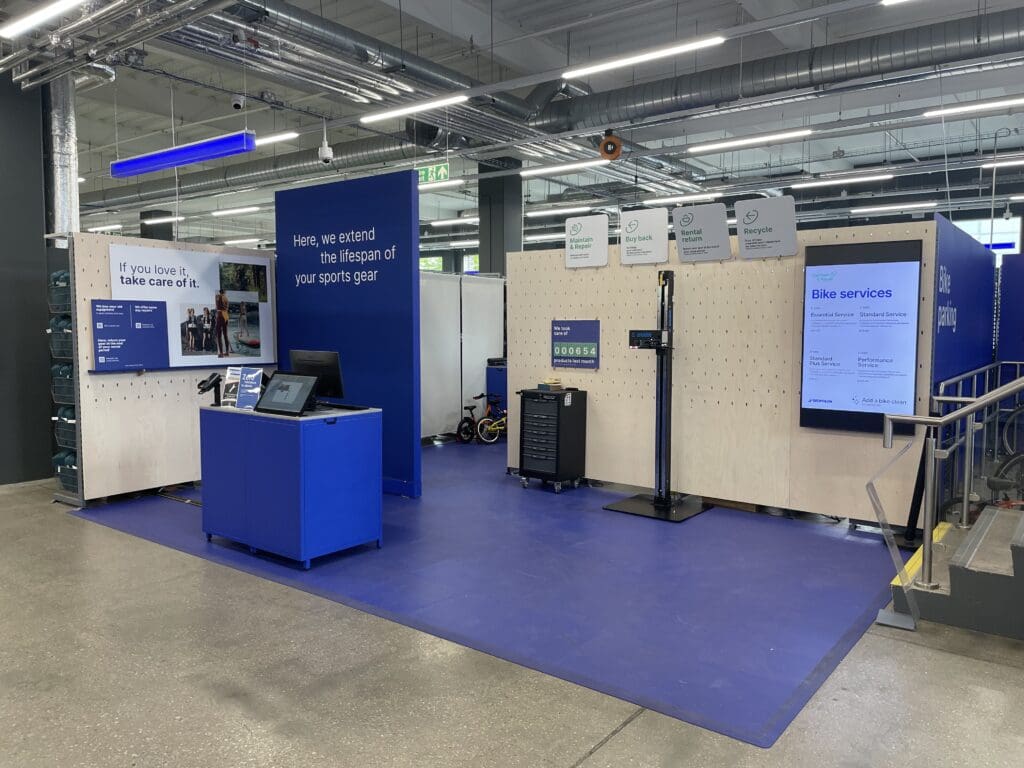
“We know one of the biggest barriers to repair is knowledge, and one of the things we had to do was help consumers understand how they could repair, and if they wanted to do it themselves, what it would require and how to do it,” Chris explained how Decathlon has set up an after sales site, providing information on maintaining and repairing product as well as a technical support team that can remotely diagnose and support with repairs over the phone.
But Decathlon’s circularity initiatives don’t stop at repair. It also has a second life tag on its website where customers can find and identify refurbed products that Decathlon has made available for sale. Crucially this is also integrated into its shopfloors, with a selection of such items also available in its brick-and-mortar stores. Decathlon refurbs about 20,000 items a year and has also recently begun to offer buy back opportunities for its customers, which sees another 10,000 items acquired and refurbed. Chris explained that this is where the company is seeing the biggest driver of its circular transition, with 30,000 refurbed items resold each year.
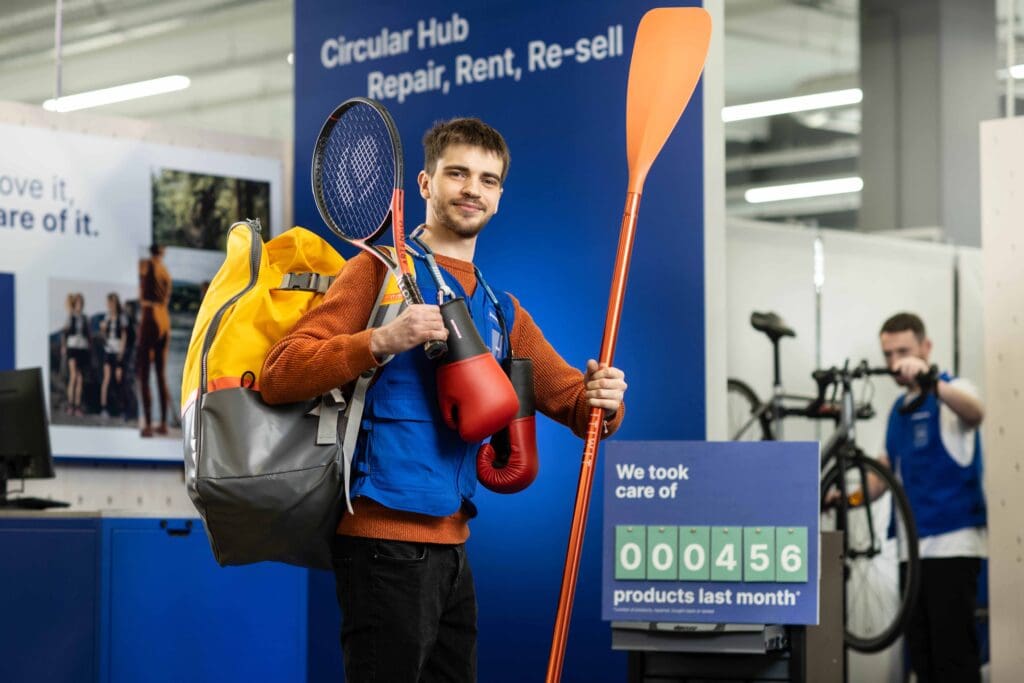
But Chris admitted it was no easy transition: both customers and internal stakeholders had to be onboarded to the initiatives. At the Conference, Chris will dive into how exactly Decathlon whet consumer’s appetite for circularity, getting them to listen and change habitually.
One such learning was how to communicate it to the customer. Chris said that they quickly learnt that renaming the Repair Hubs ‘Circular Hub’ just didn’t resonate with consumers – they only see and engage with part of the circle and so it is meaningless to the majority of consumers that aren’t super engaged in the world of sustainability.
This also meant reframing the promotion of it from environmentally-led to money saving-led – how getting product repaired, or buying second-life, or selling their products back to Decathlon, can all save the consumer money. This is what resonated. It is not that people don’t care about sustainability, it just can’t be expected to be the sole driver of consumer behaviour, particularly not en masse.

“The integration of our services within a traditional retail environment, that was a big shift. So, we integrated a workshop on the shopfloor where people could see it, integrating used products next to new products so people could shop like-for-like. All of this had to go through retail transformation. We had to really educate and upskill our staff because they were only used to selling new products; incentivising both customers and staff to adopt this route was necessary,” commented Chris. This meant giving staff specific targets to support the company’s sustainability and circularity goals.
Chris added that it can’t be the effort of a siloed sustainability team, there has to be cross-department collaboration to get the company buy-in needed. And now the commercial and marketing teams are fully seeing the benefits.
As both a first time Conference attendee and speaker, Chris is looking forward to seeing the progress of others in the space – where they have succeeded that Decathlon hasn’t yet and identity the shared challenges that could be addressed as a collective.
For conversations like this and more, get your tickets to the Products of Change Conference on 11 November 2026 at the Royal Geographical Society.