
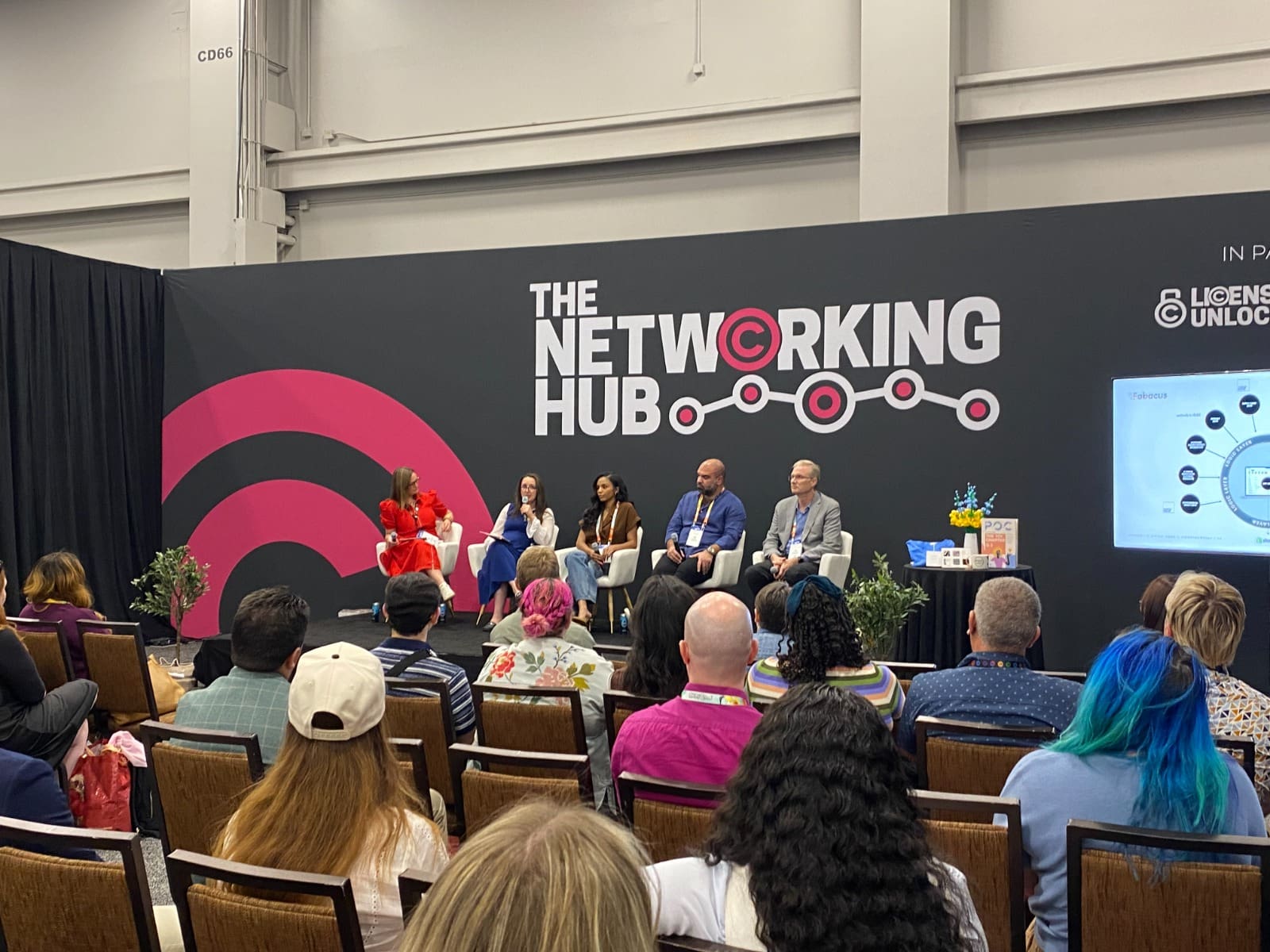
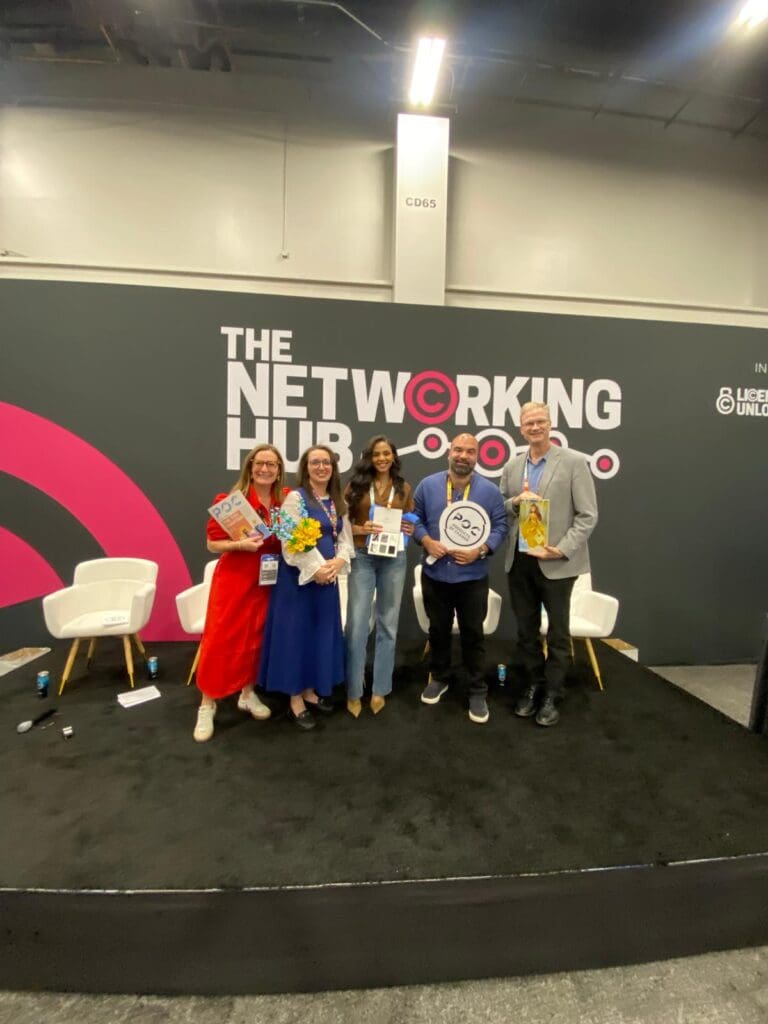
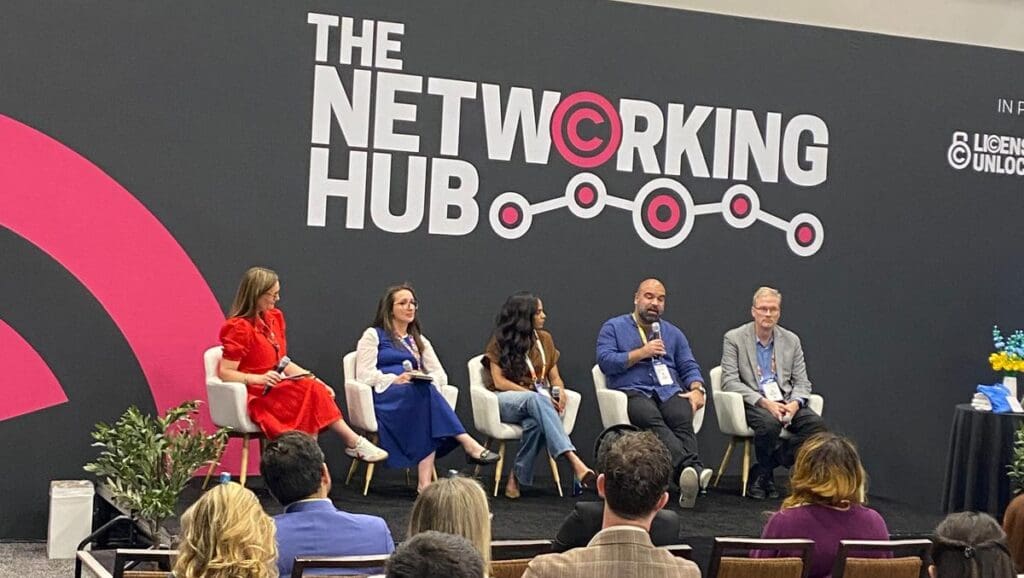
At Licensing Expo 2026, Helena Mansell-Stopher, founder and CEO of Products of Change, brought together an illustrious panel of industry professionals, each pioneering sustainability in their respective organisations and driving real change across beauty, fashion, music, and entertainment.
The panel included Andrew Xeni (Nobody’s Child), Olivia Kelly (Universal Music Group/Bravado), John Breckow (Disney), and Siobhan May Gardiner (The LEGO Group), exploring how brand owners and licensees can move beyond intent to impact by embedding sustainability into product, partnerships and commercial strategy to future-proof brands and unlock endless opportunity.
The brand and licensing industry has always evolved with culture, responding to shifting trends, retail changes as well as new consumer expectations. But there is one shift that is not a passing phase: the expectation that brands genuinely care – and should care. The panel discussed how essential industry collaboration is for this area, and how technology is supporting the sustainable transition.
Insights from Nobody’s Child
Andrew spoke about the evolution of Nobody’s Child, from an ethical brand 10 years ago before sustainability really featured in our vocabulary as it does now. Nobody’s Child has since won retailer of the year for the last three years and experienced significant growth, which Andrew attributes to its responsible credentials.
“I think it’s very hard to claim to be sustainable when you are ultimately a fashion brand, so I’m quite proud of that position. In terms of everything we do is close to the brand’s DNA, which is being responsible, what we source, how we source it, our practices,” explained Andrew, adding that the brand has also recently achieved B Corp status. “We’ve seen that customers, when you tell the story correctly and authentically, and that you’re doing the right job, it’s amazing, the return of customers,” re-emphasising the commercial value and business success that Nobody’s Child has enjoyed by keepings its values and sustainable standards front and centre of its messaging and identity.
Power of music
Similarly, Olivia Kelly shared how sustainability is also a core value to Universal Music Group, and her role is something of an “internal sustainability evangelist” for music merchandise.
“Ultimately we always want to make sure that we’re putting the artist and the fans first and foremost, that’s always at the centre of what we’re doing, and I think right now in the industry, consumers and fans alike are expecting more from the things that they’re buying,” Olivia commented, with both fans and artists demanding more sustainable merch.
“I think merchandise is really special because it’s that one tangible piece of product that connects you to your favourite artist, so when an artist is saying, ‘Hey, I really care about sustainability. I want to make sure that my products are made ethically and sourced responsibly.’ It’s our job to make sure that we’re executing on that,” she added, saying that it is slow and steady and a huge industry to change, but progress is happening and momentum is building.
Building it right
Siobhan from LEGO is meanwhile working to keep “pushing sustainability in a much more natural way in our product lifecycle, number one, and number two, also thinking about how does sustainability show up in our decision making processes and […] move from sustainability being this kind of checklist into something that is part of the core value product creation.” New to her role at LEGO, Siobhan emphasised how much she was looking forward to learning from her sustainable licensing peers on the panel.
Magic packaging
Disney’s John has meanwhile been in the sustainability journey with Disney for some time: “We’re in the experience business, so yes we have environmental goals, we have regulatory frameworks we work with, but we also have consumer expectations.” He added that even though it is the magical world of Disney, making change “is a lot of hard work, it’s a lot of convincing people to try new things.”
John explained about his personal experience as a parent, and trying to help his daughter get into her new toys on Christmas morning, wrenching through all sorts of packaging, “I just thought, this is not experientially great. Packaging is part of the story, part of the experience. It’s the gateways to the product.” This led to him and his team developing the first plastic-free doll packaging for the brand, which POC showcased on its booth at the Expo.
“It’s a reminder that change can happen. How do you change the world? One box at a time. But you also have to think about how it impacts your customer. How is it better? How is it easier? How is it more fun? How is it Disney experiential? And, oh, by the way, is it also better for the planet?” said John, articulating the growing understanding in the sustainability world that there has to be that added value and benefit to the consumer, as sustainability in and of itself is not going to sell and change the consumer mind at the level and scale needed.
John also added that this new packaging format ended up being less expensive. “I think that is something that most people don’t quite understand. Sustainability strategies is building efficiencies into a business model. Efficiencies is cost savings, so you know it’s really good for the bottom line,” said Helena.
Regulatory opportunities
The conversation then moved onto the ever-important topic of legislation, in particular, ESPR and the introduction of DPPs, something which Nobody’s Child and Andrew are closely acquainted with. Andrew also founded tech company, Fabacus, to help big IP owners to build a trusted system of organised products across all categories globally. And about three years ago the legislation started coming through about DPPs and the product data required, which was the perfect opportunity for Fabacus.
“It transpired that everything we built solves that problem. And now, of course, I was in a fortuitous position where I had my own brand [Nobody’s Child] and I was like, allowing me first, and I want to pioneer it, and I want to drive it, and I want to be the best at it,” Andrew said. Now, Nobody’s Child has DPPs on every single product in its spring/summer collection, with over 4000 SKUs across different categories globally. “We’ve actually demonstrated that this can be done and implemented at scale with commercial return on investment, whilst meeting regulation.”
Fabacus is working with numerous brands on their DPPs, including recently the likes of Hasbro, to support their readiness for the new legislation, realise the huge commercial value of the passports, as well as facilitate the level of transparency that consumers are increasingly demanding.
Cultivating collaboration
Keeping on the topic of company collaboration, Olivia then speaks about UMG’s work with textile and apparel manufacturer, Hallotex, and how the partnership has helped push UMG’s sustainability needle even further. Billie Eilish has been something of a case study for the group, since sustainability is so close to the artist’s heart, and they wanted to be able to support her with this through the merch she sold. Through the collaboration, UMG has brought to market fully vertically circular music merch apparel, made from 100% recycled cotton from unsold UMG/Bravado stock.
“We love innovation. We love that we’re able to bring that to life. We’re excited to bring it to market, but naturally, in the spirit of innovation, we’re like, okay, so what can we do next?” asked Olivia, adding that UMG is now exploring post-consumer content and zero waste manufacturing. “We’re really excited that we have support and buy-in from our leadership teams and our company as a whole, so that way we can keep moving forward.”
Because not only do companies need to work connectedly across the business and from every department to make real change happen, but the pre-competitive collaboration across the industry is also essential. “The secret, is the collaboration of the industry, […] we can do stuff on our own, but we have to, we have to set the example and say we can’t tell other people to do stuff we’re not doing,” said John, adding it is hard for one company to do it on their own. “So I think, you know, we do need the Products of Changes in the world to sort of bring us together. You know, we’re all trying to source the same recycled polyester, we’re all trying to source sustainable palm oil; if we don’t have it individually, we’re never going to create that consensus demand that says we’ve got to increase the supply field.”
Industry perspectives
This led onto a discussion of new innovative materials, and LEGO‘s work to find a more sustainable option for its plastic bricks. “When that product carries our name, it also carries the same expectations and trust that consumers associate with our brand, but then the complexity increases further with materials,” said Siobhan, explaining that the challenge at LEGO has been to find a new material that maintains the same durability and functional quality that consumers expect.
Next, John speaks more broadly of the industry as a whole and why it is crucial to focus on the ‘why’: “I just can’t stress enough, it’s because we’ve got to look at this in the long game, you know, and I know we can look at policies that come and go, and politics come and go, and you know, regulations come and go, but this is a long play, and if it took us a long time to get it, it’s going to take a long time to get out, and it really isn’t going to be just one box at a time, one decision at a time, but it’s a long game, you know, and we’re all in this together.”
He also added that the language of sustainability can be so impermeable, and it needs to be brought down to a level that people understand – most people don’t understand the difference between Scope 1, 2, and 3. But with such incredible and recognisable brands in the industry onboard, there is a great opportunity to communicate to the consumer in a way they can engage with.
“When we think back around the other products that we have across our licensing portfolio, all of a sudden you’re connecting that element of play and imagination to how that can show up, how that shows up for a fan, and then you have the opportunity with brands or with powerful partners who speak to these topics on nature, on climate. There’s definitely some powerful stories, that’s not just accessible for kids, but adults too,” said Siobhan.
The session then concluded with a Q&A with a number of questions from the audience around the commercial benefit of sustainability, the particular areas that should be targeted, and the new technologies being explored. The whole discussion demonstrated how these major leading brands have embedded sustainability into their businesses and are reaping the benefits, and are embracing the responsibility that falls on them to lead the transition.