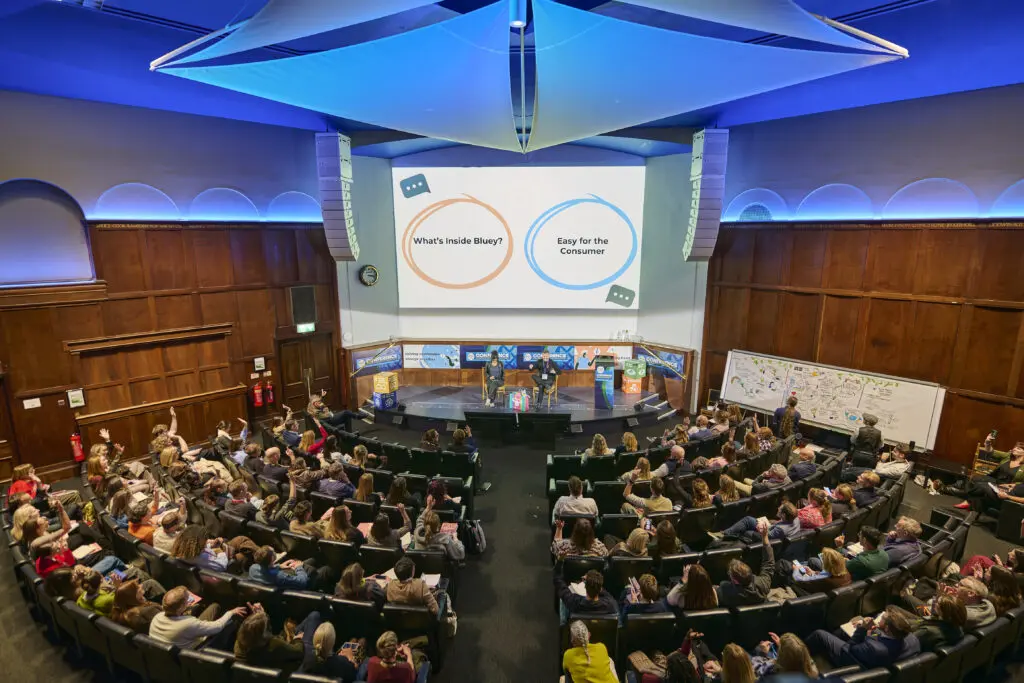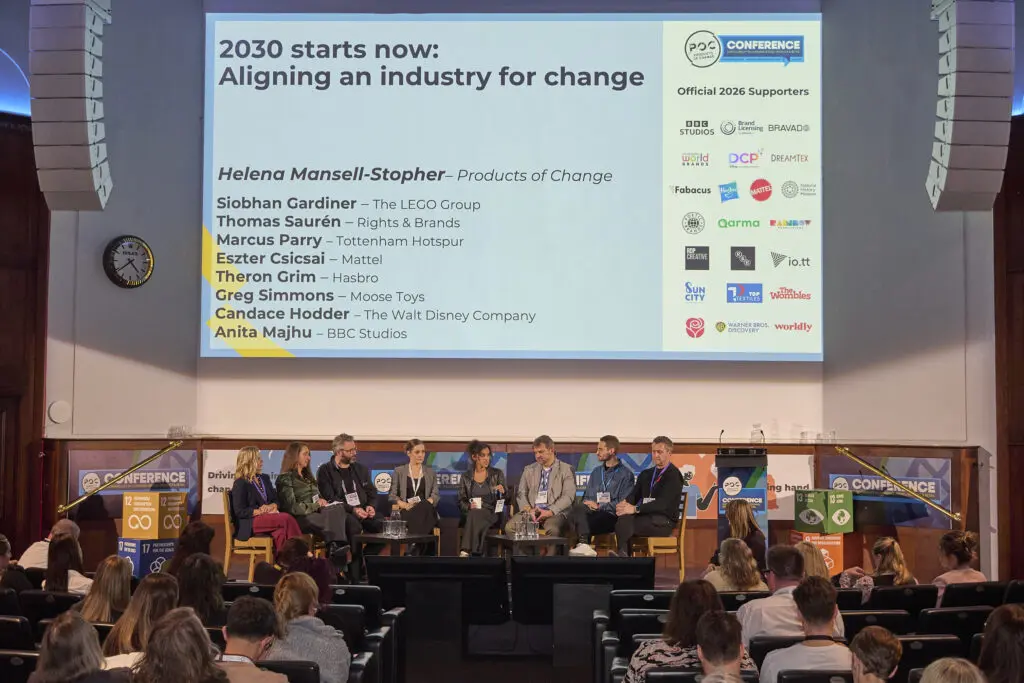
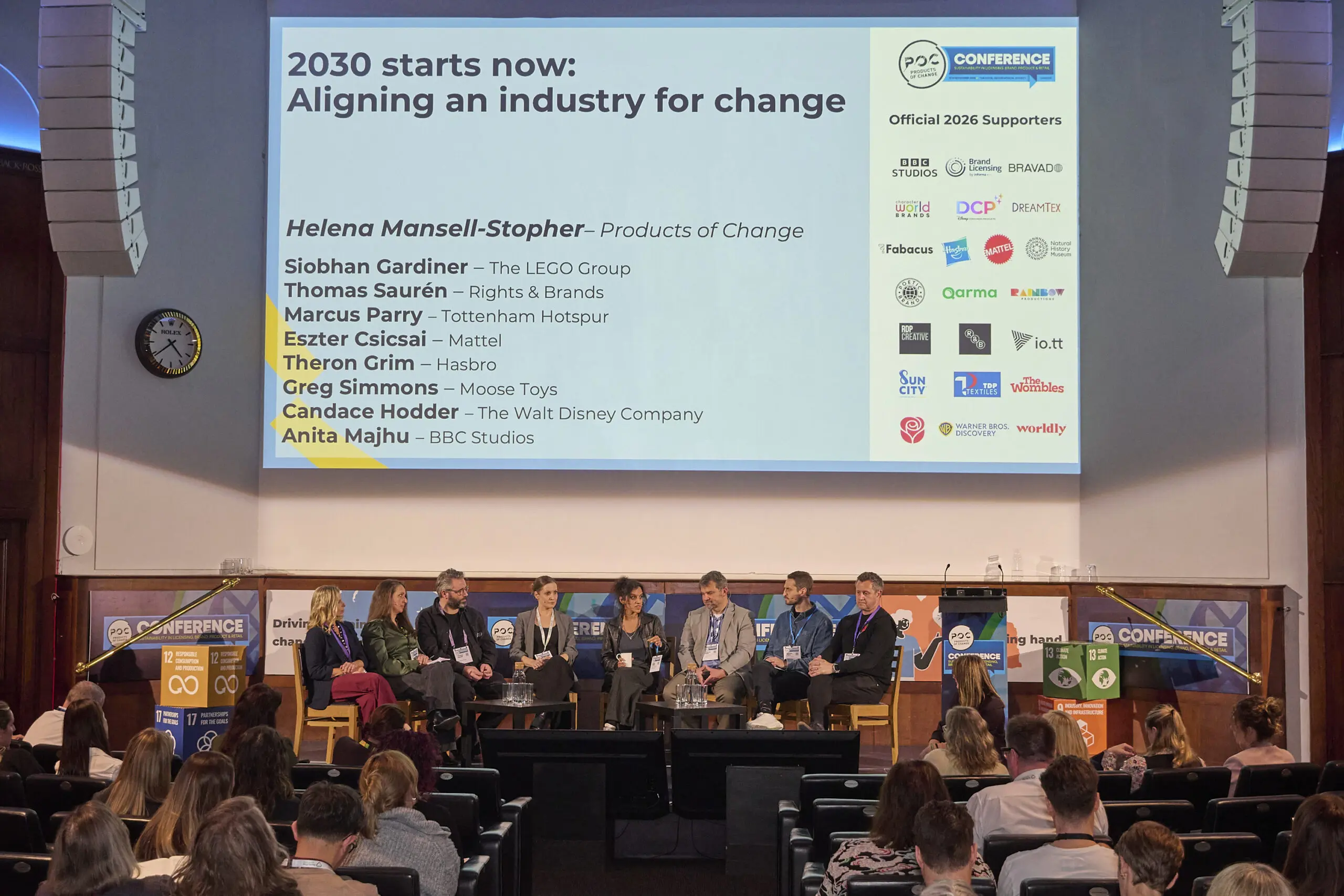
In a highlight session of the POC Conference 2026 for many, leading brand owners came together to share how they have integrated sustainability into their businesses and what is needed for the path ahead.
- Moderator: Helena Mansell-Stopher, founder and CEO, POC
- Eszter Csicsai, director of sustainability, Mattel
- Siobhan Gardiner, head of sustainability, licensing and extended line, The LEGO Group
- Theron Grim, vice president, ehs, sustainability & corporate citizenship, Hasbro
- Candace Hodder, environmental sustainability, The Walt Disney Company
- Anita Majhu, FMCG and brands & licensing sustainability lead, BBC Studios
- Marcus Parry, head of impact, Tottenham Hotspur Football Club
- Thomas Saurén, sustainability and content director, Rights & Brands
- Greg Simmons, director of sustainable product development, Moose Toys
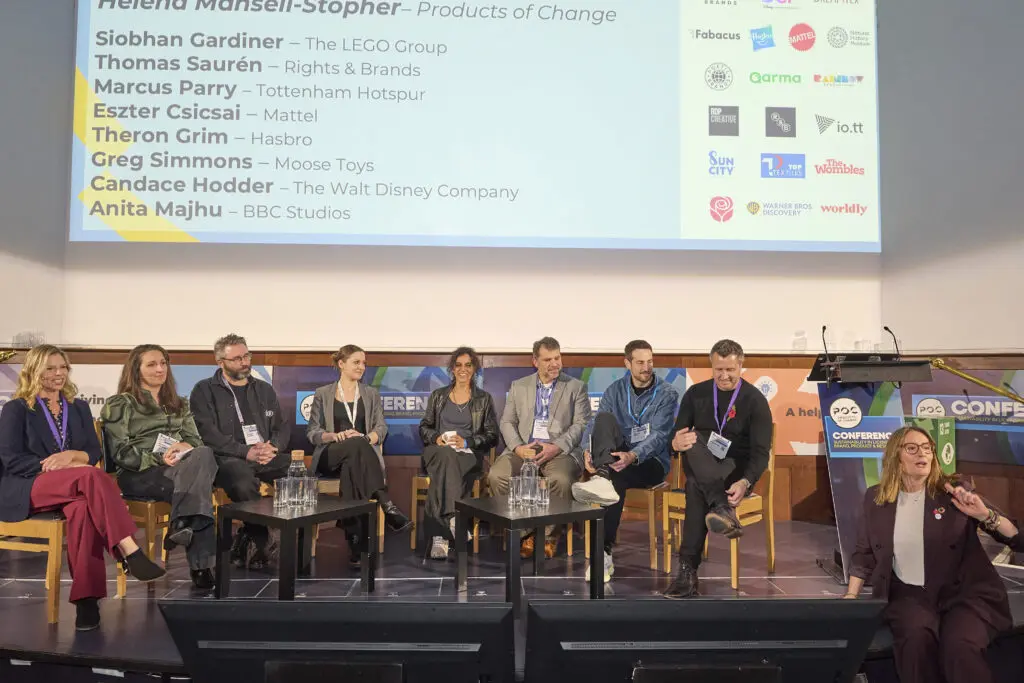
These names form part or a larger advisory council for POC and many are also part of POC’s EPR working group, through which they have been coming together to tackle industry challenges as a collective. This session was all about bringing a taste of that journey and that collaboration to the Conference audience.
It began with a conversation about the biggest changes these companies have undergone towards a more sustainably operated company.
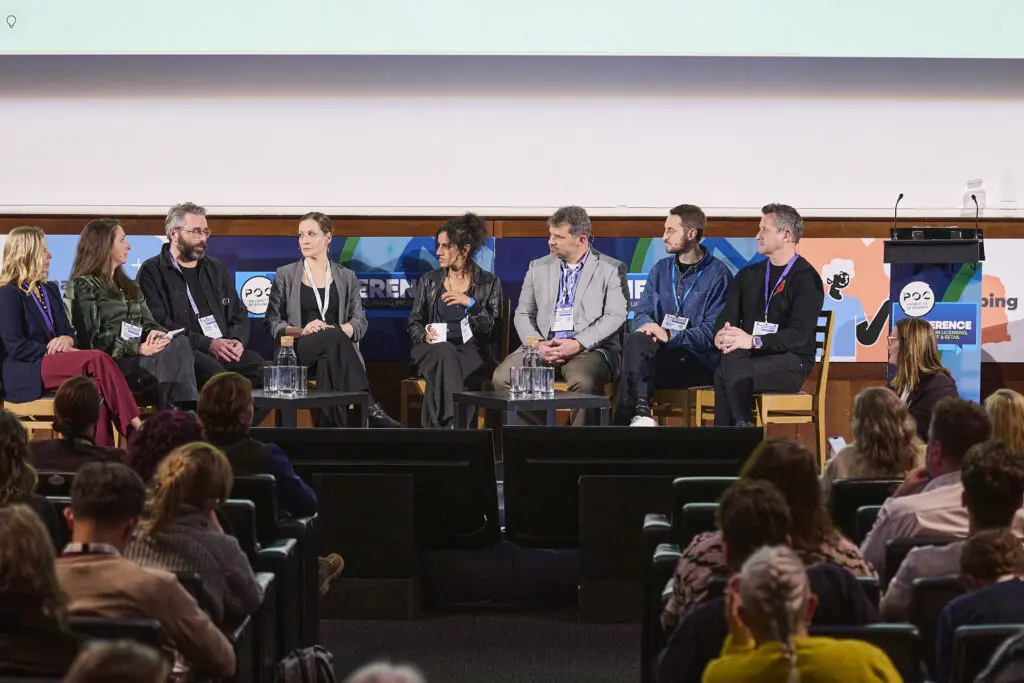
Thomas shared that for Rights & Brands, the licensing agent for major brand, Moomin, its big change for itself and its licensees is that now “sustainability is the gate you have to pass for us to continue working together.” And this has been accepted across the company even with sales.
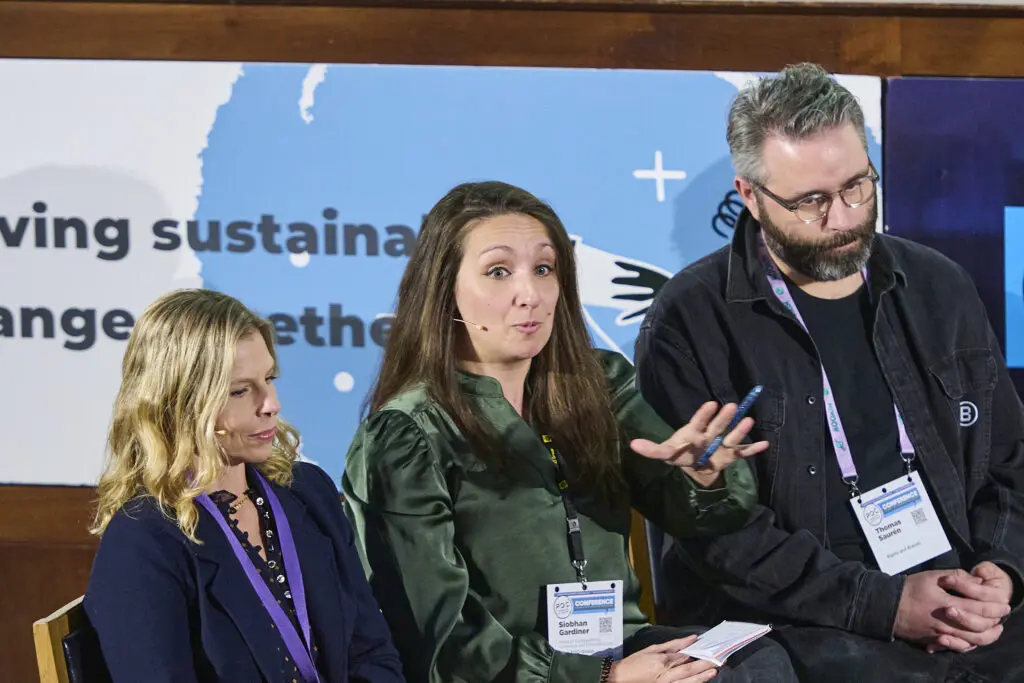
Siobhan from LEGO also spoke about how she joined LEGO when it already had an embedded approach to sustainability, a brand synonymous with quality, durability, and playfulness, not just for its bricks but also its licensed products.
Siobhan explained how LEGO’s approach to sustainability gives it the space to innovate around sustainability and be purposeful about how its IP shows up in the market.
Retailers are working to prepare for legislation, aggregating data, etc, and as a licensee operating between these actors, why wouldn’t you invest in mitigating that risk to be future fit and more competitive?
“Sustainability not just as checklist but as part of the value proposition of product,” said Siobhan, something which will become increasingly powerful over the next 5-10 years.
LEGO can help partners on that journey and use its inhouse expertise accordingly.
Eszter from Mattel added that having a central sustainability team has been crucial, since it is a challenge to have eyes everywhere but it can be an asset to have centralised hub. From this hub, the sustainability team is building models and upskilling other teams.
This enables there to be “Eyes on the many, many people throughout the company that have a handprint on sustainability,” said Eszter.
This model has also been beneficial when it comes to licensing as it allows visibility on licensee and partner requirements.
“Being in alignment helps everyone row in the same direction,” commented Eszter, and helps small sustainability teams achieve.
Similarly, at Hasbro, Theron explained how it has “learned from our mistakes with our brand team to apply learning to licensing teams.”
For example, Hasbro introduced a company-wide mandate to eliminate plastic in its packaging, however after it was introduced, it had to be backtracked on certain ranges due to consumer push back, particularly when it came to collectibles. “It works well on some products but not all,” said Theron.
Hasbro is also working on modular packaging and making it uniform for more efficient transport and packing purposes.
“We are learning from where our brands partners and licensees are and bringing them into the conversation,” said Theron, which means setting realistic expectations and meeting licensees where they are at on their sustainability journey.
Meanwhile, over at Moose Toys, Greg praises the introduction of sustainability legislation: “It is great as we don’t have to get into conversation about why we want to measure our carbon footprint anymore,” it is now a standard information requirement.
The majority of Moose’s licensing is inbound, which is made easier when there is clear message from the licensor about their sustainability, said Greg.
Eszter spoke about how the working group with POC “has been a gift,” providing a platform “to pre-competitively discuss shared challenges and share ways we have to solve them.”
Everyone has same EPR challenge, but with it comes huge opportunity, especially since toys are so visual, so packaging plays such an important role.
EPR group has had so many benefits, said Eszter, revealing where they have similar archetypal base packaging, and helping to clear up grey areas to ensure everyone is defining things in the same way.
“Sharing is a way to pay it forward,” said Eszter, “If one company has already put in the work, we can share and drive demand to make it more accessible to everybody, and drive signals towards regulators.”
As a group of leading toy brand owners, Eszter also spoke about the enormous opportunity they have to “redefine what premium means, what visual appeal means and redefine language of packaging to shift what consumers are seeing, together.” At the moment, consumers have an expectation of what toy packaging needs to be and what premium looks like, but if the toy companies move as a collective to redefine this with sustainable changes, then a consumer shift in mindset is possible.
“Talking through all things together can help us grow in the right direction,” she added.
Candace from Disney shared how it is investing in capacity building programmes and climate school to support SMEs, so that vendors and licensees can learn how to measure and manage GHGs.
Keeping on collaboration, Anita from the BBC commented that we all “need to be transparent and talk about things together, and we are seeing collaboration more and more.” Which highlights the importance of shared resources and expertise with POC.
Of course, there will still be duplicate requests in the short term as companies are exploring, but it is “not the responsibility of just one part of the value chain to address, it is the issue of the sector, which needs to be addressed or be held accountable for.”
“Good things are coming out but there are still imperfect, but they allows us to start to establish what good looks like,” said Anita. “The value chain needs to come together and pool shared expertise and that means all voices at the table.”
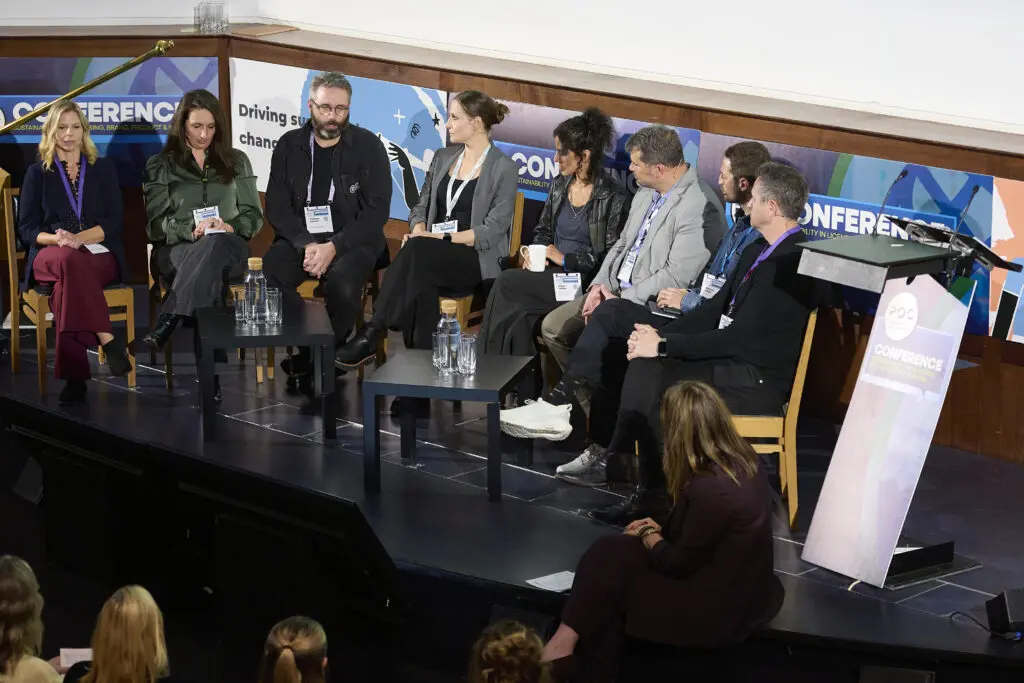
Also on the panel was Marcus from Tottenham Hotspur, offering a valuable perspective from the sporting world. He explained that sport is unique as it is small teams but with huge global reach and incredibly emotive.
He took us through some of the great work that has been going on at the Spurs stadium, including energy reduction and reducing impact from its food – an area Marcus said is particularly exciting due to the speed of implementation.
Purchased goods and services accounts for 75% of the club’s emissions and food is 30% of that so great change can be made. Already, 40% of its food is vegan or plant forward, 98% of desserts are vegan, and it has switched beef to venison and blended with veg to reduce the impact further.
“We have given them [fans] a great option that doesn’t feel like compromise,” said Marcus. He added that it is measuring full footprint and trying to pick easy wins to work with limited resources.
Candace shared about how everyone on the panel and in the community has a lot of similarities with how they are building their sustainability frameworks, adding that this allows for really beneficial collaboration, such as from the POC Carbon working group which led to the creation of the GHG protocol methodology with the World Resources Institute. It allows a review of “should this be something we build alone or something we can do together?”
Theron added that collaboration should always be mandatory, and that was realy the theme of the day. “Hasbro does not see sustainability as an advantage, we see it as table stakes,” he said, “If we can all work with that mindset, we can work together to advance. We work with the same factories, have same suppliers, use the same retailers, so there’s no reason we can’t work together.”
He used the example of an internal goal to switch as much of its paper-based packaging to FSC but it was looking to be too expensive, but its factory saw another company make that switch and that brought the price down. “If we ask for the same things, we have a better chance of those being at a lower cost because of supply and demand,” said Theron.
Materials and their cost are the biggest barrier to progress, said Thomas, which needs the big giants to work together on materials. “But we don’t want to just change materials, also have to change the business,” said Thomas, particularly when it comes to integrating circularity.
Greg said, when it comes to data, the ambition should be to make all unknowns, known.
Marcus added that he firmly believes there are enough opportunities to save money and cut costs in waste and circularity meaning a positive impact on the planet and the bottom line. “Stop thinking about the barriers and keep chipping away and looking for opportunities that everyone in the business can get behind,” he said.
“Starting anywhere is a good place to start,” said Anita, “nothing is perfect; the value we are creating is a sum of its parts and all the small things matter. All of us have a role to play.”