
A week at Future Fabrics Expo provided insights into the future as well as plenty of hope.
The serendipity and aptness of much of Europe buckling under an extreme heatwave was not lost on attendees at Future Fabrics Expo this week. While undeniably stifling and causing myriad travel disruption, the weather was in fact perfectly timed – a perfectly timed reminder of why we were all at Future Fabrics Expo.
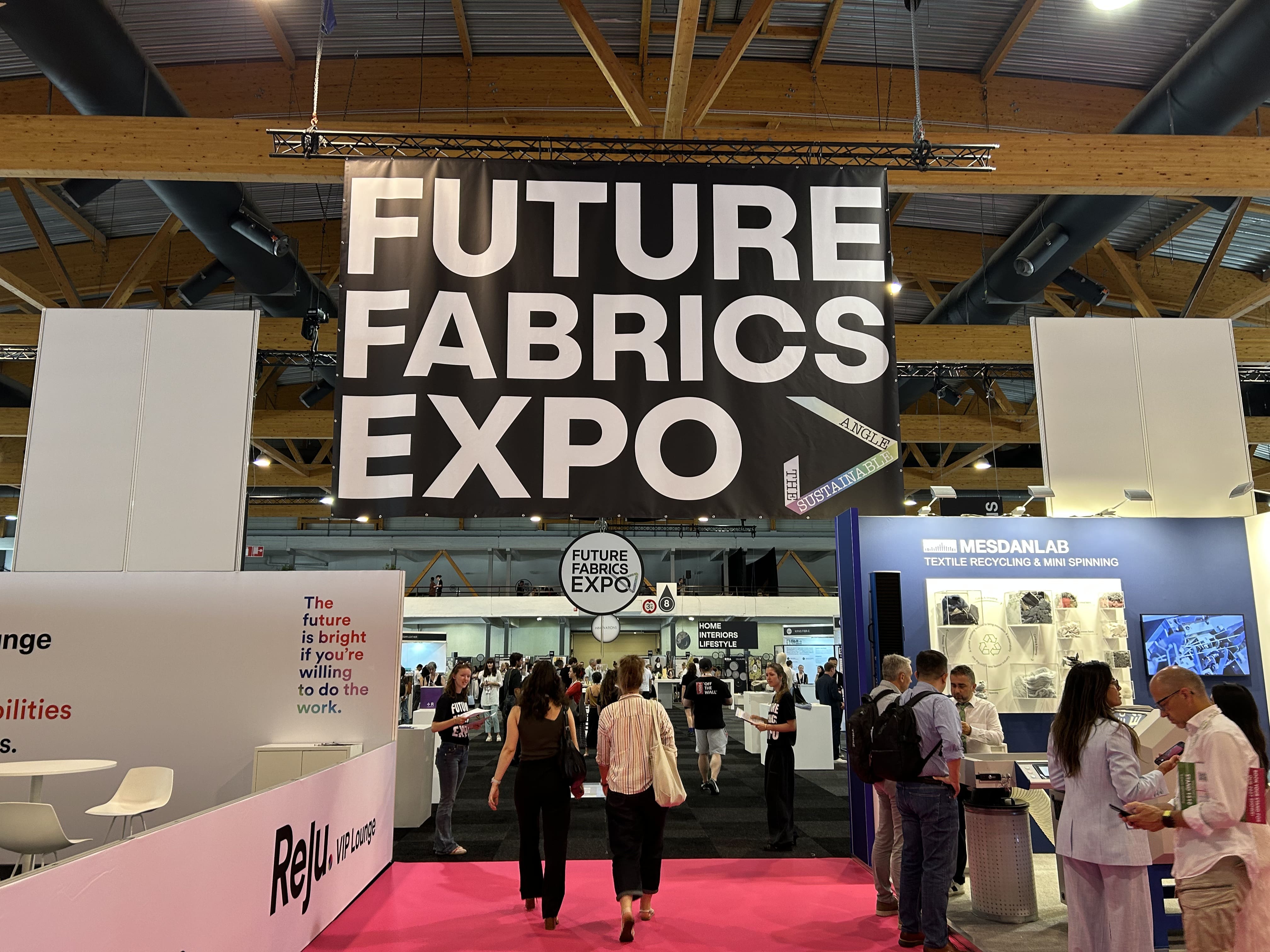
Opening for the first time in its new location in Brussels after its years in London, Future Fabrics Expo ran this week 24-24 June, cohabiting with the Textile Recycling Expo.
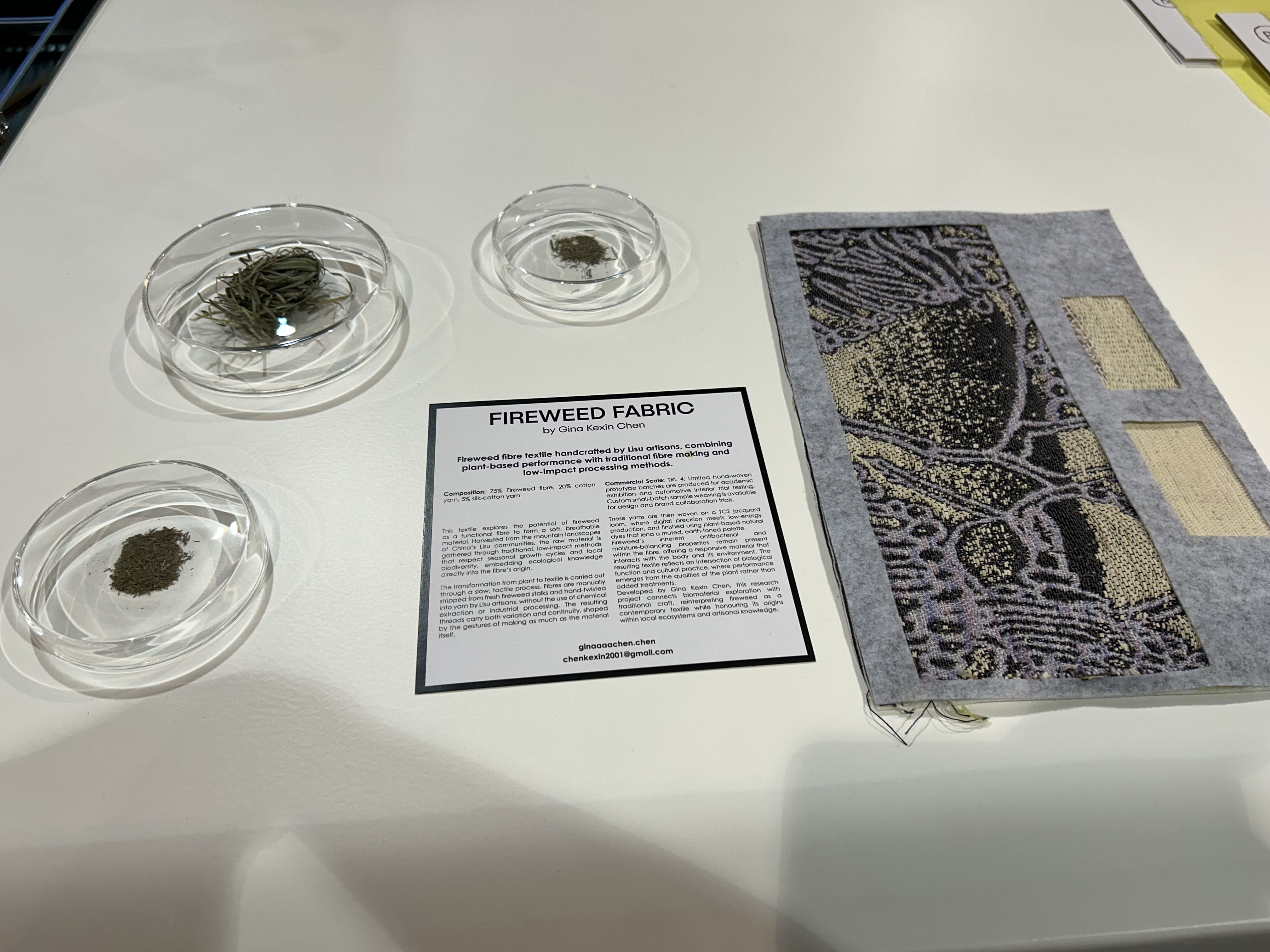
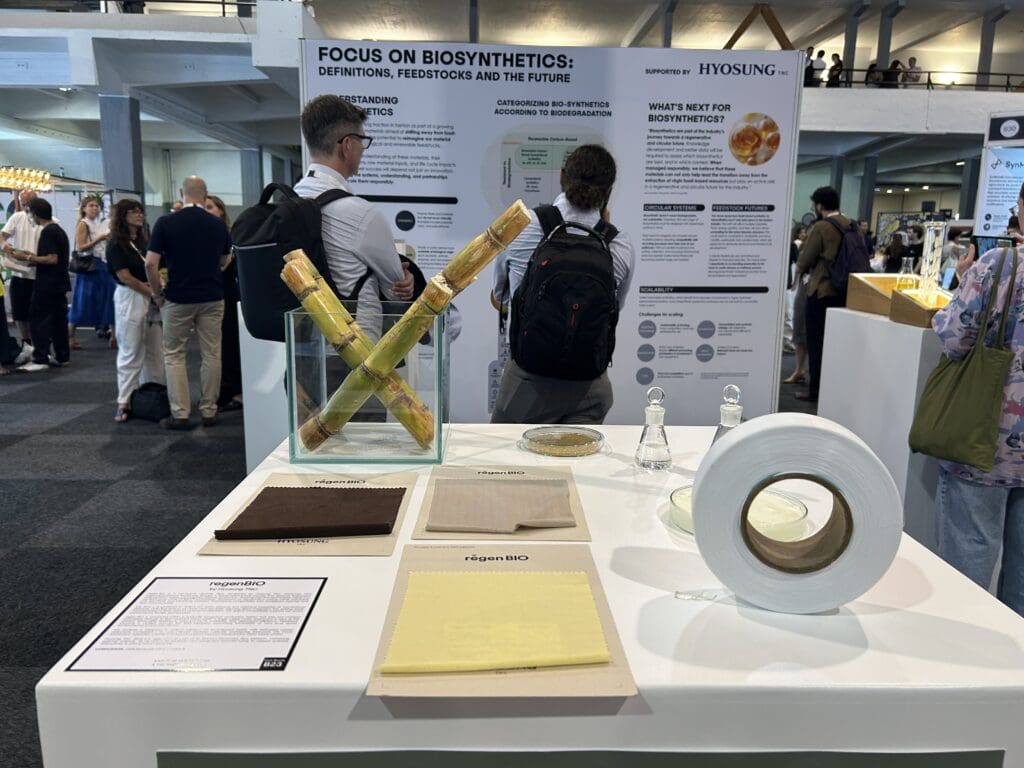
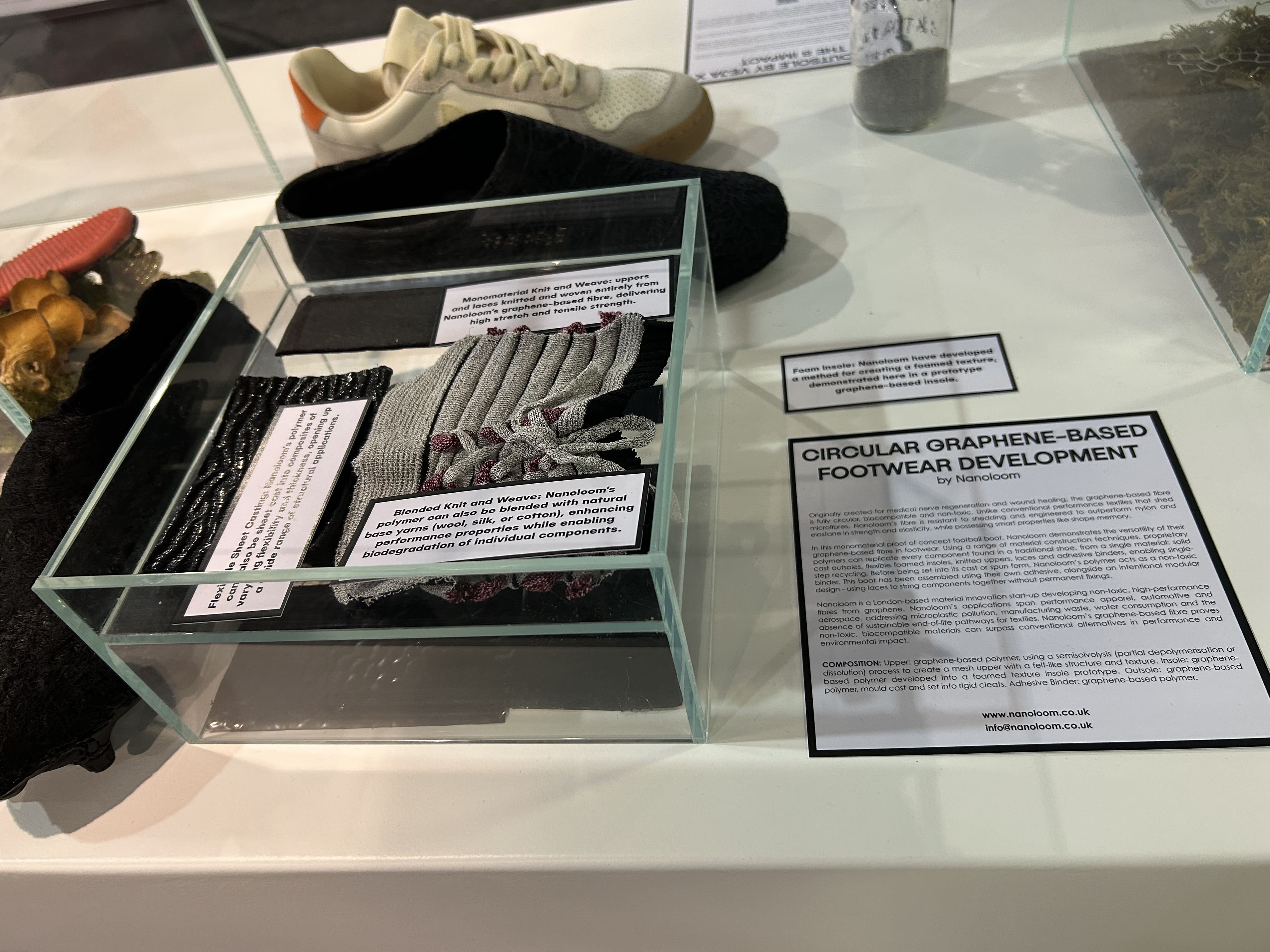
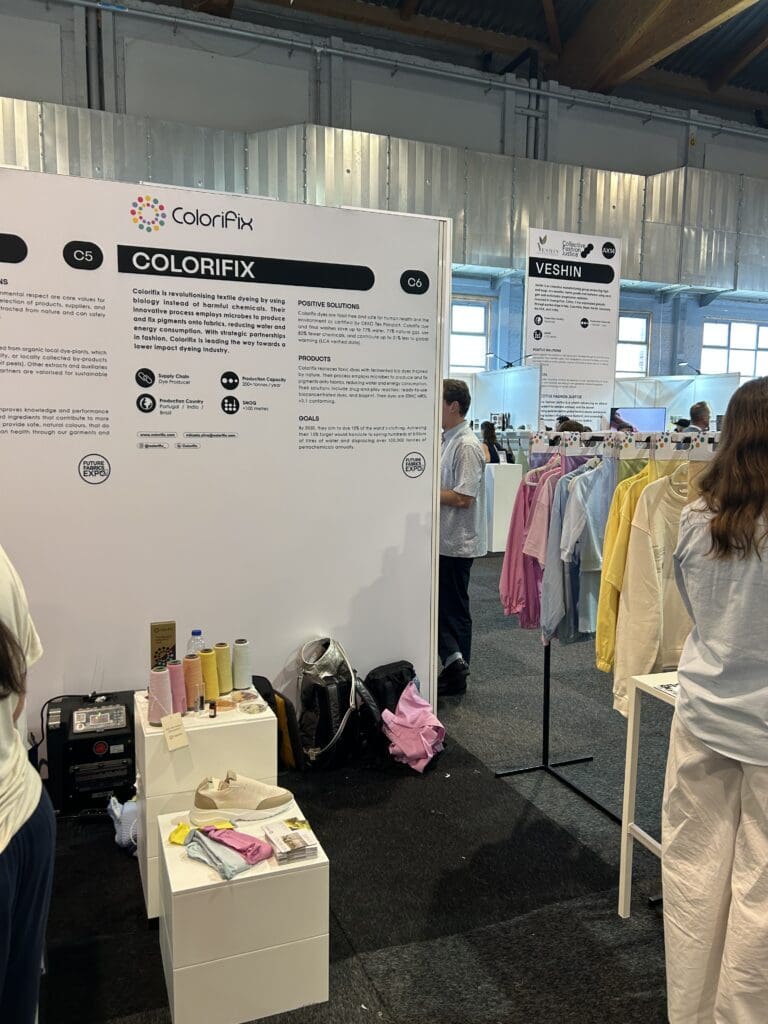
The show floor was packed with fabric innovators, each having to meet stringent requirements to exhibit, meaning there was no greenwashed showcases in sight. As well as innovators and companies displaying their solutions, the show floor also benefitted from educational displays and activations, sharing information about bioplastics, regenerative agriculture, biosynthetics, microfibres, designing for degradation and more.
And then after learning about these different areas, they were brought to life by the innovators, exhibitors and product displays.
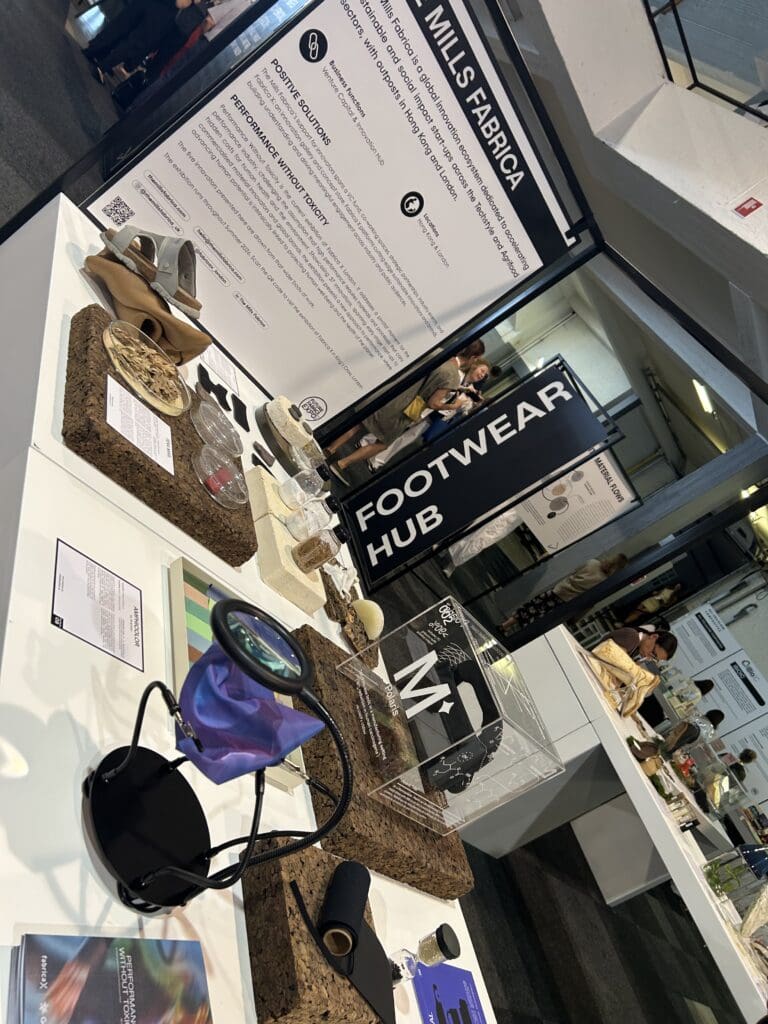
POC Member, BioFluff, was exhibiting its plant-based plush, and POC Partner, The Mills Fabrica, had a capsule version of its Performance without Toxicity exhibition that we brought the membership to see earlier in the year. There were also other innovators and companies exhibiting, visiting, or speaking on stage that are part of the POC ecosystem.
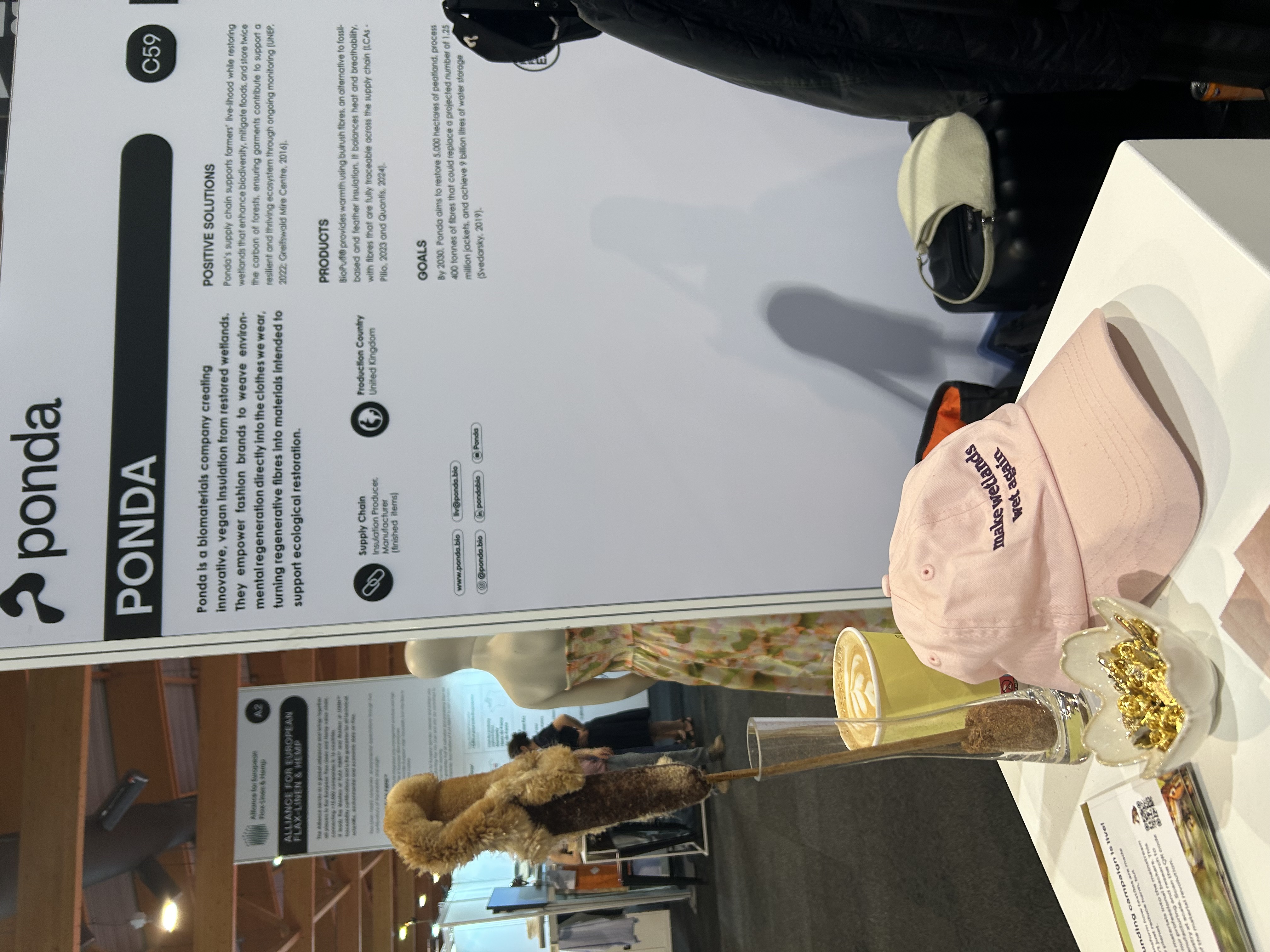
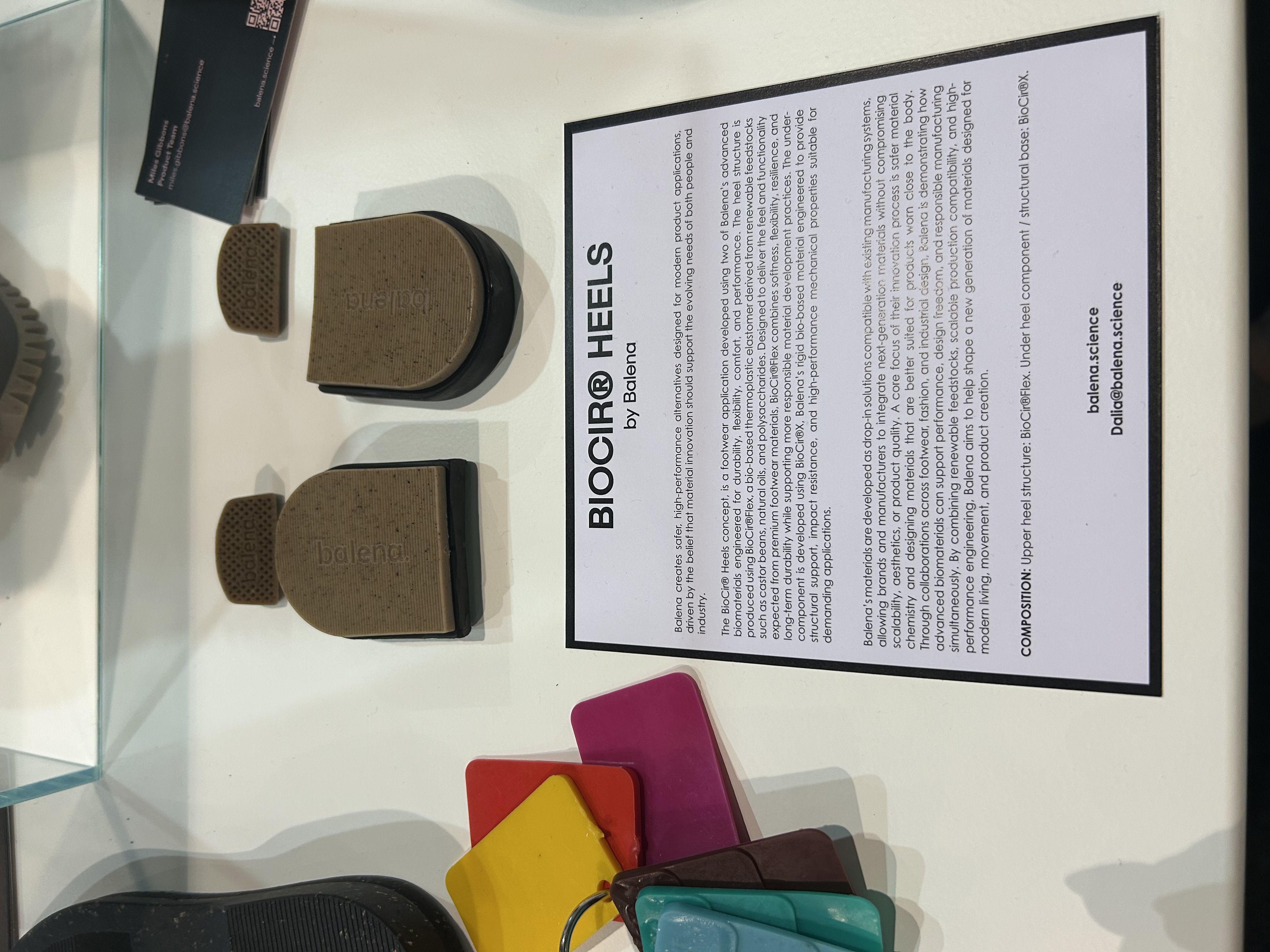
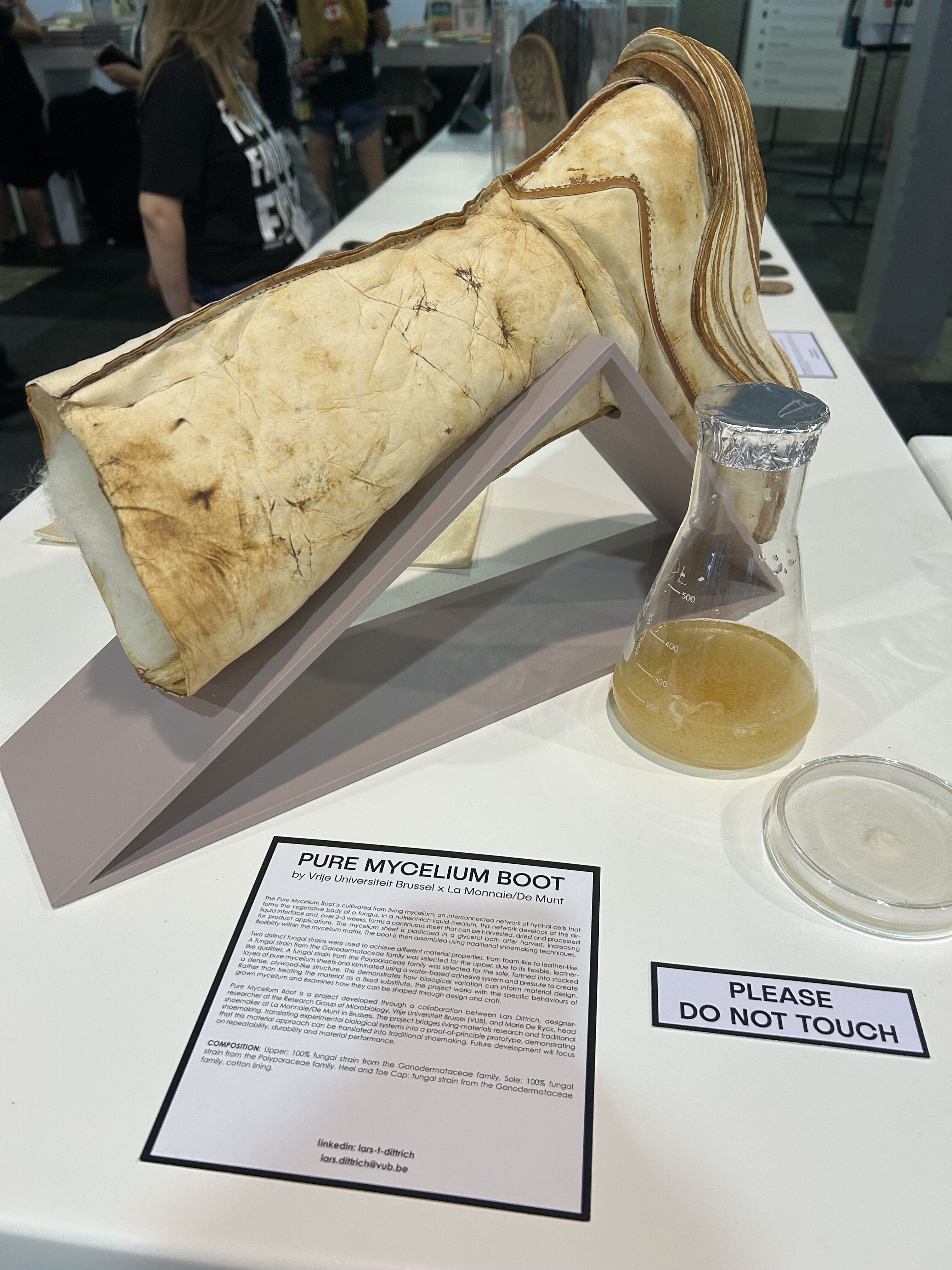
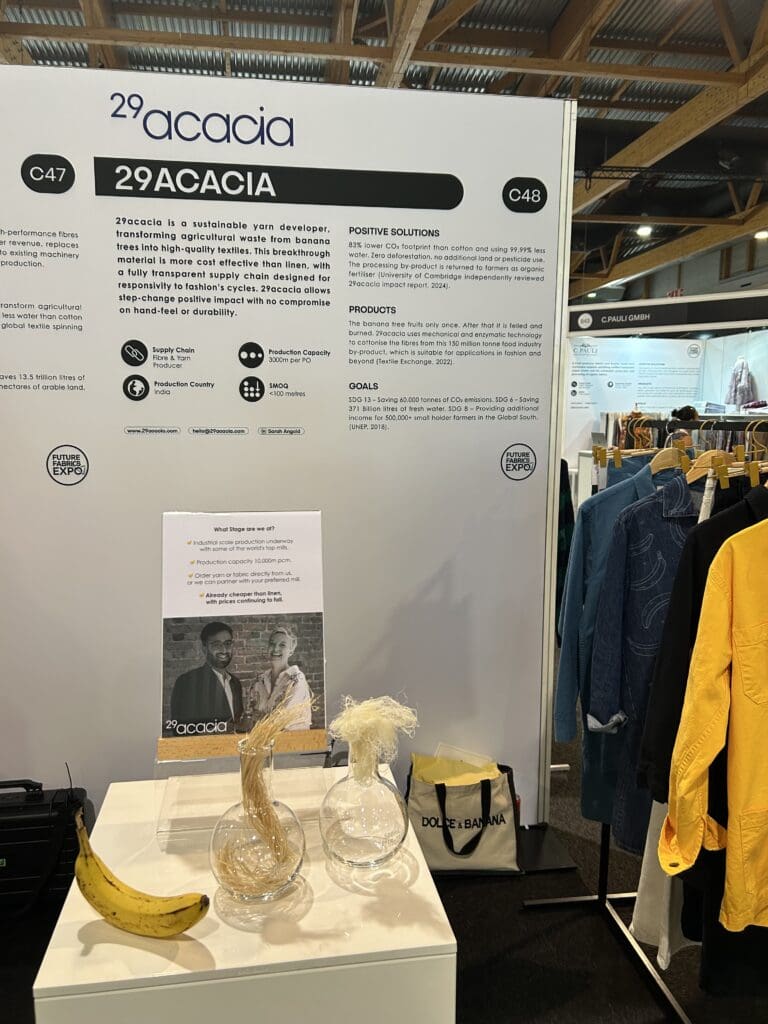
While every exhibitor was different from each other, common themes and directions were noticeable, suggesting the focuses of the industry as it advances its sustainability. Such as the better utilisation of natural fibres, particularly lower impact ones like linen and hemp, as well as alternative fibres – most memorably from banana plants, as with 29acacia, or bulrushes with Ponda. Bioplastics were also everywhere, boasting their sustainable feedstock and recyclable capabilities. But on the other end was also a whole lot of mushroom or rather mycelium-based materials, particularly as a substitute for leather.
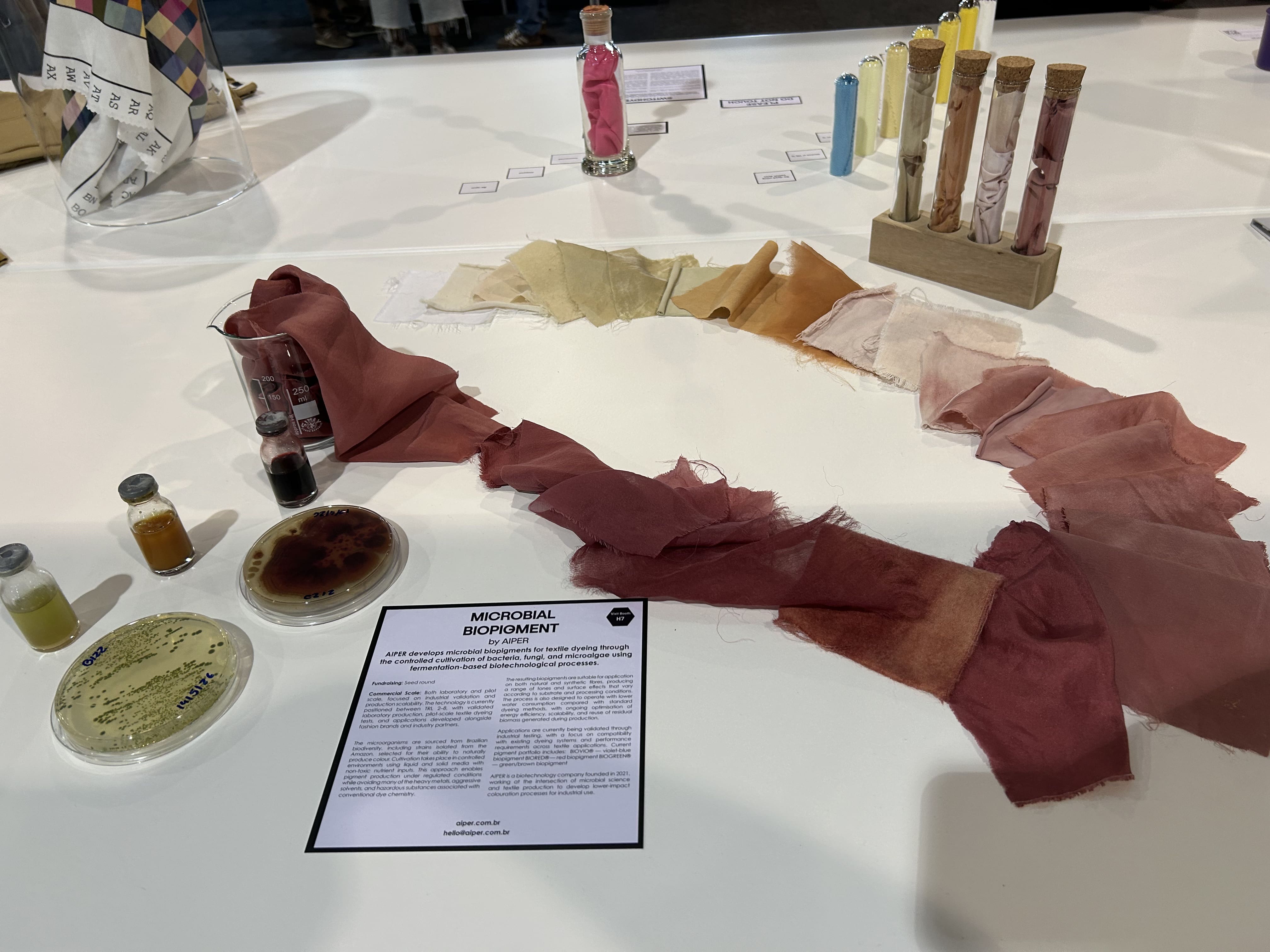
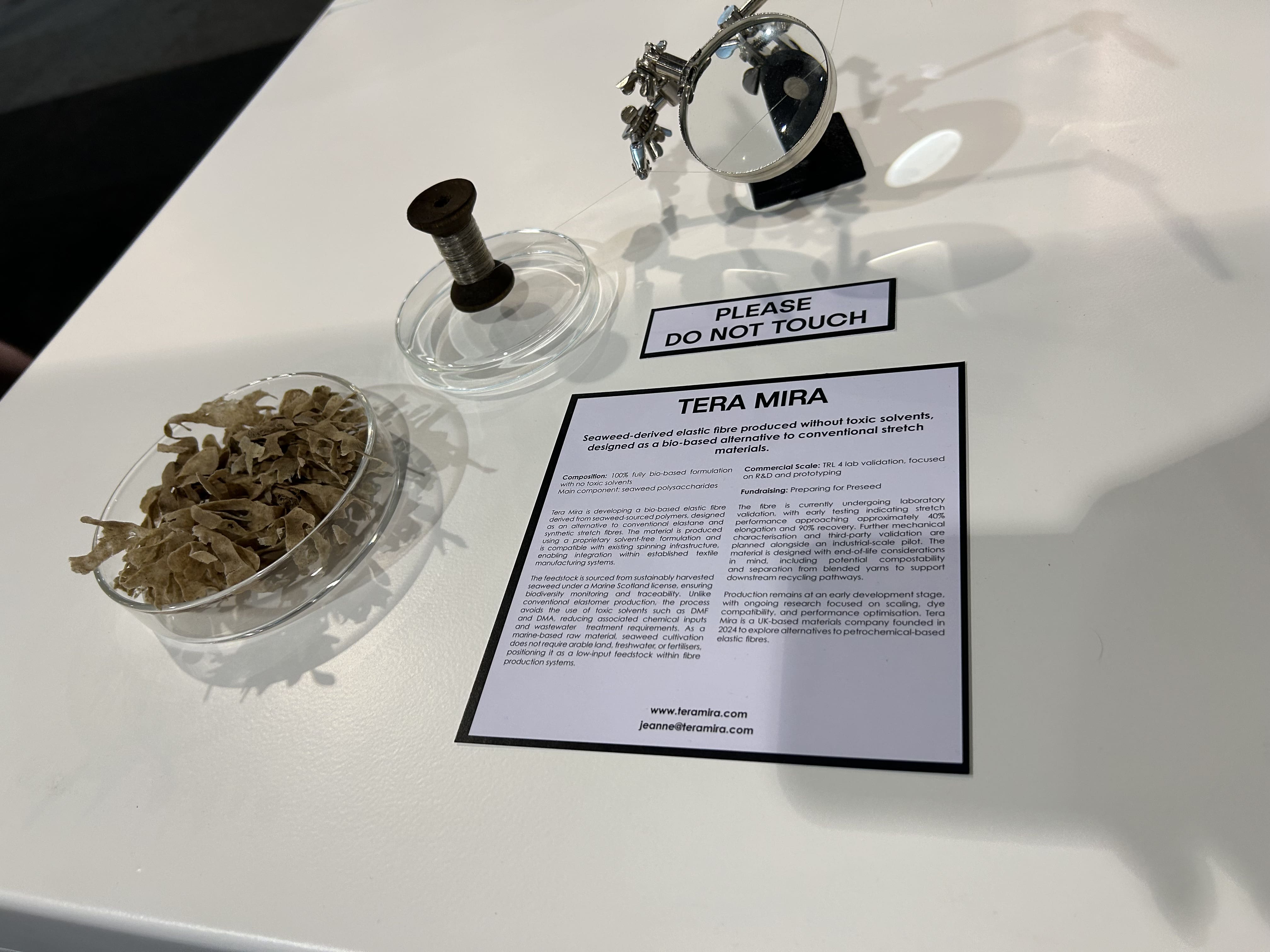
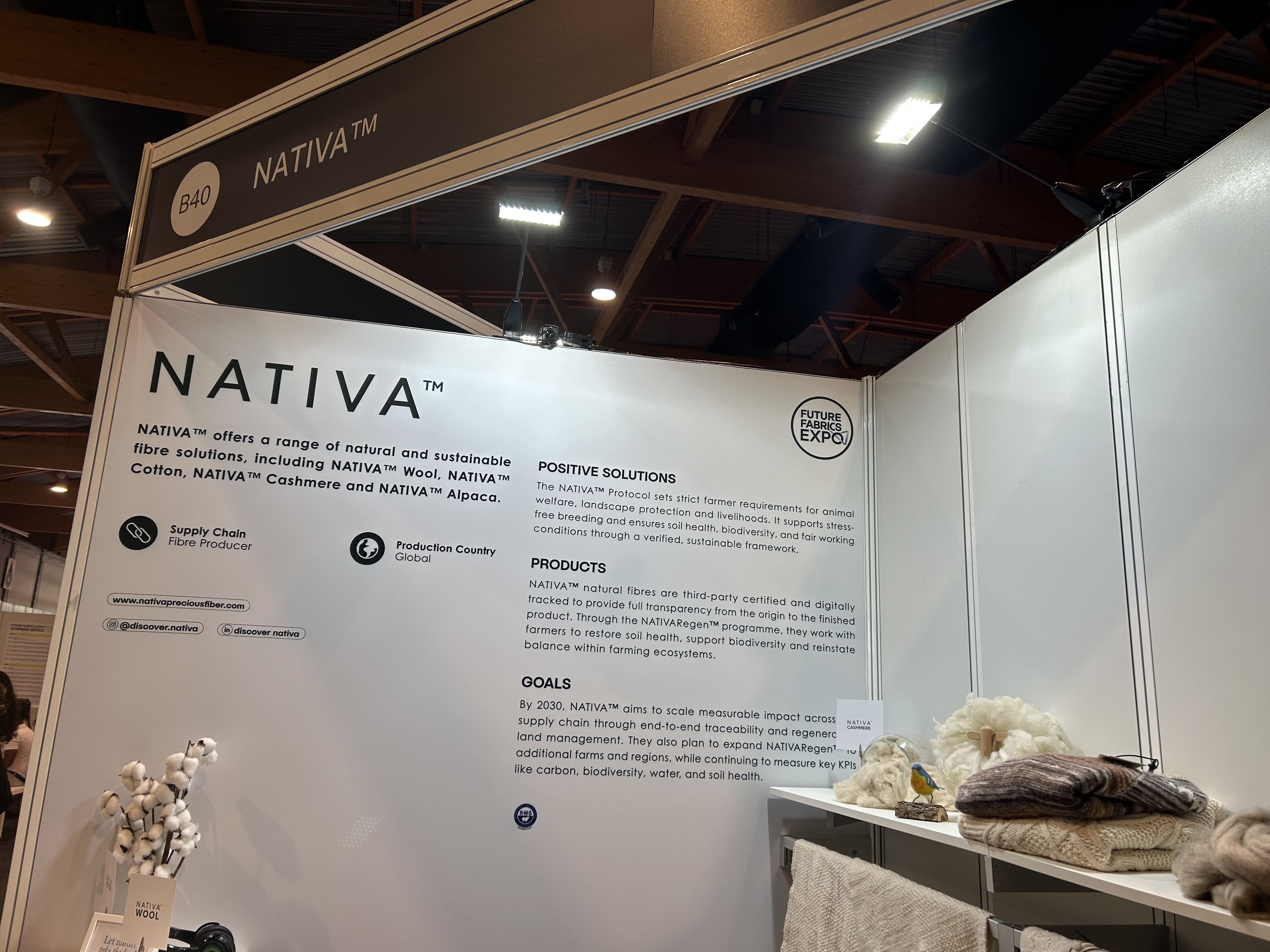
When not enthralled by the innovations, there was a fantastic seminar agenda, which opened with Mathieu Flamini from GFBiochemicals speaking about how the recent geopolitical challenges have exposed our overreliance on fossil-fuels and their byproducts. He said that the over 100 exhibitors at the show demonstrated that the smart and reliable materials choices are not made from synthetics – that they make business sense to adopt. This, combined with the increasing evidence that sustainability can support cost savings and risk management in a business.
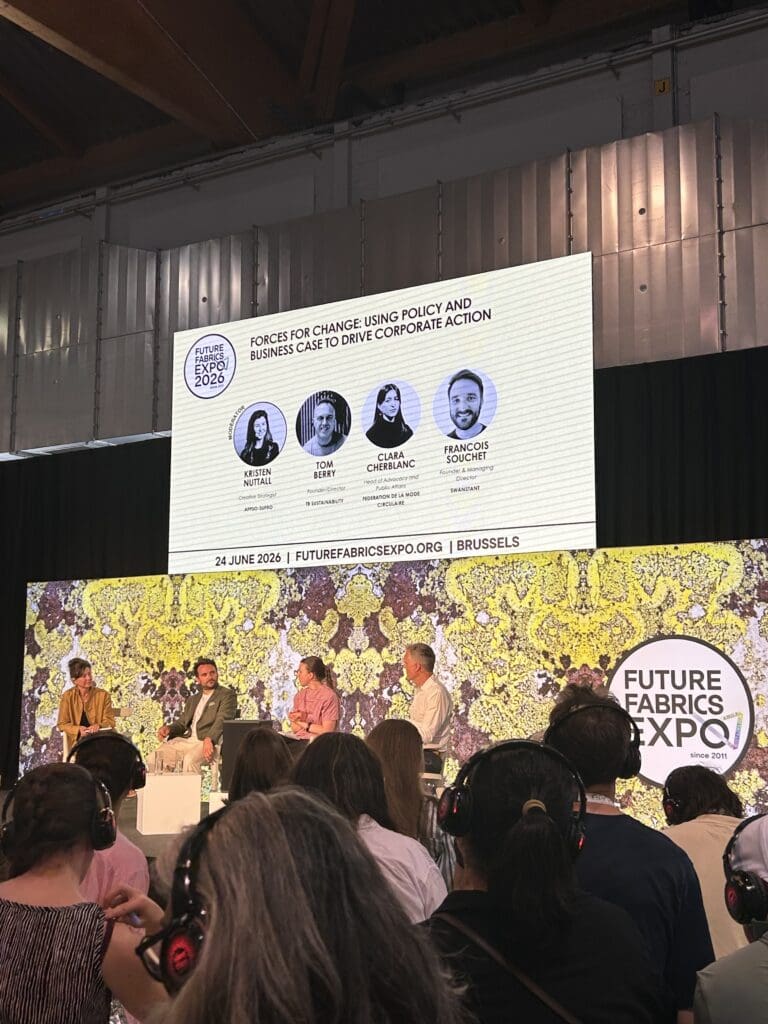
The first panel of the show, moderated by The Mills Fabrica’s Amy Tsang, discussed the slow but essential adoption of new materials and the challenges of integrating them into the existing and rather complex supply chains. Commitment is needed from brands to make the most impact, it was agreed, as when brands show appetite, investors follow.
There was also a fascinating conversation on toxicity in textiles and the growing awareness in this space – but also the fearmongering. It was discussed that there is a misconception that bio is always good and synthetic is always bad, it is instead more nuanced than that. It comes down to not only the composition of the fabric but what dyes and finishes are added to it and then how they affect its end of life journey.
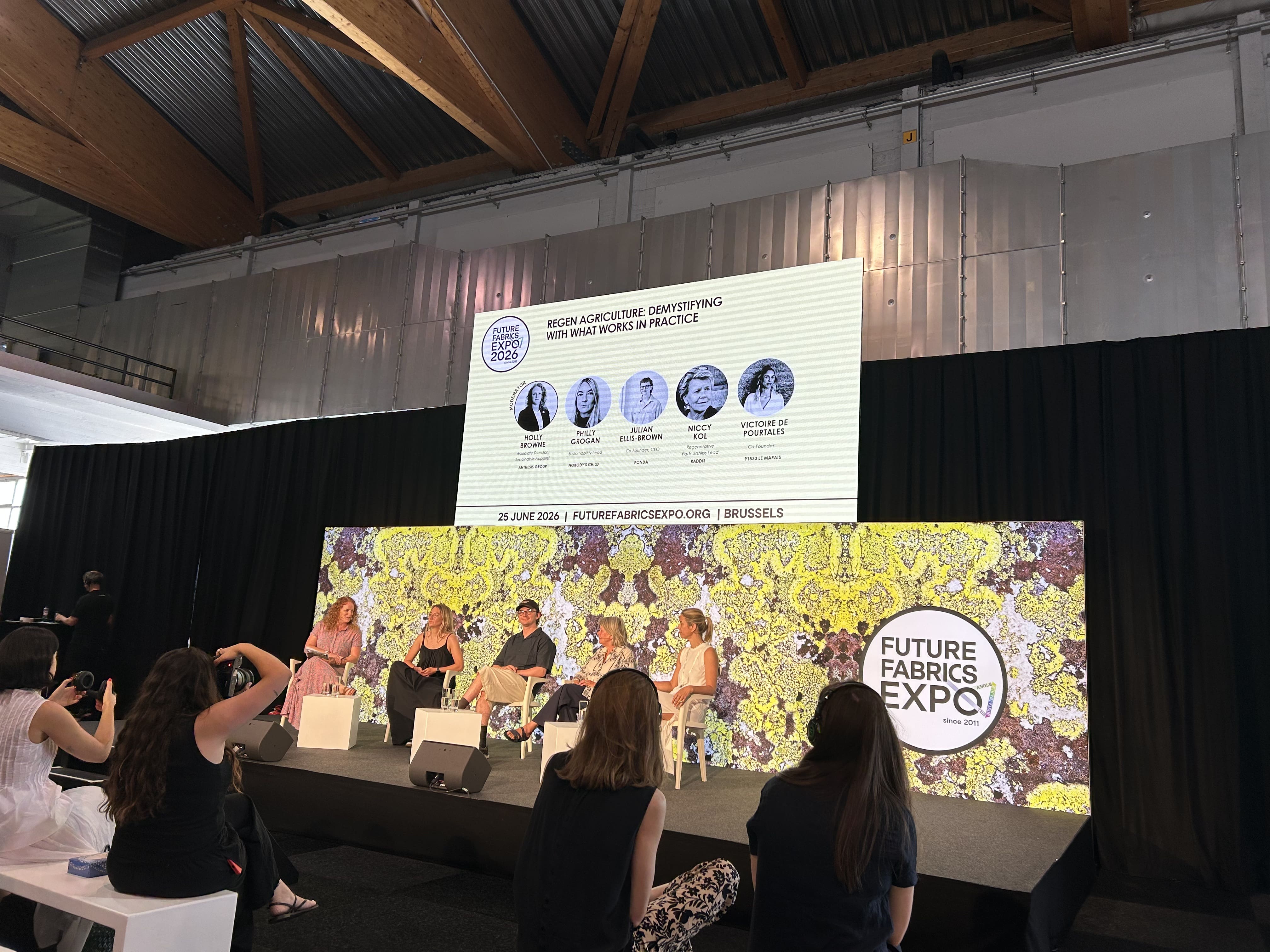
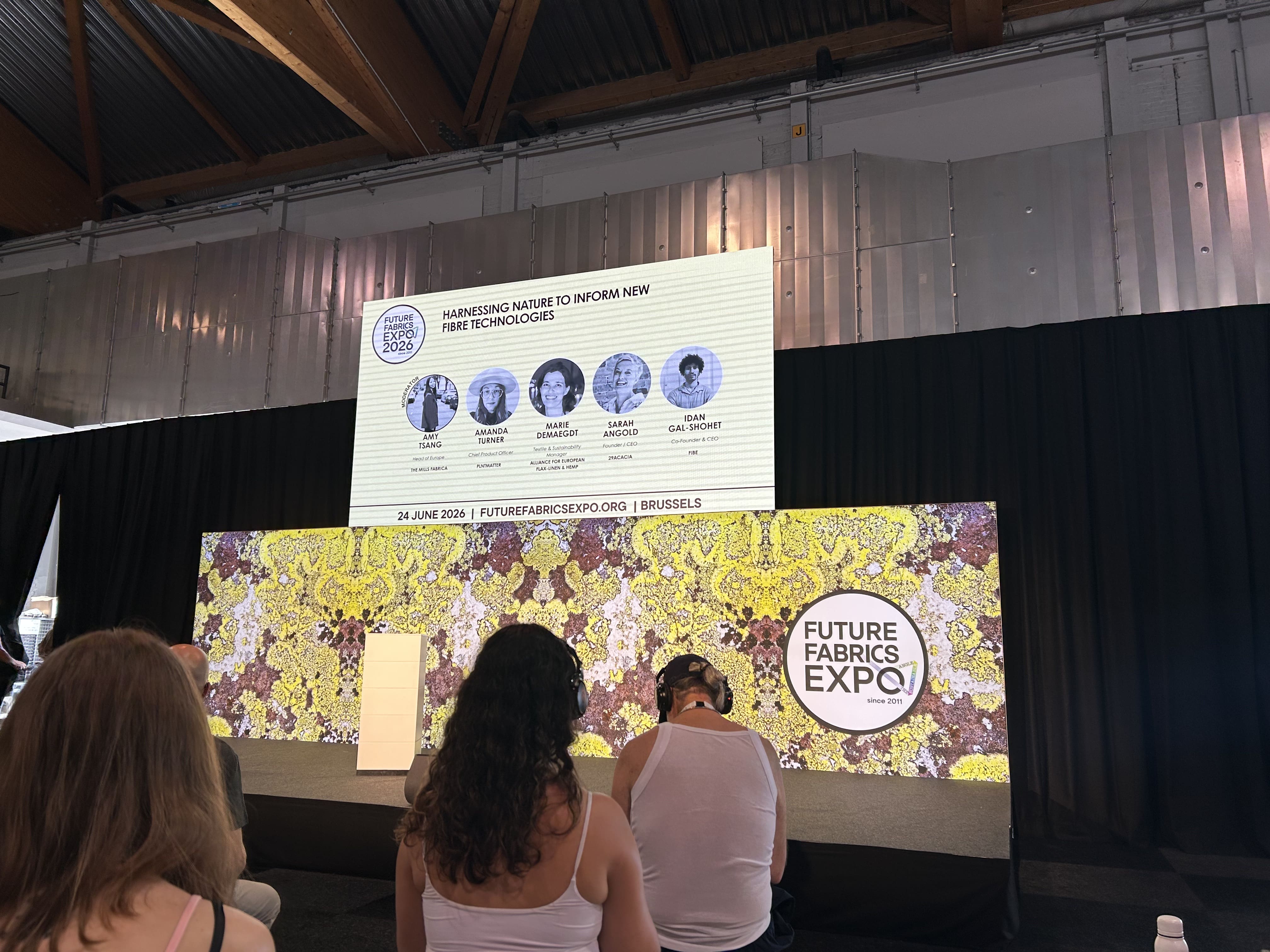
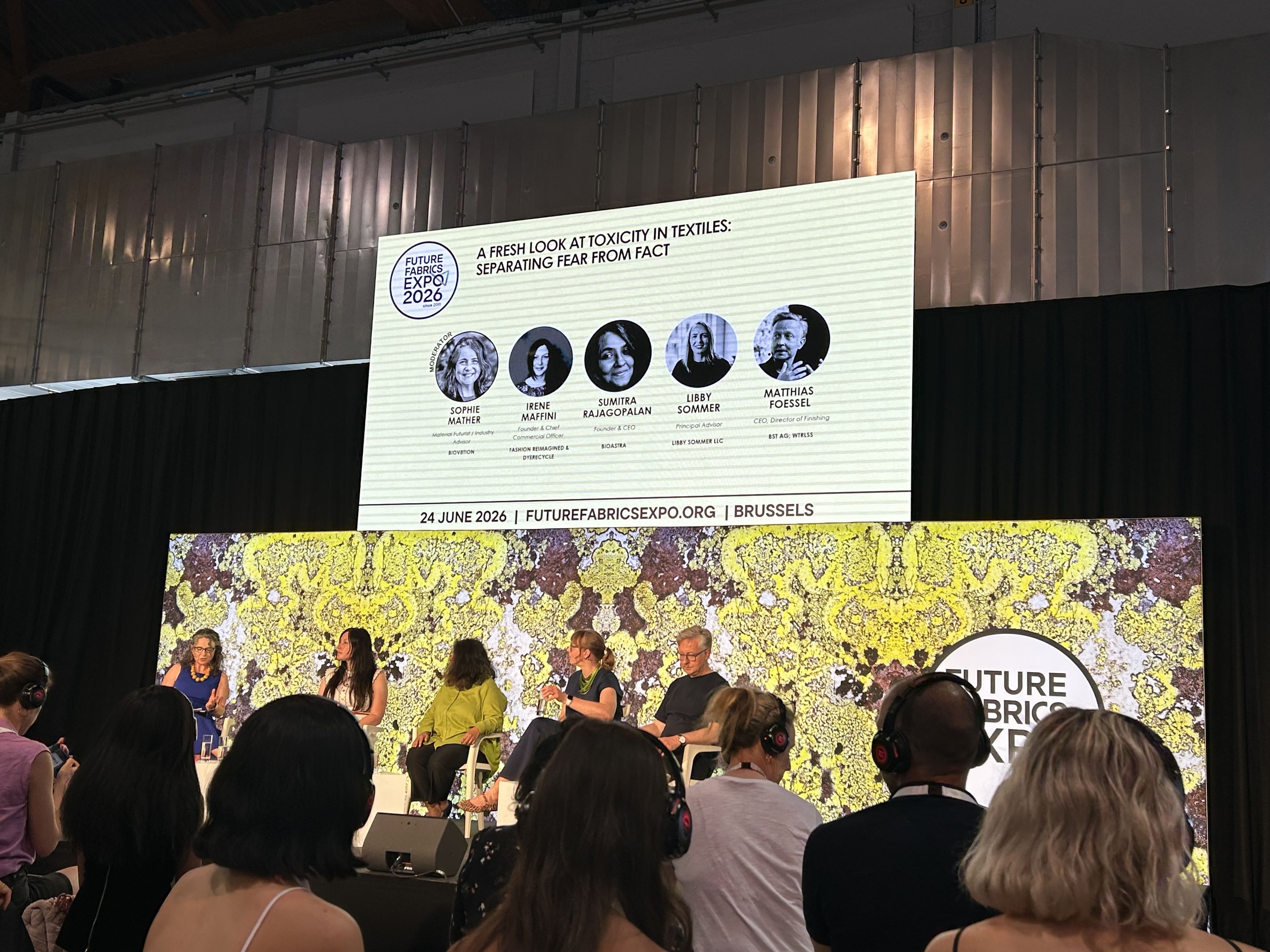
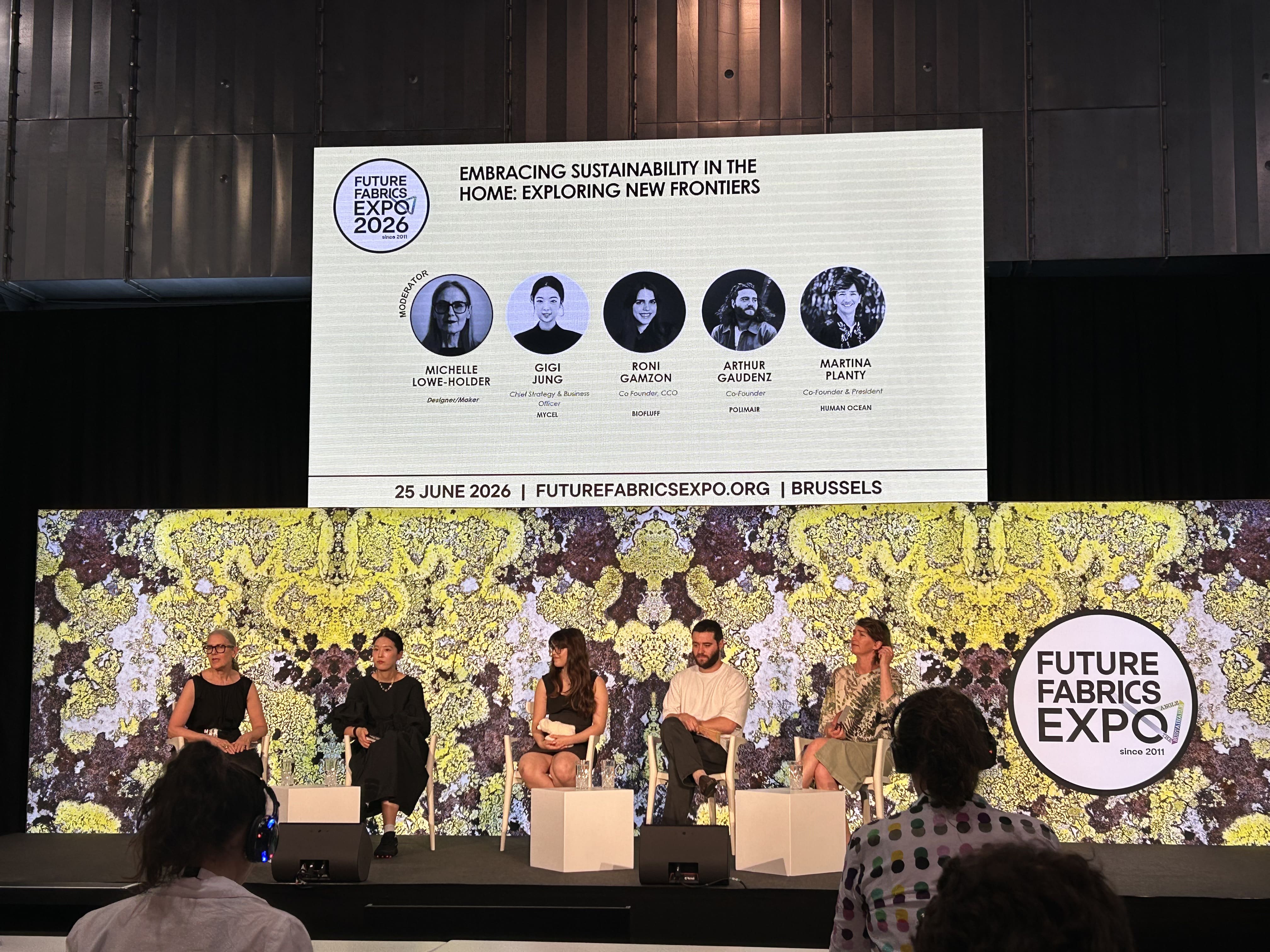
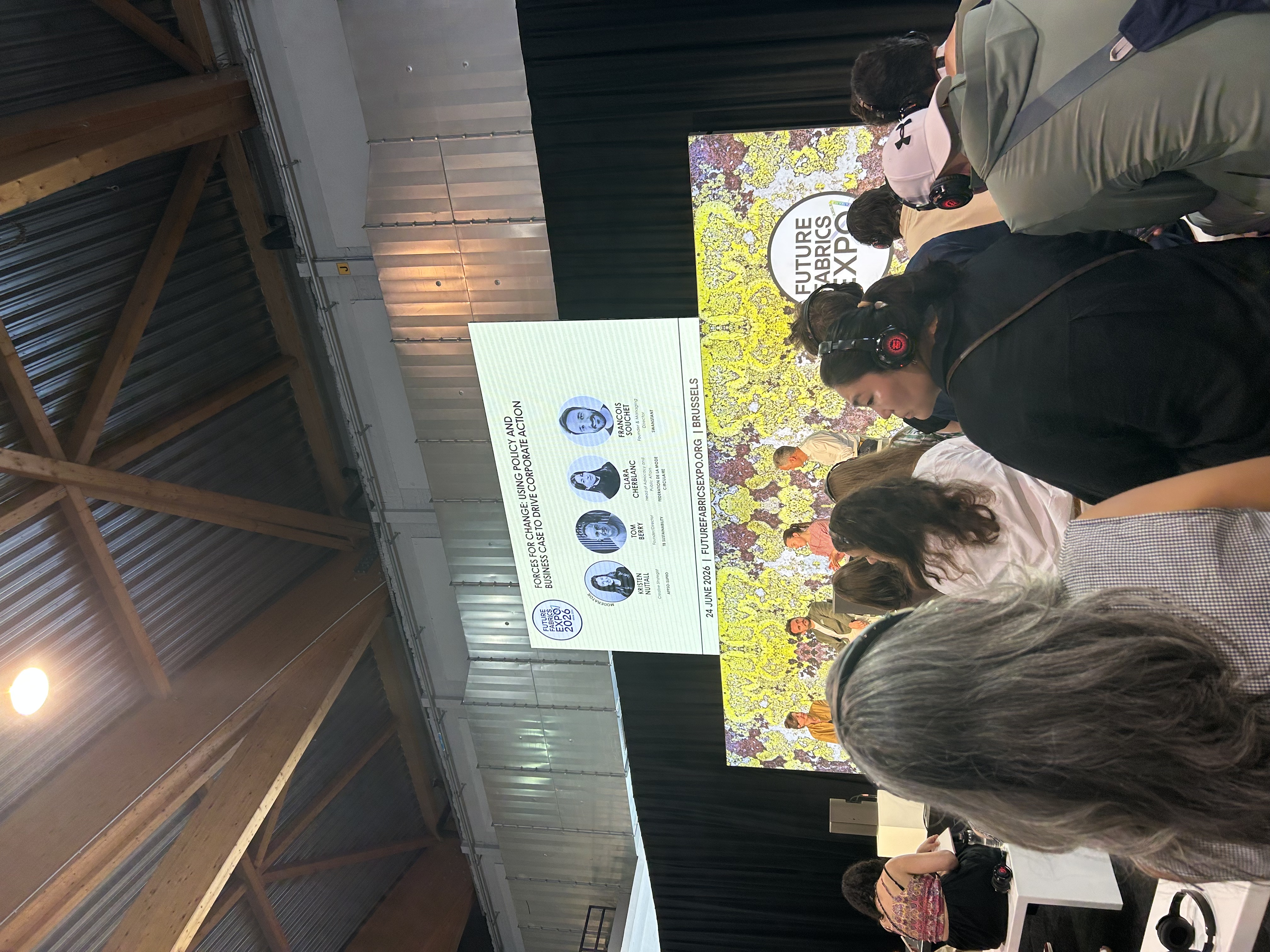
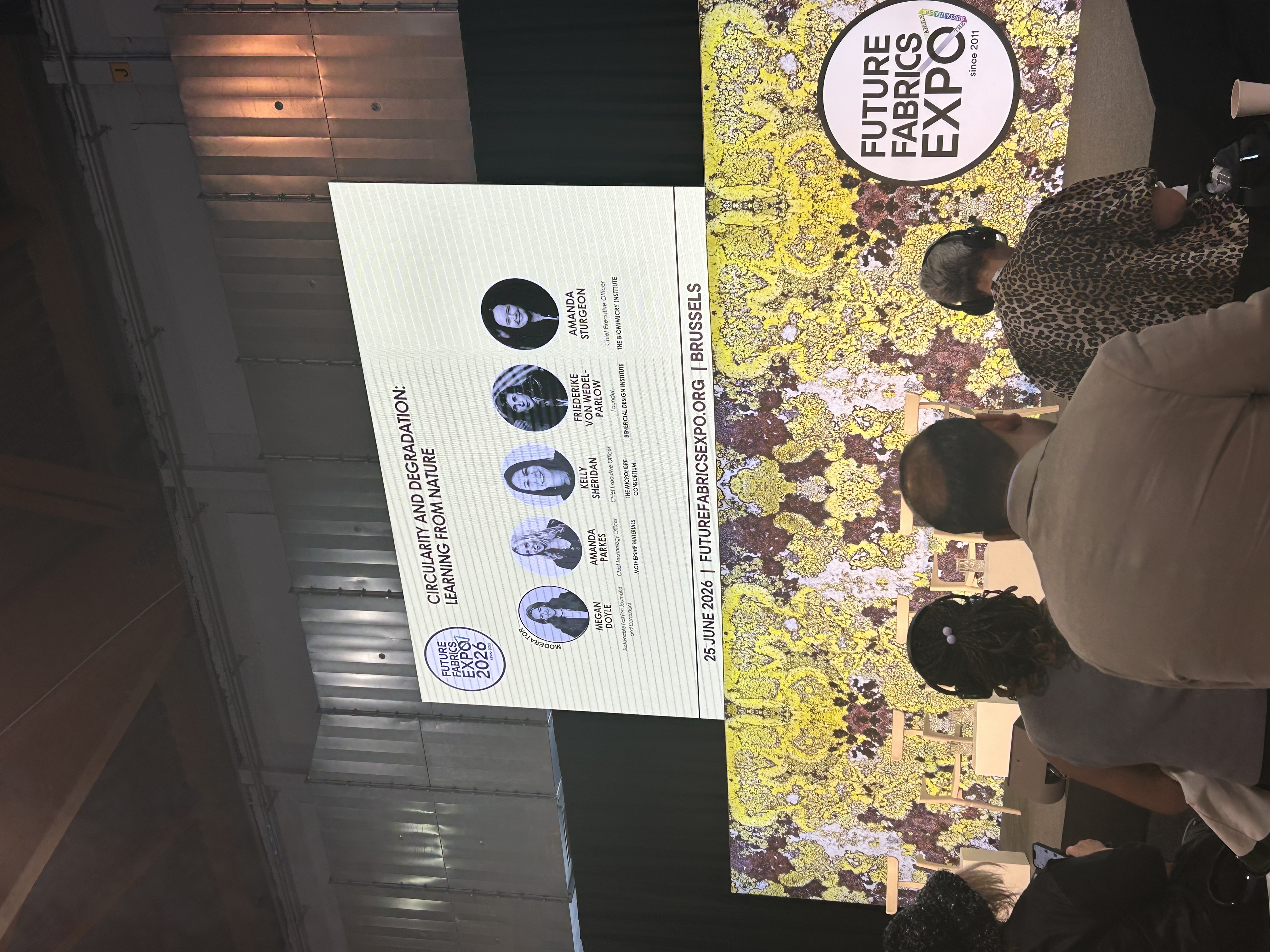
Regenerative agriculture was the focus of two panel discussion, one of which feature Philly Grogan from Nobody’s Child speaking about its regenerative cotton programme. Regen farming is a holistic approach that not only supports biodiversity and longevity but the community and people who rely on the crop – giving the farmers more agency as well as diversified income.
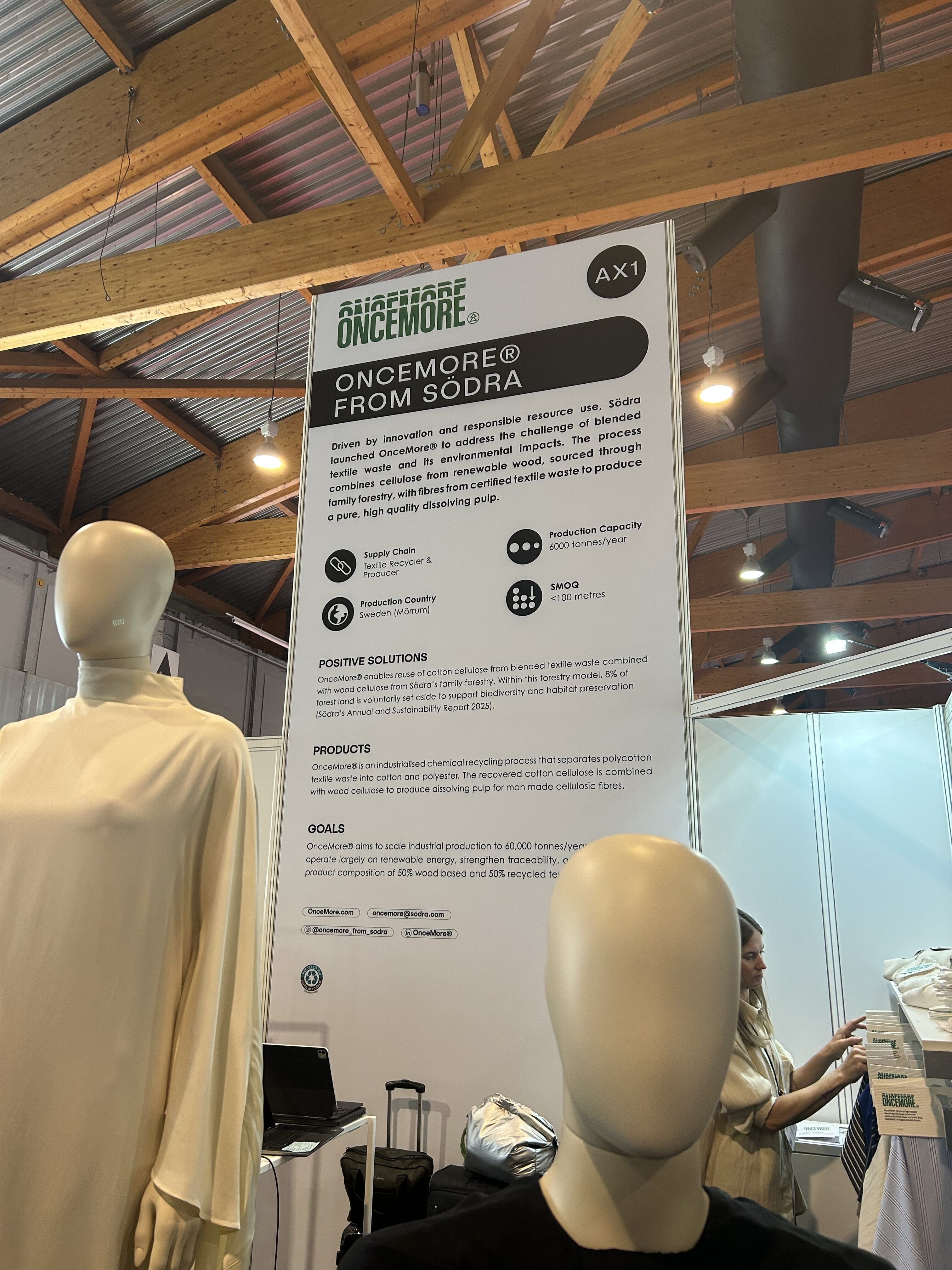
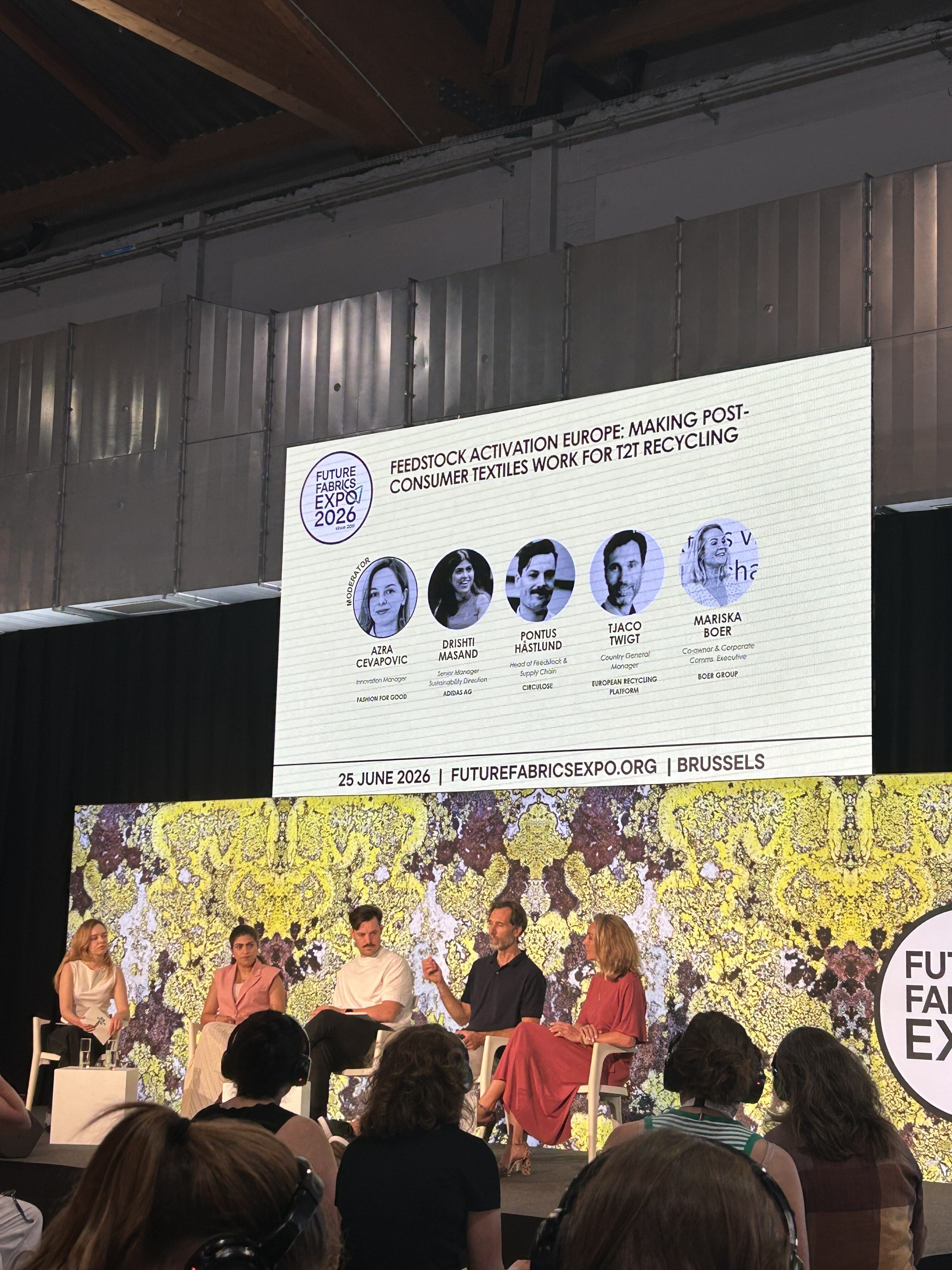
Aptly since the show was cohabiting with the Textiles Recycling Expo, this was naturally a topic of conversation on stage with some of the companies and individuals on the ground working on solutions in this area. It was identified that there is a bottle neck with pre-sorting and quality issues with recycling post-consumer but that is of course where the biggest volumes lie. The infrastructure is not yet there for the scale we need, however it is growing and the EU in particular is investing to support this stream and EPR will also help enable the transition.
It was incredibly exciting to be in the room with so many people who are actively making change happen – the radical innovators that are solving problems rather than just making things ‘less bad.’ It’s a taste of ambition and a taste of not accepting anything less than radical optimism and an overhaul towards systems that centre our environment, utilise it without wasting it. And perhaps that isn’t so radical after all.
It makes it feel real and it makes it feel possible; that we already have every solution we need. They are just waiting for us to action them, to adopt them, to bring them into the fold of business.